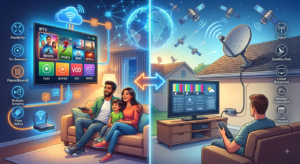
Television technology has changed significantly over the past few years. While satellite television remains a popular way to access live channels, the growth of high-speed internet has introduced another option for viewers: IPTV. Internet Protocol Television delivers compatible television content through an internet connection, giving viewers a different approach to watching live channels, movies, sports, news, and regional programming.
For modern households, choosing between IPTV and satellite television depends on several factors, including internet availability, viewing habits, channel preferences, equipment, and desired flexibility. IPTV can offer several advantages over satellite television, particularly for viewers who prefer internet-based entertainment and multi-device access.
For those researching Parivar IPTV, understanding these differences can make it easier to decide whether an internet-based television setup fits their needs. An Indian IPTV Set Top Box can also provide a dedicated television experience for compatible IPTV services.
This article explores the key advantages of IPTV over satellite television and explains what viewers should consider before making a decision.
What Is IPTV?
IPTV stands for Internet Protocol Television. It refers to the delivery of television programming through an IP-based network rather than primarily through satellite signals.
With IPTV, video and audio content are transmitted over an internet connection to a compatible device. Depending on the provider, viewers may be able to access live television, video-on-demand content, catch-up programming, and other digital features.
Compatible devices can include:
- Smart TVs
- IPTV set-top boxes
- Smartphones
- Tablets
- Computers
- Streaming devices
The exact services and content available vary between providers and locations.
What Is Satellite Television?
Satellite television uses communication satellites to deliver television signals to viewers.
A typical satellite TV setup includes a satellite dish, receiver, cabling, and television. The dish receives signals transmitted from a satellite, and the receiver processes those signals so the television can display the programming.
Satellite television has been widely used because it can deliver a large selection of channels over a broad geographical area.
However, it also has certain hardware and installation requirements that differ from internet-based television.
1. IPTV Does Not Require a Satellite Dish
One of the most obvious differences between IPTV and satellite television is the hardware required.
Satellite television generally requires a dish positioned to receive signals from a satellite. The installation process may require professional assistance, particularly when the dish needs to be correctly aligned.
IPTV does not require a satellite dish. Instead, it relies on an internet connection and compatible viewing equipment.
For households that already have reliable broadband, this can make IPTV easier to integrate into an existing digital environment.
An Indian IPTV Set Top Box can be connected to a compatible television and network to create a dedicated IPTV viewing setup.
2. More Flexible Device Options
Satellite television is primarily designed around a television and satellite receiver.
IPTV can potentially work across a wider range of connected devices.
Depending on provider support, viewers may be able to use:
- Smart TVs
- Set-top boxes
- Smartphones
- Tablets
- Computers
This can be useful for modern households where family members use multiple screens.
Instead of limiting television viewing to one traditional setup, IPTV can provide more flexibility when the service supports multiple devices.
The number of devices and simultaneous connections depends on the provider’s terms.
3. Greater Viewing Flexibility
Traditional satellite television generally follows a scheduled programming model. Viewers select a channel and watch whatever is being broadcast at that time.
IPTV can combine live television with on-demand features.
Depending on the service, viewers may have access to:
- Live channels
- Video-on-demand
- Catch-up programming
- Program guides
- Search features
This combination gives viewers greater control over their entertainment.
For busy households, this flexibility can be particularly useful.
4. On-Demand Content
One of the major advantages of internet-based television is the ability to provide on-demand content alongside live channels.
With video-on-demand, viewers can browse available movies, television programs, documentaries, or other content and select something when they want to watch it.
Traditional satellite television can offer similar features through certain receivers and services, but IPTV is naturally designed around internet-based content delivery and can integrate live and on-demand experiences within compatible platforms.
The exact VOD library depends on the provider and its content rights.
5. Easier Access to Regional Programming
Regional programming is important for many viewers, particularly people who live away from their home region.
Indian television includes many language markets, including Hindi, Tamil, Telugu, Malayalam, Kannada, Bengali, Marathi, Punjabi, and Gujarati.
Internet-based services can make it convenient for viewers to explore authorized regional programming through compatible devices.
For people researching Parivar IPTV, checking the availability of preferred Indian languages and regional channels can help determine whether the service meets their entertainment requirements.
Viewers should always confirm the current channel lineup and applicable content rights.
6. No Dependence on Satellite Signal Conditions
Satellite television can sometimes be affected by severe weather conditions.
Heavy rain, storms, or other environmental conditions can interfere with satellite signals, potentially causing temporary loss of channels or reduced reception.
IPTV does not rely on a satellite signal reaching a dish. Instead, it depends on the quality and stability of the internet connection.
This does not mean IPTV is immune to interruptions. Internet outages, network congestion, weak Wi-Fi, and provider-side problems can also affect streaming.
However, the source of potential disruptions is different.
7. Easier Integration With Existing Internet Services
Many households already use broadband internet for activities such as:
- Video calls
- Online gaming
- Social media
- Cloud services
- Streaming
- Smart home devices
IPTV can be integrated into the same connected environment.
This means a household with a suitable broadband connection may not need a separate satellite installation for internet-based television.
However, families should make sure their internet plan provides sufficient bandwidth for IPTV alongside their other online activities.
8. Better Content Discovery
Modern IPTV platforms can provide digital tools that make finding content easier.
An Electronic Program Guide, or EPG, can display current and upcoming programming.
Search functionality can help viewers find channels or programs without manually scrolling through a long list.
Favorite lists can also make frequently watched channels easier to access.
These features can improve the overall user experience, especially when a service offers a large selection of channels.
9. More Suitable for Multi-Screen Households
Modern families often have multiple screens in different parts of the home.
A household may have a Smart TV in the living room, another television in a bedroom, and smartphones or tablets used by family members.
Depending on the provider’s policies, IPTV may support multiple compatible devices.
Satellite television can also be distributed to multiple televisions, but doing so may require additional receivers, wiring, or subscription arrangements.
IPTV’s network-based nature can make multi-device access more flexible when supported by the provider.
10. Flexible Hardware Options
Satellite television generally requires specialized satellite equipment.
IPTV can be accessed through different types of hardware depending on the provider.
Some viewers may use a Smart TV application, while others prefer a dedicated set-top box.
An Indian IPTV Set Top Box can be useful for people who want a traditional television interface without relying on a computer or smartphone.
This allows viewers to choose equipment based on their preferences and existing home entertainment setup.
11. Potentially Easier Setup
Installing satellite television can involve several physical components, including a dish, receiver, cables, and appropriate positioning.
IPTV can have a simpler setup if the household already has broadband internet and compatible equipment.
A typical IPTV setup may involve:
Internet connection → Router → IPTV device or application → Television
The exact installation process varies by provider.
While IPTV can be easier to set up in some homes, users still need to make sure their network and devices are compatible.
12. Access to Modern Digital Features
Internet-based platforms can support digital features that complement traditional live television.
Depending on the service, IPTV may provide:
- Search
- Electronic Program Guides
- Favorites
- On-demand libraries
- Catch-up content
- Multiple device support
- Content categories
These features can make television feel more like a modern digital platform rather than a fixed channel lineup.
13. No Need for Physical Satellite Alignment
Satellite dishes must be correctly aligned to receive signals.
If a dish moves because of strong weather, physical impact, or installation issues, reception may be affected.
IPTV avoids this particular requirement because it does not use a satellite dish.
Instead, users need a stable network connection between their internet service and viewing device.
14. Potentially Better for Mobile Viewing
Satellite television is primarily designed for fixed installations.
IPTV can potentially support mobile viewing through compatible applications and devices.
A viewer may be able to access supported content on a smartphone or tablet, depending on the provider’s policies and geographic restrictions.
This can be useful for people who travel or simply want more flexibility around the home.
However, viewers should always follow the provider’s terms regarding device usage and location.
Is IPTV Always Better Than Satellite TV?
Despite its advantages, IPTV is not automatically the best choice for everyone.
Satellite television can be useful in areas where reliable broadband internet is unavailable or limited.
IPTV depends heavily on internet quality. A slow or unstable connection can cause buffering, freezing, or reduced picture quality.
Satellite television may therefore remain attractive to viewers who live in locations with strong satellite coverage but limited broadband options.
The best choice depends on your location, infrastructure, budget, and viewing requirements.
What Internet Speed Does IPTV Need?
Internet requirements vary depending on video quality and the number of simultaneous streams.
HD streaming generally requires less bandwidth than 4K streaming.
As a general guideline, around 5–10 Mbps per HD stream may be suitable depending on compression and provider requirements, while 20–30 Mbps or more per 4K stream can provide a reasonable target.
These are not universal requirements.
If several people are using the internet at the same time, the household may need considerably more total bandwidth.
Choosing the Right IPTV Setup
Before switching from satellite television to IPTV, consider your household’s needs.
Ask yourself:
- Is my internet connection reliable?
- Which channels do I actually watch?
- Do I need regional-language programming?
- Do I want on-demand content?
- How many devices will I use?
- Does my television support the required equipment?
- Do I need HD or 4K?
- Is a set-top box preferable to a Smart TV application?
Answering these questions can help you determine whether IPTV is suitable for your household.
The Role of Parivar IPTV
Viewers researching IPTV providers may consider different services based on their content, features, device compatibility, and subscription terms.
Parivar IPTV can be researched by viewers interested in Indian and regional entertainment, provided the available programming meets their requirements.
As with any IPTV service, consumers should review the current service information, supported devices, available channels, subscription conditions, and content authorization before making a decision.
Why an Indian IPTV Set Top Box Can Be Useful
For viewers who want IPTV on a traditional television, an Indian IPTV Set Top Box can provide a convenient dedicated setup.
The device can connect to the internet and television, allowing compatible IPTV content to be displayed on the large screen.
It can be particularly useful for households that prefer a remote-controlled television experience rather than watching through a computer or smartphone.
Always confirm that the set-top box supports the IPTV service and desired video resolution before purchasing.
Final Thoughts
IPTV offers several potential advantages over satellite television, including greater device flexibility, easier integration with broadband internet, on-demand viewing, digital program guides, regional programming options, and fewer physical installation requirements.
If you are researching Parivar IPTV, compare the available content, features, device compatibility, and subscription terms carefully. An Indian IPTV Set Top Box can also be a practical choice for viewers who want to enjoy compatible IPTV content through a dedicated television setup.
Ultimately, the better option depends on your household’s internet connection, location, viewing habits, equipment, and entertainment preferences. By considering these factors carefully, you can choose the television technology that best fits your modern lifestyle.