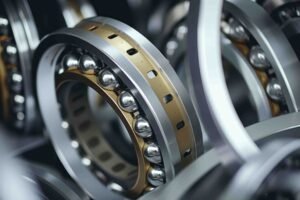
Machines and industrial equipment depend on smooth, reliable movement to perform efficiently. When rotating or moving components experience excessive friction, energy consumption increases, heat builds up, and equipment performance can decline. A thrust bearing is specially designed to support axial loads and help moving components operate with less resistance. By managing forces that act along the axis of a shaft, these bearings contribute to smoother operation, improved energy efficiency, reduced wear, and longer equipment service life. Their ability to handle axial forces makes them valuable in many mechanical systems where reliable performance and consistent movement are essential.
Understanding the Role of Thrust Bearings
Thrust bearings are mechanical components designed primarily to accommodate axial loads. An axial load is a force that acts parallel to the shaft’s axis. This is different from radial loads, which act perpendicular to the shaft. Many types of industrial machinery experience both kinds of forces, making the correct bearing selection important for achieving stable and efficient operation.
The primary purpose of a thrust bearing is to provide controlled movement between components while supporting axial forces. Instead of allowing direct contact between moving surfaces, the bearing creates a low-friction interface that helps the shaft or rotating assembly move smoothly.
This controlled movement brings several important advantages. It helps reduce energy losses, supports stable machine operation, and minimizes the amount of heat generated during movement. As a result, equipment can operate more efficiently while maintaining consistent performance.
How Thrust Bearings Reduce Friction
Friction is a natural force that occurs when two surfaces move against each other. In mechanical equipment, excessive friction can consume energy and generate heat. Over time, continuous friction can also contribute to surface wear and affect the smooth operation of machine components.
Thrust bearings help address these concerns by reducing direct sliding contact between moving parts. Depending on the bearing design, rolling elements or specially engineered surfaces allow movement to take place with less resistance.
Supporting Smooth Axial Movement
One of the main benefits of these bearings is their ability to support smooth axial movement. When a shaft is subjected to an axial force, the bearing helps manage that force while allowing the shaft to rotate or move efficiently.
This is particularly useful in equipment where continuous movement is required. By maintaining controlled contact between components, the bearing helps reduce resistance and supports reliable machine operation.
Reducing Energy Losses
Friction requires energy. When machine components encounter high resistance, more power is needed to maintain the same level of movement or rotation. Reducing friction allows equipment to use energy more effectively.
A well-selected thrust bearing can help minimize the amount of energy lost through mechanical resistance. This can support better overall efficiency, particularly in machinery that operates continuously or under demanding workloads.
Lower friction can also contribute to smoother motor operation. When the mechanical system moves efficiently, the driving motor may not need to work as hard to overcome unnecessary resistance.
Improving Equipment Efficiency
Equipment efficiency is influenced by many factors, including component design, operating conditions, maintenance, and load management. Bearings play an important role because they directly affect how efficiently moving parts interact with one another.
By managing axial forces and reducing friction, thrust bearings can support improved mechanical efficiency. The benefits can be seen across several aspects of equipment operation.
Better Power Utilization
Machines are designed to convert energy into useful movement or work. Excessive friction reduces the amount of energy available for this purpose. When friction is controlled, a greater portion of the supplied energy can be directed toward the intended mechanical function.
This improved power utilization can be valuable for industrial equipment that operates for long periods. Even small improvements in mechanical efficiency can have a meaningful impact when equipment runs continuously.
Consistent Machine Performance
Stable movement is essential for reliable equipment operation. Excessive friction can create resistance that affects rotational smoothness and overall machine behavior.
Thrust bearings help maintain controlled movement under axial loading conditions. This allows machinery to operate with greater consistency and supports predictable performance. Smooth movement is particularly beneficial in systems where precision and reliability are important.
Improved Heat Management
Friction generates heat. When friction levels are reduced, less heat is produced through mechanical contact. This can help maintain more favorable operating temperatures within the equipment.
Better heat management supports the performance of surrounding components and contributes to a more stable operating environment. It can also help reduce the thermal stress experienced by mechanical parts during extended operation.
Extending Component Service Life
One of the most valuable benefits of effective bearing performance is the potential to support longer component life. Mechanical parts that operate under controlled friction and suitable loading conditions can experience less unnecessary surface wear.
Thrust bearings help protect important machine components by managing axial forces and providing an efficient interface for movement. This can reduce the impact of repeated mechanical loads on shafts and related components.
Supporting Reduced Wear
Wear occurs naturally as mechanical components move and interact. However, efficient bearing operation can help control the amount of wear experienced by moving surfaces.
By supporting smooth movement, thrust bearings can reduce unnecessary friction between components. This helps maintain the condition of important mechanical parts and supports longer-lasting equipment performance.
Protecting Critical Components
Shafts, gears, rotating assemblies, and other mechanical components can be affected by excessive axial forces. A suitable bearing helps manage these forces and distributes the load in a controlled manner.
This can protect critical components from unnecessary stress and support the structural reliability of the overall machine. When the load is properly managed, the equipment can continue operating efficiently under its intended conditions.
Supporting Reliable Industrial Operations
Industrial equipment often needs to operate for long periods while maintaining consistent output. Reliability is therefore a major consideration when selecting mechanical components.
Thrust bearings contribute to reliable operation by supporting axial loads and helping moving components function smoothly. Their role becomes particularly important in equipment where axial forces are a regular part of normal operation.
Suitable for Continuous Applications
Many industrial systems operate continuously or for extended periods. In such environments, efficient movement can have a significant influence on overall equipment performance.
A properly selected bearing can support smooth operation throughout the machine’s working cycle. This helps maintain consistent mechanical performance and supports efficient use of energy.
Supporting High-Performance Machinery
Modern machinery is often designed to deliver high levels of productivity and precision. Mechanical components must therefore work together effectively to achieve the desired results.
Thrust bearings provide important support for systems that experience axial loading. Their ability to manage these forces helps equipment maintain stable movement and contributes to the reliable operation of high-performance machinery.
Benefits Across Different Equipment Applications
Thrust bearing are used in many types of mechanical systems because axial loads are common in a wide range of applications. Their ability to manage these forces makes them an important part of equipment designed for rotational or axial movement.
They can support efficient performance in industrial machinery, automotive systems, pumps, compressors, turbines, gearboxes, and other mechanical equipment. Each application has its own load and operating requirements, but the fundamental benefits remain similar.
Pumps and Compressors
Pumps and compressors often operate with rotating shafts that experience axial forces. Efficient bearing support helps maintain smooth shaft movement and contributes to stable equipment performance.
By managing axial loads effectively, bearings can help reduce resistance and support reliable operation over extended working periods.
Industrial Gearboxes
Gearboxes transfer power between rotating components and can experience different types of mechanical loads. Proper thrust support helps manage axial forces and allows the internal components to operate efficiently.
This contributes to smoother power transmission and supports the overall performance of the gearbox.
Turbines and Rotating Machinery
Turbines and other high-performance rotating systems require precise control of mechanical forces. Efficient thrust support helps manage axial loads and contributes to stable rotational performance.
When the bearing system is appropriately designed for the application, it can support efficient operation and help maintain consistent equipment performance.
The Importance of Proper Bearing Selection
The benefits of thrust bearings depend on selecting the right type and design for the specific application. Factors such as load capacity, operating speed, temperature, lubrication, shaft arrangement, and environmental conditions should be considered when choosing a bearing.
A bearing that matches the equipment’s operating requirements can provide better support and more efficient performance. Proper selection also helps ensure that the bearing can handle the expected axial forces while maintaining smooth movement.
Matching Load Requirements
Every machine has specific loading conditions. Understanding the direction and magnitude of axial forces is important for choosing an appropriate bearing design.
Correct load matching helps the bearing perform effectively and supports stable equipment operation.
Considering Operating Conditions
Temperature, speed, lubrication, and working environment can all influence bearing performance. Considering these factors during selection helps ensure that the bearing is suitable for the intended application.
The right combination of bearing design and operating conditions can contribute to smooth movement, efficient power use, and dependable performance.
The Role of Quality in Bearing Performance
The quality of a bearing can have a direct impact on equipment efficiency. Precision manufacturing, suitable materials, accurate dimensions, and reliable quality control all contribute to consistent bearing performance.
Working with experienced thrust-bearing manufacturers can help businesses identify suitable bearing solutions for their equipment requirements. High-quality bearings are designed to provide dependable support, efficient movement, and reliable performance across demanding applications.
Quality-focused manufacturing can also contribute to consistent dimensions and dependable operation. This helps ensure that the bearing integrates effectively with the surrounding components and performs as expected.
Long-Term Efficiency and Maintenance Benefits
Efficient bearing performance can support long-term equipment productivity. When moving components operate smoothly, the machine can maintain consistent performance while reducing unnecessary energy losses.
Regular maintenance also plays an important role in preserving bearing efficiency. Appropriate lubrication, inspection, alignment, and operating practices can help maintain smooth movement and support reliable performance.
A well-maintained bearing system can contribute to longer equipment life and more predictable operation. This supports better productivity and helps organizations make effective use of their mechanical assets.
Final Thought
Thrust bearings play an important role in improving mechanical efficiency by managing axial forces, reducing friction, supporting smooth movement, and helping protect critical components. Their ability to improve power utilization, control heat generation, reduce wear, and support consistent performance makes them valuable across many industrial applications. Choosing high-quality components from reliable thrust bearing manufacturers and matching the bearing to the equipment’s operating requirements can help businesses achieve smoother operation, improved efficiency, and dependable long-term performance. With the right bearing solution, machinery can operate more effectively while supporting productivity and efficient energy use.