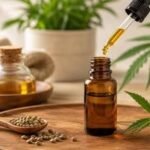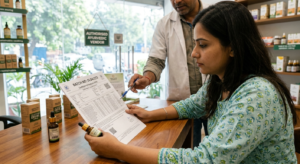
Buying CBD oil in India sounds simple until you actually start comparing products. Some brands look professional, some claim to be “Ayush approved,” some show lab reports, and some barely explain what’s inside the bottle. For first-time buyers, that mix of legal uncertainty and marketing noise can make the entire process confusing.
The good news is that genuine CBD oil in India can be identified if you know exactly what to check. The most reliable products are transparent about their licence, show third-party lab reports, disclose ingredients clearly, and avoid exaggerated health claims.
What “genuine” means
A genuine CBD oil is not just one that contains CBD. It is a product that is legally manufactured, clearly labelled, tested by an independent lab, and sold with documentation that a buyer can verify. In India, that usually means looking for an AYUSH licence, batch-specific COA reports, and honest product information on the label and website.
This matters because hemp-derived CBD products are regulated in India under a complex framework. A brand may say it is “CBD oil,” but if it cannot prove its licence, cannabinoid content, or safety profile, there is no way to know whether the product is authentic.
Check the licence
The first thing to verify is whether the brand has a valid AYUSH licence or other legitimate approval under India’s cannabis-related regulatory structure. A trustworthy company will display the licence number on its product label and website, and that number should be independently verifiable.
If a brand uses vague phrases like “Ayush approved” without showing the actual licence number, treat that as a red flag. Real compliance is specific, documented, and easy to check.
You should also be cautious of products that blur the line between hemp seed oil and CBD oil. Hemp seed oil is legal and useful in its own right, but it is not the same thing as CBD oil, and the label should not try to confuse the two.
Read the lab report
A Certificate of Analysis, or COA, is one of the most important documents in the CBD buying process. It is a third-party lab report that shows the actual cannabinoid content of a batch, including CBD and THC levels, and also checks for contaminants such as heavy metals, pesticides, and microbial issues.
A real COA should be easy to access on the brand’s website, downloadable, and tied to a specific batch or lot number. If a brand only shows a blurry image, a generic badge, or an unlabeled report with no batch reference, that is not good enough.
Here is what a solid COA should tell you:
- CBD amount in the batch.
- THC level and whether it falls within the allowed limit.
- Testing for heavy metals, pesticides, and microbial contamination.
- Batch or lot number that matches the bottle you are buying.
If the report does not answer these basics, skip the product.
Understand the label
The label should tell you exactly what type of CBD product you are buying. In India, product transparency matters because terms like full-spectrum, broad-spectrum, isolate, and hemp oil are often used loosely in marketing.
A proper label should clearly mention the cannabinoid type, ingredients, dosage guidance, storage instructions, expiry date, and batch number. If any of those are missing, the brand is asking you to buy blind.
The label should also disclose every ingredient, not just the headline cannabinoid. That includes the carrier oil, flavouring, preservatives, and any botanical additions. Full ingredient transparency is one of the easiest signs of a legitimate brand.
Know the product types
Before you buy, it helps to understand the common CBD product categories you will see in India. Full-spectrum CBD contains multiple cannabinoids and usually trace THC within permissible limits, broad-spectrum contains other cannabinoids but removes THC, and CBD isolate is pure cannabidiol with no additional plant compounds.
These differences matter because they affect both use and legality. Full-spectrum products may be preferred by users looking for a broader plant profile, while broad-spectrum or isolate products may suit buyers who want to avoid THC entirely.
A brand that does not clearly state which type it sells is not being transparent enough. That is a warning sign, not a minor omission.
Spot the red flags
There are several easy-to-spot warning signs that a CBD oil may be fake, unsafe, or poorly regulated. The biggest one is a lack of proof: no licence number, no accessible lab report, and no trustworthy customer support.
Other major red flags include:
- Prices that are much lower than similar products.
- Miracle claims that sound too good to be true.
- Plastic or low-quality packaging that does not match premium oil storage.
- No physical business address or customer support contact.
- Vague labels that do not explain cannabinoid content.
Be especially careful of products that make medical claims without evidence. A serious CBD brand may talk about wellness support, but it should not promise cures, instant relief, or guaranteed results.
Buy from the source
Whenever possible, buy directly from the brand’s official website instead of relying on random marketplace listings. Official websites are more likely to provide batch COAs, proper labels, ingredient details, and customer support if something goes wrong.[4]
Marketplace listings can be inconsistent because sellers may not update stock correctly, may mix batches, or may not provide the same transparency as the manufacturer. Buying at the source reduces the chance of receiving a product that is old, mislabelled, or difficult to verify.[5]
If you are comparing brands, look for those that publish lab reports openly, provide clear product explanations, and make it easy to contact a real person. That is usually a better sign than fancy packaging or aggressive advertising.
Compare before you buy
A smart CBD buyer does not pick the first product they see. Instead, they compare licence details, COAs, dosage, ingredients, and brand reputation before ordering.
Use this quick comparison checklist:
| Check | What to look for |
|---|---|
| Licence | Verifiable AYUSH or regulatory licence number. [5] |
| COA | Batch-specific third-party lab report. |
| Ingredients | Full disclosure of carrier oil and additives. |
| Product type | Full-spectrum, broad-spectrum, or isolate clearly stated |
| Claims | No miracle, cure-all, or exaggerated promises. |
| Seller | Official brand website or verified source. |
This table is useful because it turns a confusing purchase into a simple checklist. If a product fails two or more of these checks, it is probably not worth buying.
Where beginners go wrong
First-time buyers often focus on the wrong things. They look at flavour, packaging, or influencer mentions before checking the licence and lab report. That creates an easy opening for low-quality or misleading products to win attention.
Another common mistake is confusing hemp seed oil with CBD oil. Hemp seed oil can be a healthy wellness product, but it does not provide CBD, so it is not a substitute if your goal is cannabinoid-based support.
The third mistake is assuming all “legal” CBD products are the same. In reality, legality depends on formulation, licence, and THC content, so the details matter far more than the marketing headline.
How to buy safely
If you want to buy CBD oil in India with confidence, use a simple sequence. First, confirm the brand is licensed. Second, open the COA and check whether the batch matches the bottle. Third, read the ingredient list and dosage instructions. Fourth, compare the product type with your actual wellness need.
If you are still unsure, contact the brand directly and ask for documentation. A reputable company will answer clearly and provide the information you need without dodging the question.
This is especially useful for buyers who are new to CBD and want to avoid wasting money on ineffective products. Transparency is often the best predictor of product quality.
Conclusion
The safest way to buy genuine CBD oil in India is to think like a verifier, not a shopper. Check the licence, inspect the COA, read the label, and ignore marketing that sounds too dramatic to be true.
If a product is genuine, it should be able to prove it. That means clear documents, honest packaging, batch-level testing, and responsible claims. Anything less is a red flag.
References
- Qurist. (2026, July 9). Where to buy CBD oil in India: Top 5 brands of 2026. https://qurist.in/blogs/news/where-to-buy-cbd-oil-in-india
- Cannazo India. (2024, July 3). Navigating the CBD market: How to avoid fake products. Medium. https://medium.com/@cannazoindia/navigating-the-cbd-market-how-to-avoid-fake-products-8d3107a2769f
- Hempbuti. (2025, April 8). CBD hemp oil (India guide): What’s legal & what’s not. https://www.hempbuti.in/blogs/news/cbd-hemp-oil-india
- Hempstrol. (2026, May 30). Safe and reliable ways to access wellness oils in India. https://www.hempstrol.com/cbd-blog-india/safe-and-reliable-ways-to-access-wellness-oils-in-india
- Narcotic Drugs and Psychotropic Substances Act, 1985. (1985). Government of India. https://www.indiacode.nic.in/bitstream/123456789/18974/1/narcotic-drugs-and-psychotropic-substances-act-1985.pdf
- DeBacco University. (2021, August 2). Reading and understanding an analytical report for cannabis products [Video]. YouTube. https://www.youtube.com/watch?v=vyP3Cg2KVFU