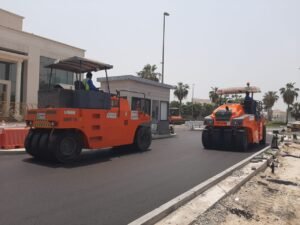
Growing cities require infrastructure that remains reliable despite increasing traffic, changing environmental conditions, and continuous urban development. Roads, public spaces, and supporting utilities represent valuable long-term investments that deserve proper care throughout their lifespan. Rather than waiting for visible deterioration, many municipalities now focus on proactive maintenance strategies that preserve infrastructure before serious damage develops. This shift has increased the importance of Asphalt Maintenance Companies In Dubai, whose work contributes to safer transportation networks and more sustainable city development.
Preventive maintenance is not simply about repairing damaged surfaces. It involves regular inspections, early intervention, and systematic planning that helps infrastructure continue performing efficiently while reducing costly reconstruction projects. When maintenance becomes part of a city’s long-term strategy, both public safety and financial efficiency improve.
Why Preventive Maintenance Matters
Infrastructure naturally experiences wear over time. Heavy vehicles, changing temperatures, sunlight, moisture, and daily traffic gradually affect pavement performance. Even well-constructed roads require attention to maintain their structural integrity.
A preventive approach offers several advantages:
- Extends service life
- Improves road safety
- Reduces emergency repairs
- Minimizes traffic disruptions
- Protects public investment
- Supports sustainable development
Addressing small issues before they expand into major failures allows maintenance budgets to be used more effectively.
Small Problems Grow Quickly
Minor surface cracks may appear harmless at first. However, once water enters these openings, it weakens the layers beneath the pavement. Over time, this can lead to larger cracks, uneven surfaces, potholes, and structural failures.
Routine inspections help identify these early warning signs, allowing repairs to be completed before extensive damage occurs.
Building Roads That Last Longer
Durability begins long before maintenance activities start. Proper design, quality materials, and accurate construction methods create a strong foundation capable of handling years of continuous use.
Several factors influence pavement longevity:
- Soil stability
- Material quality
- Foundation preparation
- Drainage efficiency
- Traffic load capacity
- Climate adaptation
When these elements are carefully considered, infrastructure performs more consistently throughout its intended lifespan.
The Value of Proper Drainage
Water remains one of the greatest threats to pavement durability.
Without effective drainage, moisture can accumulate beneath road surfaces, weakening supporting layers and accelerating deterioration. Proper drainage channels, grading, and collection systems reduce these risks while preserving structural stability.
Maintaining drainage infrastructure is just as important as maintaining the pavement itself.
Inspection Is the First Step Toward Preservation
Effective maintenance begins with understanding current conditions.
Regular inspections allow engineers to identify developing issues before they become major concerns. Visual assessments are often combined with modern technologies that provide detailed information about structural performance.
Inspection programs commonly evaluate:
- Surface condition
- Drainage performance
- Cracking patterns
- Edge stability
- Traffic impact
- Structural movement
Accurate assessments support better planning and more efficient maintenance scheduling.
Data Supports Smarter Decisions
Modern infrastructure management increasingly relies on performance data rather than assumptions.
Information collected during inspections helps prioritize repairs, allocate resources efficiently, and forecast future maintenance requirements. This data-driven approach improves long-term planning while reducing unnecessary expenditure.
Choosing the Right Maintenance Strategy
Not every road requires the same level of maintenance. The most suitable solution depends on the pavement’s condition, traffic volume, and expected future use.
Common maintenance activities include:
- Crack sealing
- Surface patching
- Protective treatments
- Resurfacing
- Drainage improvements
- Edge repairs
Selecting the appropriate treatment at the right time prevents minor issues from developing into large-scale rehabilitation projects.
Timing Makes a Significant Difference
Maintenance completed at the correct stage often costs far less than waiting until deterioration becomes severe.
Delaying repairs usually increases both construction costs and traffic disruptions. Planned maintenance schedules therefore provide better value while keeping transportation networks operating efficiently.
Sustainable Maintenance Benefits Everyone
Infrastructure preservation supports environmental sustainability as well as economic efficiency.
Maintaining existing assets reduces the need for complete reconstruction, lowering material consumption and minimizing waste generation.
Sustainable maintenance practices also help reduce:
- Energy usage
- Construction waste
- Resource consumption
- Traffic congestion during repairs
- Environmental disturbance
Extending infrastructure lifespan is often one of the most environmentally responsible approaches to urban development.
Efficient Resource Management
Cities operate within limited budgets while managing extensive infrastructure networks.
Preventive maintenance allows available resources to be distributed more effectively across multiple projects instead of concentrating large expenditures on emergency reconstruction.
This balanced approach benefits both government agencies and local communities.
Technology Is Improving Maintenance Planning
Digital innovation continues transforming infrastructure management.
Advanced surveying methods, pavement monitoring systems, and predictive analysis tools help engineers understand how roads perform over time.
Modern technologies assist with:
- Asset monitoring
- Condition mapping
- Maintenance forecasting
- Construction documentation
- Project coordination
- Performance evaluation
These tools improve accuracy while supporting more efficient decision-making throughout the maintenance process.
Coordinating Infrastructure Activities
Road maintenance often overlaps with underground utility work, landscaping improvements, drainage upgrades, and traffic management initiatives.
Careful coordination between these activities reduces unnecessary excavation, limits disruptions, and improves overall project efficiency.
Integrated planning also helps preserve recently completed maintenance work from future utility installations.
Public Safety Remains the Primary Goal
Well-maintained infrastructure contributes directly to safer travel.
Smooth road surfaces, effective drainage, visible traffic guidance, and stable pavement conditions help reduce risks for motorists, cyclists, pedestrians, and public transport users.
Safe infrastructure also supports emergency services by ensuring reliable access throughout urban areas.
Communities benefit when transportation systems remain dependable throughout every season.
Preparing Cities for Future Growth
Urban populations continue increasing, placing greater demands on transportation networks.
Maintenance strategies should therefore consider future traffic volumes alongside current conditions. Infrastructure that performs well today must also remain capable of supporting tomorrow’s development.
Forward-thinking maintenance planning helps cities adapt without requiring frequent large-scale reconstruction.
Conclusion
Reliable infrastructure depends not only on quality construction but also on consistent care throughout its operational life. Preventive maintenance protects public investment, improves safety, reduces long-term costs, and supports sustainable urban growth. Through regular inspections, timely repairs, effective drainage management, and strategic planning, cities can significantly extend the lifespan of their transportation networks while minimizing disruptions. As urban development continues to expand, integrating underground utility improvements with projects involving Pipeline Construction In Dubai ensures that both surface infrastructure and essential service networks evolve together to meet future demands.