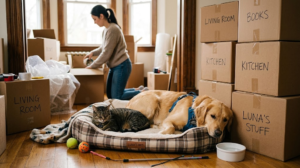
Moving to a new home can be exciting for people, but for pets, it can feel confusing and stressful. Their familiar surroundings suddenly change, strangers may come and go, furniture gets moved, and everyday routines can be disrupted. Dogs and cats, in particular, often rely heavily on familiar smells, sounds, and daily habits, so even a well-organized move can make them anxious.
If you are planning a move and looking for movers in san jose, remember that your pet needs a moving plan too. Taking a little time to prepare your dog, cat, bird, rabbit, or other companion can make moving day much smoother. The goal is not to eliminate every source of stress but to give your pet a safe, familiar routine before, during, and after the move.
Why Moving Can Be Stressful for Pets
Pets do not understand why their environment is suddenly changing. A home that has always felt safe may quickly become filled with boxes, unusual noises, unfamiliar people, and constantly changing furniture.
Common signs of moving-related stress include hiding, excessive barking or meowing, trembling, pacing, refusing food, excessive licking, accidents inside the house, or changes in sleeping habits. Some pets may become unusually clingy, while others may try to escape.
Understanding these reactions can help you respond patiently. Your pet is not being difficult; it may simply be reacting to an unfamiliar situation.
Start Preparing Your Pet Early
One of the best ways to reduce moving-day anxiety is to avoid making every change at once. Begin preparing your pet several weeks before the move whenever possible.
Keep Daily Routines Consistent
Try to maintain regular feeding, walking, play, and sleeping schedules. Even if boxes are gradually taking over the house, familiar routines can provide a sense of security.
For example, if your dog normally goes for a walk every morning, continue that habit. If your cat expects dinner at a particular time, keep feeding times consistent.
These small routines can reassure your pet that some things are still normal.
Introduce Packing Gradually
Rather than packing everything in a single weekend, start gradually. Bring out a few boxes at a time and allow your pet to become familiar with them.
Keep packing materials away from pets that may chew plastic, tape, string, or other potentially dangerous items. Cats may be tempted to climb into boxes, while dogs may investigate packing supplies out of curiosity.
You can also make packing less stressful by giving your pet a comfortable area away from the busiest parts of the home.
Create a Safe Space
A quiet, familiar space can become your pet’s retreat during the moving process. Choose an area that is away from heavy foot traffic and loud activity.
Place familiar items there, such as:
- Their bed or blanket
- Favorite toys
- Food and water bowls
- A familiar-smelling item of clothing
- A crate, if they are already comfortable using one
For cats, a quiet bedroom or bathroom can work well. Dogs may feel comfortable in a familiar room or crate, depending on their temperament.
The important thing is that the space feels familiar rather than becoming another source of stress.
Keep Pets Away From Moving-Day Activity
Moving day is usually the most chaotic part of the entire process. Doors may remain open, furniture is being carried outside, and unfamiliar people may be walking through the home.
This creates two major risks: stress and escape.
Consider a Separate Room
Before movers arrive, place your pet in a secure room with food, water, bedding, and familiar items. Put a sign on the door reminding everyone not to open it.
If possible, ask a trusted friend or family member to look after your pet for the day. A quiet environment away from the moving activity can be much easier for an anxious animal.
Prevent Escape Attempts
An open front door can be extremely tempting—and dangerous—for a nervous pet. Even normally calm animals may bolt when frightened.
Make sure collars and identification tags are secure. If your pet has a microchip, verify that the registration and contact information are current.
Keeping your pet physically separated from the moving process is one of the simplest ways to prevent an accidental escape.
Make Transportation Less Stressful
How you transport your pet depends on the animal, the distance, and what it is accustomed to.
Cats and smaller animals are generally safest in secure carriers. Dogs may travel in a secured crate, carrier, or appropriate restraint depending on the vehicle and circumstances.
If your pet is not used to a carrier, introduce it well before moving day. Leave it open in a familiar room and place treats or toys inside. This allows your pet to explore it without immediately associating it with a stressful trip.
During travel, keep the vehicle at a comfortable temperature and avoid leaving your pet unattended in a parked car.
For longer moves, plan appropriate breaks for dogs and make sure you have enough food, water, medication, waste bags, and other necessities readily accessible.
Bring Familiar Items to the New Home
When you arrive, resist the temptation to immediately give your pet access to the entire house. A completely unfamiliar environment can be overwhelming.
Instead, start with one quiet room.
Place familiar bedding, toys, food bowls, and other belongings in the space. Familiar smells can help make the new surroundings feel less threatening.
For cats especially, starting with a smaller area can make the transition easier. Once the cat appears comfortable, you can gradually introduce additional rooms.
Dogs may adapt more quickly, particularly if you maintain their normal walking and feeding schedule.
Give Your Pet Time to Adjust
Every pet responds differently to a new home. Some animals begin exploring within minutes, while others may need days or even weeks.
Do not force your pet to explore. Let it investigate at its own pace.
Spend time together in the new home without constantly encouraging interaction. Talk calmly, offer treats when appropriate, and maintain familiar routines.
If your pet wants to hide for a while, make sure the hiding area is safe and accessible. As confidence grows, it will likely begin exploring more of the new environment.
Maintain Familiar Routines After the Move
The moving truck may leave, but the adjustment period is not necessarily over.
Continue feeding, walking, playing, and sleeping at familiar times. If your dog normally receives a morning walk, keep that routine going in the new neighborhood. If your cat has a regular evening play session, continue it.
Routine provides structure when everything else feels unfamiliar.
You should also avoid making too many additional changes immediately after the move. If possible, give your pet some time to settle before introducing major changes to food, sleeping arrangements, or daily schedules.
Watch for Signs of Ongoing Stress
Some anxiety immediately after a move is normal. However, pay attention if unusual behavior continues or becomes severe.
Persistent refusal to eat, repeated vomiting or diarrhea, extreme lethargy, aggressive behavior, prolonged hiding, difficulty breathing, or other concerning symptoms may require professional attention.
If you are worried about your pet’s health or behavior, contact a veterinarian. Do not give your pet calming medication or supplements unless your veterinarian recommends them and provides appropriate guidance.
Help Your Pet Explore the New Neighborhood
Once your pet seems comfortable inside the new home, gradually introduce the surrounding area.
For dogs, start with short walks and allow plenty of time for sniffing and exploration. Familiar scents and predictable routes can help them become comfortable.
For cats that live indoors, there may be no need to introduce them to the outdoors at all. If your cat normally goes outside, take extra precautions after a move. A cat that is unfamiliar with the new area may become lost if allowed outside too quickly.
Make sure your pet’s identification information reflects your new contact details before allowing outdoor access.
Avoid Punishing Anxiety-Related Behavior
Moving stress can sometimes cause behaviors that would not normally occur. A house-trained dog might have an accident, or a normally confident cat might hide under furniture.
Punishing these behaviors can increase fear and make adjustment harder.
Instead, clean accidents thoroughly, reinforce positive behavior, and give your pet time to regain confidence. Patience is often more effective than correction during a major transition.
Make the New Home Feel Familiar
Your pet does not necessarily care about the size of the new house, the layout of the kitchen, or how modern the living room looks. What matters most is familiarity and security.
Set up their belongings early, use familiar bedding, keep feeding areas consistent, and spend quality time together.
For dogs, familiar walks and play sessions can help establish the new home as a safe place. For cats, familiar scents and quiet spaces can be especially valuable.
The faster your pet recognizes familiar patterns, the easier the transition may become.
Final Thoughts
Moving with a pet requires a little extra planning, but it does not have to be overwhelming. Start preparing early, maintain familiar routines, create a secure space, keep your pet away from moving-day chaos, and introduce the new home gradually. Most importantly, give your companion patience and time to adjust. A calm approach can make a major difference throughout the transition. Whether you are organizing the move yourself or working with Brother Movers, planning your pet’s comfort alongside your household belongings can help everyone settle into the new home with less stress and greater peace of mind.