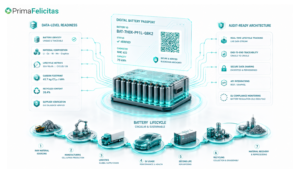
The growing demand for transparency, sustainability, and regulatory compliance is changing how batteries are manufactured, distributed, used, and recycled. Digital battery passport solutions provide a structured way to collect, manage, and share important battery information throughout its lifecycle. A Digital Battery Passport can connect information such as battery identity, material sourcing, manufacturing details, performance, carbon footprint, and recycling data. For companies operating across the European battery ecosystem, Battery Traceability Solutions can help create greater visibility across complex supply chains.
As battery production expands, particularly in electric vehicles and energy storage, organizations need reliable systems that can manage data across multiple stakeholders. PrimaFelicitas helps businesses develop technology solutions for Digital Battery Passport platforms, lifecycle data management, supply-chain traceability, blockchain integration, and enterprise system connectivity.
What Is a Digital Battery Passport?
A Digital Battery Passport is a digital record containing important information about an individual battery and its lifecycle. It can provide authorized stakeholders with access to information related to battery identity, raw materials, manufacturing, performance, sustainability, and end-of-life processes.
The purpose is to improve transparency and traceability across the battery value chain. Instead of keeping important information in disconnected systems, a Digital Battery Passport can provide a structured digital representation of battery information that can be updated throughout its lifecycle.
For example, data can begin with raw material sourcing and continue through manufacturing, distribution, usage, repair, reuse, repurposing, and recycling.
PrimaFelicitas describes its Digital Battery Passport platforms as systems designed to track battery lifecycle information from raw material sourcing through recycling while supporting supply-chain transparency and regulatory readiness.
Why Are Digital Battery Passport Solutions Important?
Battery supply chains involve many participants, including raw material suppliers, battery manufacturers, EV companies, logistics providers, distributors, repair organizations, and recyclers. Each participant may generate or manage different types of information.
Without a connected traceability framework, important data can become fragmented across multiple systems.
Digital battery passport solutions can help organizations establish a more organized approach to collecting and managing this information.
Key benefits include:
- Improved battery lifecycle visibility
- Better supply-chain transparency
- More structured data management
- Improved sustainability reporting
- Greater traceability of materials
- Easier access to relevant battery information
- Better preparation for regulatory requirements
- Improved coordination between supply-chain participants
A well-designed solution can connect data from different sources while controlling access according to stakeholder requirements.
How Does Battery Traceability Work?
Battery traceability involves following relevant information about a battery throughout its lifecycle. This can include the origin of materials, manufacturing information, battery performance, maintenance history, ownership changes, reuse, and recycling.
A typical traceability process can involve several stages:
Raw Material Sourcing → Battery Manufacturing → Distribution → Usage → Repair or Second Life → Recycling
At each stage, relevant information can be collected and associated with the battery’s digital identity.
A Battery Traceability Solution can connect these different data points and make relevant information available to authorized participants. This creates a more complete view of the battery lifecycle instead of relying on isolated records.
PrimaFelicitas offers battery lifecycle data management and supply-chain traceability solutions designed to track information from raw material sourcing through production, distribution, and end-of-life recycling.
What Information Can a Digital Battery Passport Contain?
The exact information requirements can vary according to the applicable regulatory framework and battery category. However, a Digital Battery Passport may contain several important types of information.
Battery Identification
A unique digital identity can help associate information with a particular battery throughout its lifecycle.
Material Information
Information about raw materials and their sourcing can help improve supply-chain transparency.
Manufacturing Data
Manufacturing information can provide visibility into where and how a battery was produced.
Performance Information
Battery capacity, performance, health, and other relevant technical information can help stakeholders understand the condition and lifecycle of a battery.
Sustainability Information
Carbon footprint, recycled content, and other sustainability-related information can contribute to environmental reporting and responsible supply-chain management.
Recycling and End-of-Life Data
Information about repair, reuse, repurposing, and recycling can support circular-economy processes.
PrimaFelicitas’ existing Digital Battery Passport content describes lifecycle information including material sourcing, carbon footprint, performance history, and recycling data.
How Do Battery Traceability Solutions Support Supply Chains?
Modern battery supply chains can involve organizations operating across multiple countries and business systems. This creates challenges around data collection, standardization, access control, and system interoperability.
Battery Traceability Solutions can help connect information from different stakeholders and systems.
For example, a manufacturer may need to obtain information from material suppliers while also providing relevant manufacturing data to downstream partners. Recyclers may later need access to information related to battery composition and history.
A centralized or distributed traceability architecture can help organizations establish appropriate data flows while maintaining security and access controls.
PrimaFelicitas also develops solutions that can integrate with ERP platforms, IoT devices, manufacturing software, and existing enterprise infrastructure.
The Role of Blockchain in Battery Traceability
Blockchain technology can be used as one component of a battery traceability architecture. Its distributed and tamper-resistant characteristics can help create records that are difficult to alter without detection.
For battery ecosystems involving multiple organizations, blockchain can provide a shared mechanism for recording selected lifecycle events and data.
However, blockchain should not automatically be considered the complete solution. A successful Digital Battery Passport platform also requires appropriate data architecture, identity management, access controls, APIs, integration capabilities, governance, and data validation.
PrimaFelicitas combines technologies such as blockchain, AI, and IoT integrations within its battery traceability solutions to support secure and scalable lifecycle data management.
Digital Battery Passport and EU Battery Regulation
Regulatory developments are one of the major reasons battery companies are preparing for digital traceability.
The EU Battery Regulation 2023/1542 introduces requirements intended to improve battery sustainability, transparency, and lifecycle information. PrimaFelicitas’ service page focuses on helping organizations prepare technology infrastructure for Digital Battery Passport requirements associated with the European battery ecosystem.
Businesses should evaluate their own regulatory obligations and applicable battery categories with qualified legal or compliance professionals. Technology implementation should then be designed around the relevant requirements.
This makes early data-readiness planning important for companies that expect to participate in the European battery market.
What Should Businesses Consider When Developing a Battery Passport?
Organizations planning a Digital Battery Passport platform should consider more than simply creating a digital record.
Important considerations include:
- Data collection and validation
- Unique battery identification
- Supply-chain data integration
- Data access permissions
- System interoperability
- API integration
- Lifecycle data management
- Security and privacy
- Audit trails
- Scalability
- Regulatory requirements
A well-designed platform should be able to accommodate data from multiple stakeholders while remaining flexible enough to support future requirements.
PrimaFelicitas provides Battery Passport Platform Development and integration services intended to help businesses build scalable battery traceability infrastructure.
Benefits for Different Battery Industry Participants
Digital traceability can provide value to different organizations across the battery ecosystem.
Battery Manufacturers
Manufacturers can improve visibility into production, materials, performance, and lifecycle information.
EV Manufacturers
EV companies can use structured battery information to support lifecycle management, sustainability initiatives, and supply-chain transparency.
Raw Material Suppliers
Suppliers can provide relevant sourcing and material information to downstream participants.
Recycling Companies
Recyclers can access useful battery information to support end-of-life processing and circular-economy activities.
Energy Storage Companies
Energy storage providers can maintain better lifecycle information for batteries used in storage applications.
PrimaFelicitas specifically identifies EV manufacturers, battery manufacturers, energy storage companies, battery recyclers, raw material suppliers, and supply-chain platforms among the industries supported by its Digital Battery Passport solutions.
Frequently Asked Questions
What is a Digital Battery Passport?
A Digital Battery Passport is a digital record containing relevant information about a battery and its lifecycle, including areas such as materials, manufacturing, performance, sustainability, and recycling.
Why are Digital Battery Passport solutions important?
They can improve battery lifecycle visibility, supply-chain transparency, data management, and preparation for applicable regulatory requirements.
What are Battery Traceability Solutions?
Battery Traceability Solutions are technology systems designed to collect, connect, manage, and track relevant battery information across different stages of the supply chain and lifecycle.
Can blockchain be used for battery traceability?
Yes. Blockchain can be incorporated into a battery traceability architecture to create tamper-resistant records and improve trust between participating organizations.
Who can benefit from a Digital Battery Passport?
Battery manufacturers, EV manufacturers, raw material suppliers, energy storage companies, recyclers, distributors, and other participants in the battery ecosystem can benefit from structured lifecycle traceability.
What technologies can support a Digital Battery Passport?
Depending on the project, a platform can incorporate technologies such as blockchain, IoT, APIs, cloud infrastructure, enterprise integrations, and data management systems.
Final Thoughts
The battery industry is becoming increasingly data-driven, and lifecycle transparency is becoming an important part of responsible battery management. Digital battery passport solutions provide a framework for organizing information across manufacturing, supply chains, usage, and recycling.
A well-designed Digital Battery Passport can help organizations improve visibility into battery lifecycle information, while Battery Traceability Solutions can connect stakeholders and data across complex supply chains.
For companies preparing to develop or modernize their battery traceability infrastructure, PrimaFelicitas offers Digital Battery Passport platform development, lifecycle data management, blockchain-powered traceability, supply-chain integration, and compliance-ready infrastructure.
Businesses can evaluate their current data infrastructure, identify traceability gaps, and develop a technology roadmap that supports their operational and regulatory objectives.