If you have walked down the flour aisle recently or scrolled through a health page online, chances are you have come across the term “multigrain atta.” It has quickly become one of the most searched and most recommended flour options for Indian households, and for good reason. As more people move away from refined, single-grain flours and look for options that support better digestion, steady energy, and long-term wellness, multigrain atta has emerged as the practical, everyday answer.
This guide breaks down everything you need to know about multigrain atta: what it actually is, why it is nutritionally superior to plain wheat flour, how it is made, and how to bring it into your kitchen without any guesswork.
For decades, Indian kitchens have relied almost entirely on wheat flour for rotis, parathas, and puris. That habit made sense when the priority was simply filling stomachs affordably. But nutrition science, and everyday experience, has shown that a diet built around a single grain rarely delivers everything the body needs. Multigrain atta was created to close that gap without asking families to change their cooking habits or give up the foods they already love. It simply upgrades the flour itself, so every roti, paratha, or paratha wrap made at home quietly becomes more nutritious.
What Is Multigrain Atta?
Multigrain atta is a flour blend made by combining wheat with several other grains, legumes, and seeds instead of relying on wheat alone. A typical multigrain atta may include a mix of wheat, soya, chana (Bengal gram), barley, oats, maize, rice flour, and psyllium husk. Each of these ingredients contributes something different: protein, fibre, minerals, or texture, so the final flour is far more balanced than a single-grain flour could ever be.
The idea behind multigrain atta is simple. Wheat alone is a good source of carbohydrates, but it does not offer the full spectrum of nutrients the body needs on a daily basis. By blending in grains like oats and barley, along with protein-dense legumes like soya and chana, multigrain atta becomes a more complete food, one that supports muscle health, digestion, and sustained energy through the day.
Not every product labelled “multigrain” is created with the same intention. Some brands add a token amount of an extra grain to an otherwise wheat-dominant flour purely for marketing purposes, while genuine multigrain atta is formulated so each grain contributes a meaningful percentage of the final blend.
Why Multigrain Atta Is Better Than Regular Wheat Flour
Higher Protein Content
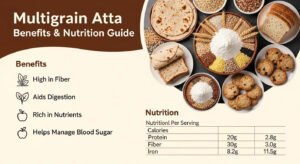
One of the biggest advantages of multigrain atta is its protein content. Ingredients like soya and chana significantly boost the protein value of the flour compared to regular wheat atta. This makes it a smart choice for vegetarian households looking to increase protein intake through everyday staples like rotis and parathas, rather than relying only on separate protein sources.
This matters more than it might initially seem. Most vegetarian diets in India lean heavily on carbohydrates, with protein often arriving only through dal, paneer, or the occasional protein supplement. Since roti or paratha is eaten multiple times a day, upgrading the flour itself is one of the most effortless ways to raise the overall protein intake of a household without adding a single extra step to the cooking process or the grocery list.
Rich in Dietary Fibre
Multigrain atta typically contains a noticeably higher amount of dietary fibre than plain wheat flour, largely thanks to ingredients like oats, barley, and psyllium husk. Fibre plays a key role in digestion, helps regulate blood sugar spikes, and keeps you feeling fuller for longer, which can be especially useful for anyone managing weight or blood sugar levels.
Most Indian diets fall short of the recommended daily fibre intake, largely because refined flours and polished grains have become the norm. Multigrain atta helps reverse this trend simply by being part of a meal that is already eaten daily. Over weeks and months, this consistent fibre intake can noticeably improve gut regularity and reduce the bloating or sluggish digestion that often comes with a low-fibre diet.
A Better Mix of Complex Carbohydrates
Rather than depending on a single carbohydrate source, multigrain atta draws from several grains at once. This blend of complex carbohydrates is digested more gradually than simple carbs, which means more stable energy levels and fewer mid-day energy crashes.
More Minerals in Every Bite
Grains like barley and maize, along with legumes such as chana, naturally carry minerals like iron, zinc, and manganese. When combined into one flour, multigrain atta becomes a more mineral-rich option than a flour made from wheat alone, supporting everyday functions like immunity and metabolism.
How Multigrain Atta Is Made
Traditionally, good multigrain atta is stone ground rather than processed through high-speed steel mills. Stone grinding keeps the milling temperature low, which helps preserve the natural nutrients, fibre, and aroma of the grains. High-speed processing, on the other hand, tends to generate heat that can strip away some of these benefits over time.
The best multigrain atta brands also mill in small batches, often only after an order is placed. This “fresh milled” approach ensures the flour reaches your kitchen without sitting on a warehouse shelf for weeks, so you get maximum freshness, better flavour, and no need for chemical preservatives or additives.
Does Multigrain Atta Taste Different?
One of the most common hesitations people have before switching is around taste and texture. Regular wheat atta produces soft, familiar rotis, and many households worry that adding other grains will make the flour heavier or harder to work with. In reality, a well-balanced multigrain atta is designed to retain that same soft, pliable dough while adding a subtly nuttier flavour and a slightly heartier texture. The presence of ingredients like psyllium husk actually helps improve the elasticity of the dough, which can make rolling easier rather than harder.
The key is proportion. A multigrain atta where wheat still forms the base, complemented by smaller, well-measured portions of other grains, tends to feel almost identical to regular atta in daily use, while quietly delivering far more nutritional value with every meal.
Common Myths About Multigrain Atta
Myth 1: Multigrain atta is only for people with health conditions. While multigrain atta is genuinely helpful for managing diabetes, weight, or heart health, it is equally suitable for healthy individuals and growing children who simply want a more nutritionally complete diet.
Myth 2: More grains always means healthier flour. The nutritional value of multigrain atta depends on the specific grains used and their proportions, not just the total number of grains. A thoughtfully formulated eight-grain blend can be far more balanced than a flour that lists twelve grains in negligible quantities.
Myth 3: Multigrain atta takes much longer to cook. In most cases, multigrain atta cooks in a similar time frame to regular wheat flour, especially when it is finely ground. Slight adjustments in water quantity while kneading are usually all that is needed.
Myth 4: Multigrain atta is significantly more expensive. While multigrain atta can cost somewhat more than basic wheat flour due to the variety of ingredients involved, the price difference is often minor when compared to the added nutritional value, especially when it replaces the need for separate protein or fibre supplements.
Multigrain Atta and Everyday Health Concerns
Weight Management
Because of its higher fibre and protein content, multigrain atta tends to keep you satiated for longer than regular wheat flour. This can naturally reduce unnecessary snacking between meals, making it a useful addition for anyone working on weight management.
Blood Sugar Support
The fibre-rich, complex-carbohydrate profile of multigrain atta means it is digested more slowly than refined flour. This gradual digestion helps prevent sharp spikes in blood sugar, which is a meaningful benefit for households paying attention to glycemic response.
Digestive Health
Ingredients like psyllium husk and oats are well known for supporting gut health. Including multigrain atta in your regular diet can contribute to smoother digestion and more regular bowel movements over time.
Heart Health
Whole grains like oats and barley are associated with supporting healthy cholesterol levels. As part of a balanced diet, multigrain atta can be a small but meaningful contributor to long-term heart health.
How to Use Multigrain Atta in Your Kitchen
One of the best things about multigrain atta is how easily it fits into recipes you already make. It works well for:
- Everyday chapatis and rotis
- Parathas, plain or stuffed
- Puris for special occasions
- Homemade breads and flatbreads
Multigrain atta is typically available in fine or coarse grinds. A finer grind is ideal for soft rotis and parathas, while a coarser grind can add a rustic texture to certain breads and traditional preparations. If you are new to multigrain atta, it helps to start by mixing it with your regular wheat flour in a small ratio, then gradually increasing the proportion of multigrain atta as your family gets used to the taste and texture.
When kneading dough with multigrain atta, it often helps to let the dough rest for ten to fifteen minutes before rolling it out. This resting period allows the additional grains and fibre to absorb moisture evenly, which results in a softer, more pliable dough. A small amount of oil or ghee worked into the dough can also help maintain softness, especially with coarser grinds.
Storing Multigrain Atta the Right Way
Because multigrain atta contains a wider variety of natural grains, proper storage matters even more than it does for regular wheat flour. Keep it in an airtight container, away from direct sunlight and moisture, ideally in a cool, dry part of the kitchen. If you live in a humid climate, refrigeration can help extend shelf life and prevent the flour from developing off-flavours. Buying smaller quantities more frequently, rather than stocking up in bulk, is another simple way to make sure you are always cooking with fresh, freshly milled multigrain atta.
Tips for Choosing a Good Multigrain Atta
Not all multigrain atta on the market is created equal. Here are a few things worth checking before you buy:
- Ingredient list – Look for a genuine blend of multiple grains and legumes, not just wheat with a small percentage of other ingredients added for marketing purposes.
- No chemicals or additives – Good multigrain atta should be free from artificial preservatives, bleaching agents, or fillers.
- Stone ground processing – Stone milling helps retain more nutrients compared to conventional high-speed grinding.
- Freshness – Freshly milled flour has a noticeably better aroma and taste than flour that has been sitting in storage for months.
- Transparent sourcing – Brands that are open about where their grains come from and how the flour is processed tend to be more trustworthy long-term choices.
Final Thoughts
Multigrain atta is more than just a health trend, it is a practical upgrade to one of the most commonly used ingredients in Indian kitchens. By combining wheat with grains like soya, chana, barley, oats, and maize, multigrain atta delivers more protein, more fibre, and more minerals than regular wheat flour, all without requiring any change in your daily cooking routine.
Whether your goal is better digestion, more stable energy, weight management, or simply feeding your family a more balanced diet, switching to a good quality, stone ground multigrain atta is a simple change that can make a real difference over time.