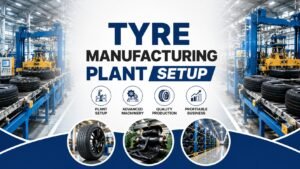
IMARC Group’s “Tyre Manufacturing Plant Project Report 2026: Industry Trends, Plant Setup, Machinery, Raw Materials, Investment Opportunities, Cost and Revenue” provides a comprehensive guide for entrepreneurs and investors looking to understand how to set up a tyre manufacturing plant. The report offers detailed insights into various aspects, including unit operations, raw material requirements, utility requirements, infrastructure requirements, machinery and technology requirements, manpower requirements, packaging requirements, transportation requirements, and other essential project requirements.
In addition to operational guidance, the report provides an in-depth analysis of project economics, covering capital investment, project funding, operating expenses, income and expenditure projections, fixed and variable costs, direct and indirect costs, expected return on investment (ROI), net present value (NPV), profit and loss analysis, and overall financial feasibility.
What is a Tyre?
A tyre is a circular, flexible component fitted around the wheel of a vehicle to provide traction, stability, cushioning, and efficient movement. It is manufactured using a combination of natural and synthetic rubber, reinforcing materials, steel, textile cords, carbon black, and other specialized compounds. Tyres are designed to withstand varying road conditions, vehicle loads, temperatures, and operating speeds.
Tyres are used across passenger cars, commercial vehicles, two-wheelers, agricultural machinery, construction equipment, and other industrial applications. The increasing demand for mobility and transportation continues to support the growth of the global tyre industry.
Market Overview and Business Potential:
The tyre manufacturing industry is supported by the continued expansion of the automotive sector, increasing vehicle ownership, growing replacement demand, and the development of transportation and logistics infrastructure. The transition toward electric mobility and the increasing focus on fuel efficiency and sustainability are also influencing product development and manufacturing technologies. According to IMARC Group, the global tyre market reached USD 181.11 Billion in 2025 and is projected to grow to USD 273.82 Billion by 2034, exhibiting a CAGR of 4.7% during 2026-2034.
Manufacturers are increasingly focusing on advanced materials, improved tread designs, enhanced durability, lower rolling resistance, and sustainable manufacturing practices. The growing use of automation and digital technologies is also contributing to improvements in production efficiency and product quality.
Key Investment Highlights:
- Process Used: Raw material preparation, rubber compounding, component manufacturing, tyre building, curing, inspection, testing, and packaging.
- End-Use Industries: Automotive, transportation, logistics, agriculture, construction, mining, and industrial equipment.
- Applications: Passenger vehicles, commercial vehicles, motorcycles, bicycles, agricultural machinery, construction equipment, and industrial vehicles.
Download a Free Sample Report: https://www.imarcgroup.com/tyre-manufacturing-plant-project-report/requestsample
Tyre Manufacturing Plant Capacity:
The production capacity of a tyre manufacturing plant depends on factors such as the type of tyre manufactured, plant configuration, automation level, machinery, and target market. The proposed facility can be designed according to specific production requirements and business objectives.
Tyre Manufacturing Plant Cost Analysis:
The operating cost structure of a tyre manufacturing plant is influenced by raw material procurement, including natural and synthetic rubber, reinforcing materials, chemicals, and other production inputs. Other important expenses include utilities, labor, maintenance, transportation, packaging, quality control, and administrative costs.
Major Applications:
- Passenger Vehicles: Tyres are essential components for cars and other passenger vehicles, providing traction, handling, stability, and ride comfort.
- Commercial Vehicles: Heavy-duty tyres are used in trucks, buses, and logistics vehicles to support high loads and long-distance transportation.
- Two-Wheelers: Specialized tyres are manufactured for motorcycles, scooters, and bicycles to provide safety and performance.
- Agricultural Machinery: Tyres are used in tractors and other agricultural equipment designed to operate under demanding field conditions.
- Construction and Mining Equipment: Heavy-duty tyres support construction, earthmoving, and mining machinery.
- Industrial Vehicles: Tyres are used in forklifts, material-handling equipment, and other industrial vehicles.
Why Tyre Manufacturing?
Growing Automotive Production: The expansion of the global automotive industry and increasing vehicle ownership are creating sustained demand for tyres across passenger and commercial vehicle segments.
Rising Replacement Demand: Tyres require periodic replacement due to regular wear and usage. This creates a recurring aftermarket demand that supports long-term growth opportunities for tyre manufacturers.
Expansion of Transportation and Logistics: The growth of e-commerce, logistics, and freight transportation is increasing the utilization of commercial vehicles, thereby supporting demand for commercial and heavy-duty tyres.
Increasing Demand for Electric Vehicles: The growing adoption of electric vehicles is creating demand for specialized tyres designed to accommodate higher vehicle weight, instant torque, and specific performance requirements.
Growth in Construction and Infrastructure: Increasing investments in infrastructure, construction, and mining activities are supporting demand for off-the-road and heavy-duty tyres.
How to Setup a Tyre Manufacturing Plant?
Setting up a tyre manufacturing plant requires careful evaluation of market demand, location, infrastructure, technology, raw material availability, machinery requirements, workforce planning, and quality assurance systems.
Detailed Process Flow:
The tyre manufacturing process involves several stages, including:
- Unit Operations Involved
- Quality Assurance Criteria
- Technical Tests
- Mass Balance
- Raw Material Requirements
Site Selection: The location should provide convenient access to raw material suppliers, transportation networks, utilities, skilled labor, and target markets. The selected site should also comply with industrial zoning, environmental regulations, and other applicable requirements.
Plant Layout Optimization: The plant layout should be designed to ensure an efficient flow of raw materials and finished products. Separate areas should be allocated for raw material storage, production operations, quality control, finished goods, warehousing, and supporting infrastructure.
Equipment Selection: The selection of machinery depends on the product category, production capacity, level of automation, and technology requirements. Appropriate machinery and supporting equipment are essential for maintaining production efficiency, product consistency, and quality standards.
Raw Material Sourcing: A reliable supply chain is essential for maintaining uninterrupted production. Raw material procurement should focus on product quality, supply reliability, cost efficiency, and long-term availability.
Safety and Environmental Compliance: The manufacturing facility should implement appropriate occupational safety measures, environmental management systems, emission-control practices, and waste-management procedures in accordance with applicable regulations.
Quality Assurance Systems: A comprehensive quality management system should be established to monitor raw materials, production processes, and finished products. Regular inspections, testing, documentation, and traceability systems can help maintain product consistency and compliance with industry standards.
Project Economics:
Establishing and operating a tyre manufacturing plant involves several financial components, including land acquisition, site development, civil construction, machinery procurement, raw materials, utilities, workforce expenses, transportation, maintenance, and other operational costs.
Capital Investment:
The total capital investment depends on the plant’s production capacity, product range, location, technology, automation level, and infrastructure requirements. Major capital investments are generally associated with land and site development, civil works, machinery, and supporting infrastructure.
Equipment Costs:
Machinery represents a significant component of the total project investment. Equipment requirements depend on the type of tyres produced, planned production capacity, level of automation, and manufacturing technology.
Raw Material Expenses:
Raw material costs represent an important component of operating expenditure. The financial assessment should consider procurement costs, supply-chain stability, material quality, and price fluctuations.
Infrastructure and Utilities:
The project cost should account for infrastructure development, electricity, water, transportation facilities, storage, and other utilities necessary for smooth plant operations.
Operational Costs:
Ongoing expenditure includes raw materials, utilities, labor, maintenance, quality control, packaging, transportation, administrative expenses, and other recurring operational requirements.
Financial Planning:
Detailed income projections, expenditure analysis, break-even assessment, profitability analysis, ROI, NPV, and other financial indicators are required to evaluate the overall financial viability of the project.
Capital Expenditure (CapEx) and Operational Expenditure (OpEx) Analysis:
Capital Expenditure Breakdown:
- Land and Site Development Costs: This includes expenses associated with land acquisition, site preparation, development, and other infrastructure requirements necessary for establishing the manufacturing facility.
- Civil Works Costs: This covers the construction and development of plant buildings, production areas, warehouses, foundations, storage facilities, and other essential civil infrastructure.
- Machinery and Other Capital Costs: This includes investments in manufacturing machinery, equipment, installation, automation systems, supporting infrastructure, and other capital assets required for plant operations.
Operational Expenditure Breakdown:
- Raw Material and Utility Costs: The operational expenditure primarily covers the costs associated with raw materials, electricity, water, fuel, and other utility requirements necessary for manufacturing operations.
- Transportation, Packaging and Workforce Costs: This includes expenses related to transportation, packaging materials, salaries, wages, manpower, and other day-to-day operational requirements.
- Depreciation, Taxes and Other Expenses: These include depreciation, taxation, repairs, maintenance, administrative expenses, and other recurring costs associated with operating the plant.
Profitability Analysis:
- Income and Revenue: The project’s income is generated through the sale of tyres across different automotive, commercial, industrial, and specialty application segments, depending on production capacity, market demand, and pricing.
- Expenditure and Gross Profit: The analysis evaluates total operating expenditure against projected revenue to determine gross profit and assess the overall operating performance of the manufacturing facility.
- Net Profit and Financial Performance: This covers net profitability after considering operating expenses, depreciation, taxation, financing, and other costs, helping evaluate the overall financial viability and long-term profitability of the project.
Ask Analyst for Customized Report: https://www.imarcgroup.com/request?type=report&id=7863&flag=C
Report Coverage:
- Detailed Process Flow: Unit Operations Involved, Quality Assurance Criteria, Technical Tests, Mass Balance, and Raw Material Requirements.
- Land, Location and Site Development: Selection Criteria and Significance, Location Analysis, Project Planning and Phasing of Development, Environmental Impact, Land Requirement, and Costs.
- Plant Layout: Importance and Essentials, Plant Layout, and Factors Influencing Layout.
- Plant Machinery: Machinery Requirements, Machinery Costs, and Machinery Suppliers.
- Raw Materials: Raw Material Requirements, Procurement, Raw Material Costs, and Supplier Analysis.
- Packaging: Packaging Requirements, Packaging Material Details, Procurement, and Associated Costs.
- Other Requirements and Costs: Transportation, Utilities, Energy, Water, and Human Resource Requirements.
- Project Economics: Capital Costs, Techno-Economic Parameters, Income Projections, Expenditure Projections, Product Pricing and Margins, Taxation, and Depreciation.
- Financial Analysis: Liquidity Analysis, Profitability Analysis, Payback Period, Net Present Value, Internal Rate of Return, Profit and Loss Account, Uncertainty Analysis, Sensitivity Analysis, and Economic Analysis.
- Other Analysis: Market Trends, Market Segmentation, Regional Analysis, Price Trends, Competitive Landscape, Regulatory Landscape, Strategic Recommendations, and Case Studies.
Key Questions Answered in the Report:
- How has the tyre market performed so far and how will it perform in the coming years?
- What is the market segmentation of the global tyre market?
- What is the regional breakup of the global tyre market?
- What are the price trends of various raw materials in the tyre industry?
- What is the structure of the tyre manufacturing industry and who are the key players?
- What are the various unit operations involved in a tyre manufacturing plant?
- What is the total size of land required for setting up a tyre manufacturing plant?
- What is the layout of a tyre manufacturing plant?
- What are the machinery requirements for setting up a tyre manufacturing plant?
- What are the raw material requirements for setting up a tyre manufacturing plant?
- What are the packaging requirements for setting up a tyre manufacturing plant?
- What are the transportation requirements for setting up a tyre manufacturing plant?
- What are the utility requirements for setting up a tyre manufacturing plant?
- What are the human resource requirements for setting up a tyre manufacturing plant?
- What are the infrastructure costs for setting up a tyre manufacturing plant?
- What are the capital costs for setting up a tyre manufacturing plant?
- What are the operating costs for setting up a tyre manufacturing plant?
- What will be the income and expenditures for a tyre manufacturing plant?
- What is the time required to break even?
- What are the profit projections for setting up a tyre manufacturing plant?
- What are the key certifications required for setting up a tyre manufacturing plant?
Report Customization:
The report can be customized according to individual project requirements, including:
- Location or country/region of the proposed plant.
- Plant capacity and production requirements.
- Plant machinery and associated cost requirements.
- Additional segments and project-specific scope requirements.
How IMARC Can Help?
IMARC Group provides comprehensive market research, feasibility studies, site selection analysis, plant setup support, regulatory approvals and licensing, equipment and technology recommendations, procurement research, competitive benchmarking, pricing analysis, and project consulting services. These services help businesses and investors evaluate market opportunities, plant location, machinery, raw materials, utilities, manpower, project economics, and financial feasibility.
Services:
- Plant Setup
- Factory Auditing
- Regulatory Approvals and Licensing
- Company Incorporation
- Incubation Services
- Recruitment Services
- Marketing and Sales
Contact Us:
IMARC Group
134 N 4th St. Brooklyn, NY 11249, USA
Email: sales@imarcgroup.com
Tel No:(D) +91 120 433 0800
United States: (+1-201971-6302)