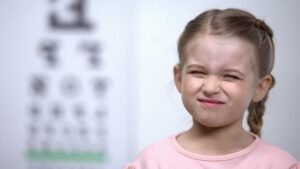
A child does not always know their vision is blurry. To them, the world may simply look normal. That is why signs like squinting, sitting close to the TV, or struggling to see the board can matter.
For parents in Tustin and nearby Orange County communities, an eye test for children can help reveal vision changes that may otherwise go unnoticed. Myopia is linked to how the eyes grow, along with genetic and environmental factors. Let’s break down what that means for your child.
What Is Myopia?
Myopia is a common refractive error. It happens when the eye grows too long from front to back. It can also happen when the cornea or lens has a shape that causes light to focus in front of the retina instead of directly on it.
The result is simple: your child may see a book clearly but struggle to see a classroom board, road sign, or face across a room. Squinting, sitting close to a screen, or complaining about blurry distance vision can be signs.
Family History Can Play a Role
Genes matter. A child is more likely to develop myopia if one or both parents are nearsighted. But family history is not the whole story. A child can develop myopia even when neither parent wears glasses. Researchers believe that both genetic and environmental factors affect how the eye grows.
So, if you had glasses as a child, it does not mean your child will definitely become nearsighted. It does mean regular vision checks are worth taking seriously.
Less Outdoor Time May Matter
Here is one factor parents may be able to change: outdoor time. Research has found that children who spend more time outdoors are less likely to develop myopia. Scientists are still studying exactly why. One theory is that exposure to brighter outdoor light may affect signals involved in eye growth.
This does not mean your child needs to avoid books or homework. It means outdoor play should have a place in the daily routine. For families in Tustin, that can be as simple as playing outside after school, walking around the neighborhood, riding a bike, or spending time at a local park.
What About Reading and Screens?
This is where things can get confusing. Near work, such as reading, studying, and using digital devices, has been linked with myopia in some research. However, experts do not consider screen use alone to be a proven single cause of childhood myopia. Myopia is more complex and likely involves several factors.
Instead of blaming screens, focus on healthy habits. Encourage regular breaks during close-up tasks. Make sure your child has good lighting. Keep screens at a comfortable distance. Most importantly, make time for outdoor activities.
How Can Parents Spot Myopia Early?
Children do not always know that their vision is blurry. They may think everyone sees the same way.
Watch for signs such as:
- Squinting to see distant objects
- Sitting very close to the television or screen
- Moving closer to the classroom board
- Frequent headaches
- Trouble seeing things across a room
- Difficulty reading signs or seeing faces from far away
- Complaints that the board looks blurry
A pediatric eye exam can check vision, eye alignment, focusing ability, and overall eye health. Local pediatric eye care services in Tustin recommend regular exams because children may have vision problems without reporting symptoms.
Why Regular Eye Exams Matter
Myopia often begins between ages 6 and 14 and may change as children grow. An eye exam can check for refractive errors and show how clearly your child sees at different distances. If glasses are prescribed, understanding the reading eyeglass prescription can help you know what the numbers mean, including the sphere value for nearsightedness.
Do not wait for your child to complain. Squinting, blurry distance vision, or trouble seeing the board are good reasons to schedule a vision check. Regular exams can track vision changes during school years. Clear vision helps with learning, sports, social activities, and everyday tasks.