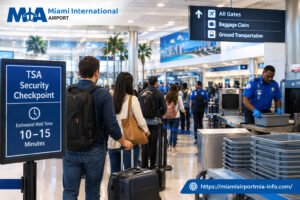
Air travel often feels easy until you arrive at the airport and discover a longer-than-expected security line. For passengers departing from Miami International Airport, checking Miami Airport TSA wait times can be an important part of planning the journey. Security conditions can change throughout the day, so having a realistic airport schedule is often more useful than simply arriving at the last possible moment.
Whether you are traveling for a vacation, business trip, or connecting flight, understanding the factors behind airport security delays can help you organize your time more effectively.
Why Airport Security Timing Matters
Getting to the airport on time is only one part of a successful departure. After arriving at MIA, passengers may need to park or be dropped off, check in with their airline, drop luggage, pass through security, find their gate, and board before departure.
If security takes longer than expected, the time available for everything else becomes smaller.
This is why travelers should avoid treating TSA wait time as a fixed number. Conditions may change depending on passenger volume, checkpoint activity, flight schedules, and seasonal demand.
A better approach is to build flexibility into your travel schedule.
What Can Cause Longer TSA Lines?
Security traffic can increase when many passengers arrive around the same time. Busy travel periods can therefore produce noticeably different conditions from quieter parts of the day.
Several factors may affect the screening experience:
- Morning or evening departure patterns
- Weekend travel
- Holidays and peak vacation periods
- Passenger volume
- Number of active screening lanes
- Additional screening requirements
- Changes in airport operations
Even if you have traveled through MIA before, conditions on your next visit may not be identical.
That is why current airport information can be more useful than relying entirely on your previous experience.
How Early Should You Plan to Arrive?
There is no universal arrival time that works perfectly for every traveler. Your ideal schedule depends on whether you are flying domestically or internationally, whether you are checking luggage, your transportation method, and how familiar you are with the airport.
Instead of focusing only on the flight departure time, consider the complete journey from your front door to the gate.
Ask yourself:
How long will transportation take?
Traffic around a major airport can change your travel time.
Do I need to check luggage?
Baggage drop-off adds another step before security.
Do I know my terminal and airline location?
Knowing where to go can prevent unnecessary walking and confusion.
Have I allowed extra time?
A flexible schedule gives you more room when airport conditions change.
Check Security Information Before Leaving
One of the simplest ways to prepare is to check available airport security information before starting your journey.
Current information can help you understand whether conditions appear normal or busier than expected. If you notice heavier activity, you can factor that into your schedule instead of discovering the situation after reaching the terminal.
Travelers should also check their flight status and airline information before leaving home. Flight schedules, gates, and other details can change, so combining security information with current flight information creates a more complete picture of the journey.
Prepare Your Carry-On in Advance
Security preparation does not begin when you reach the checkpoint. It begins while packing.
Organize your carry-on before leaving home and review the current TSA rules for the items you are carrying. Pay particular attention to liquids, electronics, food, medications, and other items that may have specific screening requirements.
Keeping important travel documents accessible can also make the airport process more organized.
The purpose is simple: eliminate avoidable problems before they reach the checkpoint.
Don’t Forget About Your Gate
Passing through security does not mean your airport journey is finished.
Miami International Airport is large, and walking from a security checkpoint to your departure gate can take additional time. Once through security, check the latest gate information and allow enough time to reach the correct area.
If you are unfamiliar with MIA, reviewing the airport layout before your trip can make navigation easier.
A few minutes spent understanding the airport layout can be particularly valuable when traveling with children, older passengers, or heavy luggage.
Planning for Miami Airport Arrivals
Security planning is important for departing passengers, but travelers picking up family or friends may also need to monitor Miami Airport arrivals.
Flight schedules can change because of weather, air traffic, operational issues, or delays. Checking updated arrival information before heading to the airport can help you avoid unnecessary waiting.
Instead of depending only on the original scheduled arrival time, keep track of the latest flight status and plan your pickup accordingly.
Build a More Flexible Airport Schedule
The smartest airport schedule is not necessarily the one with the fewest spare minutes. It is the one that gives you enough flexibility to handle unexpected changes.
Before traveling through MIA, consider this simple routine:
- Confirm your flight details.
- Check your airline and terminal information.
- Review current security information.
- Prepare your carry-on before leaving.
- Allow additional time for transportation and screening.
- Check your gate information after security.
- Keep monitoring your flight for updates.
These steps can make airport planning more predictable without requiring complicated preparation.
Final Thoughts
Checking Miami Airport TSA wait times is a useful part of preparing for a flight, but it should not be the only factor in your schedule. Passenger volume, checkpoint activity, airline requirements, transportation, and terminal navigation can all affect how much time you need.
Travelers can make the experience easier by checking current information, preparing their luggage, confirming their terminal, and allowing a reasonable buffer before boarding.
For additional airport guides, travel information, and practical resources for passengers, visit miamiairportmia-info before your next journey through Miami International Airport.