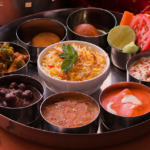
I had a theory I wanted to test. The expensive dishes on an Indian menu get all the attention, but I suspected the cheap ones told you more about a kitchen. So one evening I ordered both ends on the same table and paid proper attention.
It started as idle curiosity and turned into the way I judge every place now. If you have ever stared at an indian food near me result wondering whether to spend up or save, this is what I found.
The two plates
At the top end I ordered the Lucknowi Mughlai Murg at 25,00, a chicken breast stuffed with minced chicken and nuts in a Mughal-style gravy. It is a chef’s signature and about as involved as the menu gets.
At the bottom I ordered the Dal Makhni at 15,50, black lentils and kidney beans slow-cooked with butter and cream. The cheapest main on the menu, give or take, and a dish I would normally never bother ordering in a restaurant because I can make a version at home.
Ten euros apart. I wanted to know what that ten euros actually bought.
What the expensive dish gave me
The Mughlai chicken was excellent, and it was obvious why it costs what it costs. There is real labour in it. The breast is stuffed by hand, the gravy is built on cashews rather than a quick tomato base, and it arrives looking like something a kitchen is proud of.
But here is the thing I noticed. A dish like that is designed to impress, so of course it impresses. It gets the most attention on any given night because it is the showpiece. Judging a kitchen by its showpiece is like judging a band by its one famous song. It tells you they can do the obvious thing well.
It did not tell me whether the kitchen was good when nobody was watching.
What the cheap dish gave me
The dal told me that.
A good Dal Makhni is almost entirely about time. The lentils have to cook slowly for hours until they break down into something creamy on their own, before any butter or cream goes near them. Rush it and you get a thin, grainy bowl that tastes of spices sitting on top rather than cooked in. There is nowhere to hide, because the dish has maybe five ingredients.
This one was not rushed. It had body without being heavy, the spices were inside the lentils rather than floating above them, and it had clearly been given the hours it needs. And that is the information I actually wanted, because a kitchen only cooks its cheapest dal that carefully if it cooks everything carefully. There is no commercial reason to fuss over a 15,50 bowl. They did it anyway.
The ten euros, explained
So what did the extra money buy? Ingredients and labour, mostly. Nuts, a stuffed breast, more hands-on preparation. The expensive dish is more expensive because it genuinely costs more to make. That is fair.
What the ten euros did not buy was a better indication of the kitchen’s standards. Both dishes were cooked with the same care. The price gap was about complexity, not quality. And quality is the thing I was actually trying to measure.
That reframed how I order. On a first visit now, I deliberately order one cheap dish alongside whatever else I want, because the cheap dish is the honest test. If the dal is right, the twenty-five euro main is almost certainly right too.
How to use this yourself
The method is simple and it works at any Indian restaurant, not just this one.
On a first visit, order the cheapest dal or vegetable main on the menu alongside your usual choice. Then pay attention to it. Does it have body, or is it thin? Are the spices cooked in, or sitting on top? Does it taste like someone gave it time, or like it was assembled in a hurry?
If the cheap dish passes, relax. You have found a kitchen that does not cut corners where it easily could, which is the best signal you are going to get. If the cheap dish is careless, no amount of spending up will fix the evening, because the carelessness is baked in.
The honest conclusion
I still order the expensive dishes. The Mughlai chicken is genuinely worth 25,00 and I would order it again tomorrow.
But I stopped using price as a proxy for quality, because the experiment showed me they are different things. The expensive dish tells you what a kitchen can do when it is trying hardest. The cheap one tells you what it does on an ordinary Tuesday, with nobody watching, for a customer who only spent fifteen euros. That second answer is the one worth having, and it is sitting at the bottom of the menu where nobody looks.
If you are weighing up where the best indian restaurant amsterdam might be, that is the test I would trust over any star rating. Order the cheapest thing, and let it tell you the truth.