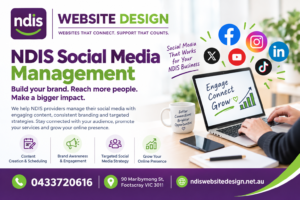
Social media gives NDIS providers an opportunity to communicate with people who may be looking for disability support services, including participants, family members, carers and support coordinators. A well-managed social media presence can help your business become more familiar within the community and make it easier for people to learn about the services you offer.
However, reaching the right audience requires more than publishing regular posts. NDIS providers need content that answers questions, communicates their services clearly and creates a positive impression of their organisation.
Understand What Families Want to Know
Families often research disability support providers before making contact. They may want to understand what services are available, how support is delivered, whether your organisation operates in their area and how they can begin the enquiry process.
Your social media content should address these questions directly.
Consider creating posts about:
-
Your disability support services and areas covered
-
How your organisation handles enquiries
-
Your team’s experience and approach
-
Community activities and participation opportunities
-
Frequently asked questions from families
-
How participants can learn more about your services
Helpful content can make your business easier to understand without relying on aggressive promotional messaging.
Create Content for Support Coordinators
Support coordinators may be looking for providers that offer suitable services, communicate clearly and have relevant availability. Your social media content can help them quickly understand what your organisation does.
Share informative updates about your services, locations, referral process, team and current capacity where appropriate. Keep your posts professional and easy to read.
LinkedIn can be particularly useful for developing professional relationships. You can share business updates, sector information, service announcements and educational content that may be relevant to other professionals working in disability support.
Social media should complement direct professional relationships rather than replace them.
Use Facebook to Connect With Local Communities
Facebook can help NDIS providers maintain a local presence and participate in relevant community conversations. Depending on the platform’s group rules, providers may be able to share useful information or respond to questions in appropriate community spaces.
Focus on being helpful rather than posting repeated advertisements. Content that answers common questions or provides practical information is more likely to feel relevant to community members.
You can also use your business page to share service updates, team news, community involvement and links to useful resources.
Share Content That Builds Confidence
Families and participants may want to know what your organisation is like before contacting you. Social media can provide a glimpse of your business culture, communication approach and the people behind your services.
Consider sharing:
-
Staff introductions
-
Office or workplace updates
-
Community event participation
-
Educational information
-
Service explanations
-
General behind-the-scenes content
Always respect privacy and obtain appropriate consent before sharing identifiable participant information, photographs or personal stories. NDIS providers should also ensure their online communication reflects respectful, truthful and appropriate conduct.
Novida+1
Make Your Website Easy to Find
Social media may introduce someone to your organisation, but many people will want to visit your website before making an enquiry. Your website should clearly explain your services, locations, contact details and how to get started.
Investing in NDIS website design in Australia can help create a professional online experience that supports families and referral partners. A mobile-friendly website with clear navigation and accessible content makes it easier for visitors to find the information they need.
Connect your social media posts to relevant website pages. For example, a post about your disability support services can link directly to your service page, while an introduction to your organisation can link to your About Us page.
Maintain a Consistent Presence
Consistency is more important than publishing a large number of posts in a short period. Create a monthly content calendar that includes service information, educational posts, team content and business updates.
Monitor engagement and website visits to understand which topics attract attention. This can help you improve your content and focus on information that is genuinely useful to your audience.
Build Meaningful Connections Online
Social media can help NDIS providers become more recognisable among families, participants and support coordinators. When your content is informative, your communication is respectful and your website provides clear information, you create a stronger foundation for potential enquiries.
At NDIS Website Design, we help disability support businesses build an online presence with website design, SEO and NDIS social media marketing.