
Introduction
Walk into almost any Indian kitchen and you’ll find a bag of flour that has quietly fed generations — jowar atta. Made by grinding sorghum grains, jowar atta has been a staple in states like Maharashtra, Karnataka, and Telangana for centuries, long before “gluten-free” became a buzzword. Today, as more people look for wholesome alternatives to refined wheat flour, jowar atta is finding its way back onto dining tables across the country.
In this guide, we’ll break down what jowar atta actually is, why it’s considered a healthier choice, its nutritional profile, and practical tips to help you use it well.
What Is Jowar Atta?
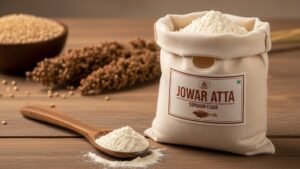
Jowar atta is flour made from sorghum, a hardy cereal grain that has been cultivated in India for thousands of years. Unlike wheat, jowar is naturally gluten-free, which makes jowar atta a popular option for people managing gluten intolerance or celiac disease. The flour has a light, slightly nutty flavour and is traditionally used to make bhakri, rotis, and porridge.
Because jowar is a hardy crop that grows well in dry regions with minimal water and chemical input, it’s also considered an environmentally sustainable grain — one reason jowar atta is often grouped with other traditional millets making a comeback in Indian households.
Nutritional Value of Jowar Atta
One of the biggest reasons people switch to jowar atta is its nutrition profile. On average, per 100g, jowar atta offers:
- Dietary fibre: Around 6–7g, which supports digestion and gut health
- Protein: Roughly 10–11g, higher than many refined flours
- Minerals: Good amounts of iron and manganese
- Glycemic index: Low, meaning it releases energy slowly instead of causing sharp blood sugar spikes
- Gluten: None — making jowar atta safe for gluten-sensitive individuals
This combination of fibre, protein, and minerals is what makes jowar atta stand out compared to plain refined wheat flour, especially for anyone trying to eat more mindfully.
Why People Are Choosing Jowar Atta
1. Naturally Gluten-Free
For anyone with celiac disease or gluten sensitivity, finding a daily-use flour that doesn’t compromise on taste or texture can be tough. Jowar atta fills that gap well, offering a roti-friendly grain without any gluten content.
2. Supports Digestive Health
Thanks to its fibre content, jowar atta can help support regular digestion. Fibre-rich foods like jowar are often recommended as part of a balanced diet aimed at improving gut function over time.
3. A Sensible Choice for Blood Sugar Management
Because jowar has a low glycemic index, jowar atta is frequently recommended as part of diabetes-friendly meal planning. It’s important to remember, though, that individual results vary, and anyone managing a medical condition should consult their doctor before making major dietary changes.
4. A Good Source of Plant Protein
With around 10–11g of protein per 100g, jowar atta contributes meaningfully to daily protein intake, especially useful for vegetarian and vegan diets where protein sources can be limited.
5. Rich in Minerals
Iron and manganese found in jowar atta play a role in everyday bodily functions, from oxygen transport to bone health. Including jowar atta in your regular diet can be a simple way to boost mineral intake without relying on supplements.
How to Use Jowar Atta at Home
Jowar atta behaves quite differently from wheat flour because it lacks gluten, which means the dough won’t stretch the same way. A few tips to get the best results:
- Use warm or hot water while kneading — this helps bind the dough since there’s no gluten to hold it together.
- Knead gently and let the dough rest for 10–15 minutes before rolling.
- Start with a blend. If you’re new to jowar atta, mix it with wheat flour in a 30:70 or 50:50 ratio and gradually increase the jowar proportion as you get used to the taste and texture.
- Roll it soft and thick. Jowar rotis are typically rolled a little thicker than wheat rotis and cooked on a medium flame.
- Explore beyond rotis. Jowar atta also works well in bhakris, parathas, cheelas, porridge, and even certain baked snacks.
Things to Keep in Mind
While jowar atta offers several nutritional advantages, a few practical points are worth noting:
- Storage matters. Since it typically contains no preservatives, jowar atta should be stored in an airtight container in a cool, dry place and used within a few weeks for best freshness.
- Texture takes getting used to. The absence of gluten means jowar rotis can feel denser or crumblier than wheat rotis initially. Practice and the right water temperature make a big difference.
- Not a one-size-fits-all solution. Like any dietary change, introducing jowar atta should be done gradually, and it’s wise to consult a nutritionist or doctor if you have specific health concerns.
Frequently Asked Questions
Is jowar atta the same as sorghum flour? Yes, jowar and sorghum refer to the same grain. Jowar atta is simply the flour made by grinding sorghum grains.
Is jowar atta good for weight management? Jowar atta is fibre-rich and takes longer to digest, which can help with satiety. However, weight management depends on overall diet and lifestyle, not a single ingredient.
Can children eat jowar atta rotis? Yes, jowar atta is generally considered safe and nutritious for children, though it’s a good idea to introduce it gradually alongside familiar foods.
How is jowar atta different from bajra or ragi atta? All three are traditional Indian millet flours, each with its own nutrient profile and texture. Jowar atta tends to have a milder flavour, while bajra and ragi have more distinct tastes and slightly different nutritional strengths.
Does jowar atta taste different from wheat atta? Yes, jowar atta has a subtly nutty, earthy flavour that’s different from the more neutral taste of wheat flour. Many people find it takes a few tries to get used to.
Conclusion
Jowar atta isn’t a new health trend — it’s a return to a grain that Indian households have relied on for generations. With its gluten-free nature, solid fibre and protein content, and useful mineral profile, jowar atta makes a practical addition to a balanced, everyday diet. Whether you’re managing a gluten intolerance, watching your blood sugar, or simply looking to diversify your flour choices, easing jowar atta into your routine — one roti at a time — is a small change that can add up to real benefit.
