Ask five expecting parents what matters most in a product, and you’ll likely receive five different answers: one cares about skin sensitivities, another about environmental impact, another simply wants to know it’s been tested and won’t do harm. There’s no single answer to what counts as the best organic products for pregnancy. Because the reason you’re choosing organic varies from person to person. If you know why you’re choosing organic, shopping becomes much easier.
Why ‘Best’ Means Something Different for Every Expecting Parent
Prioritising skin sensitivity and safety
Pregnancy hormones change how skin reacts to fragrance, preservatives and some synthetic chemicals. So for most women, the organic transition is essentially just avoiding a reaction. Skin that has never reacted to anything before pregnancy can become abruptly hypersensitive. That’s why some women only start looking into organic solutions once they have problems. If that’s you, then choose fragrance-free, dermatologically tested products. Then the word ‘organic’ on its own suggests a gentler formula.
Prioritising environmental impact
Others are drawn to organic cotton, biodegradable packaging, and sustainably sourced materials. Because they want to reduce their environmental impact. Particularly if nursery furniture and baby essentials enter the picture too. This priority often extends the search beyond skincare to maternity clothes and home textiles.
Prioritising budget and practicality
Organic ranges normally cost more, so a sensible approach is deciding where it matters most rather than converting everything at once. Skincare used every day is often one of the most worthwhile areas to prioritise, while a one-off purchase used only occasionally may be less important.
The Main Organic Product Categories to Know
Skincare and body oils
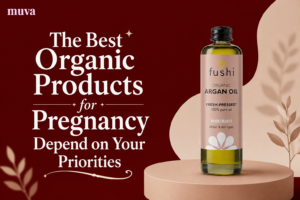
Organic-based bump balms and stretch mark oils, such as those containing rosehip, shea butter and calendula, are generally prepared without retinoids and high-strength salicylic acid. These are normally not advised in pregnancy. A few pregnancy skin care products also contain bakuchiol, a plant-based alternative to retinol. But if in any doubt about particular substances, it’s best to check with your doctor before using.
Maternity wear
Organic cotton maternity clothing is often made with stricter standards for materials and processing, making it a popular choice for women with sensitive skin during pregnancy.
Bedding and nursery basics
Organic cotton sheets, muslins and blankets are widely available now and tend to be softer and more breathable than synthetic blends, which some parents prefer for a newborn’s sensitive skin even before the baby arrives.
Prenatal supplements
The word “organic” is less relevant for supplements than it is for skincare or textiles. But some prenatal ranges do include plant-based, additive-free solutions as an alternative to standard multivitamins. The active nutrients such as folic acid, vitamin D and iron are more essential than whether the tablet is labelled organic. So it’s more necessary to check the dose against NHS guidance than go by the package.
What ‘Organic’ Actually Guarantees, and What It Doesn’t
GOTS (Global Organic Textile Standard) or Soil Association certification means that the materials comply with an organic standard, which addresses issues such as the use of pesticides and processing chemicals, but does not necessarily suggest a product is acceptable for use in pregnancy. But even if you’re seeking organic pregnancy products that UK retailers offer, you’ll still need to check the full ingredient list for ingredients that aren’t recommended during pregnancy. Some ‘natural’ or ‘organic’ products still contain essential oils or botanical extracts that are not recommended. If you’re unsure, a GP will tell you faster than a product description will.
FAQs
Is organic skincare automatically safer to use during pregnancy?
Not really. Organic is about how the ingredients are grown and processed; not all of the ingredients are pregnancy-safe. Even if it says organic, always examine the entire ingredient list for additives that are not suggested in pregnancy.
Do organic products cost significantly more than conventional ones?
Generally yes, especially in terms of certified skincare and maternity clothes, but this gap is closing as more high street stores carry organic lines alongside the non-organic. Instead of changing everything at once, focus on the categories that mean the most to you. This keeps the expense realistic without feeling like an all-or-nothing decision.
Choosing Based on What Matters to You
There is no single answer, no objective answer to what the best organic items are to use throughout pregnancy. The best choice depends on whether you care more about skin sensitivity, environmental effect, or simply peace of mind. Whatever the reason, it’s better to carefully read ingredient lists and choose the best organic products for pregnancy.