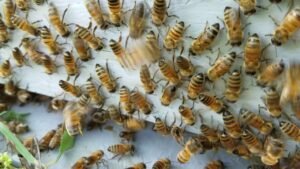
Bee activity around residential properties can create concern, especially when colonies appear near entrances, patios, attics, or children’s play areas. However, many homeowners react quickly without understanding why bees selected a particular location.
Bees generally search for sheltered spaces offering protection from weather, predators, and environmental disturbances. Small openings around walls, roofs, chimneys, sheds, and other structures can provide attractive nesting opportunities. Therefore, simply removing visible insects rarely addresses the underlying reason behind their presence.
Another common misunderstanding involves treating every bee encounter as an immediate infestation. Individual bees may simply forage around flowers, trees, gardens, or other sources of nectar. A few insects moving through a yard do not necessarily indicate an established colony nearby.
However, repeated activity around one location may indicate a nest or hive requiring closer attention. Watching flight patterns from a safe distance can provide useful information without disturbing the insects. Careful observation allows property owners to determine whether activity remains temporary or becomes persistent.
Mistake One: Using Harsh Chemicals
One of the most common mistakes homeowners make involves applying household chemicals or pesticides without understanding their potential consequences. People may assume that stronger chemicals automatically provide faster and more effective results.
However, indiscriminate pesticide use can harm beneficial pollinators while creating unnecessary environmental exposure. Chemicals may also affect nearby plants, pets, wildlife, and other insects sharing the surrounding environment.
Furthermore, spraying visible bees does not necessarily remove an established colony hidden inside a wall or other structure. The colony may remain protected while activity temporarily decreases around the visible entrance. Consequently, homeowners may believe the problem has disappeared when the underlying issue remains unresolved.
Some chemicals can also cause disturbed colonies to behave unpredictably. Agitated insects may search for alternative exits or move toward interior areas. This situation can create additional encounters rather than resolving the original concern.
Another problem involves applying substances near structural openings without knowing what lies behind them. Walls, ceilings, roof spaces, and chimneys can contain hidden cavities where colonies establish themselves. Introducing chemicals into these areas without professional assessment may create contamination or property concerns.
Instead, property owners should identify the source of activity before considering any treatment. Professional specialists can determine whether insects represent an established colony or ordinary foraging activity. This assessment supports safer decisions while reducing unnecessary environmental harm.
Responsible management focuses on understanding the situation before choosing an intervention. This approach protects residents while respecting the ecological value of pollinators.
Mistake Two: Blocking Nest Entrances
Another serious mistake occurs when homeowners immediately seal cracks, holes, or openings where bees appear to enter. Although sealing openings may seem logical, doing so while a colony remains active can create significant complications.
If insects become trapped inside walls, they may search for alternative routes into living spaces. Increased activity around indoor areas can make the situation more difficult and uncomfortable. Furthermore, trapped materials such as honey and comb can create additional structural concerns.
Sealing an entrance also does not necessarily remove the colony itself. Bees may remain inside the cavity while continuing to occupy the structure. Without removing the underlying nesting materials, future problems may develop even after visible activity decreases.
Professional assessment should therefore happen before permanent sealing occurs. Specialists can determine whether an opening remains active and whether a colony occupies the surrounding cavity. After appropriate removal or relocation, professionals can recommend suitable repairs to prevent future nesting.
Property owners should also inspect other potential access points around the building. Roof edges, vents, soffits, siding gaps, chimneys, and utility openings can provide additional opportunities for insects. Addressing these vulnerabilities after confirming colony removal can reduce future nesting possibilities.
Mistake Three: Disturbing Colonies Alone
Attempting to remove a colony without professional experience is another major mistake homeowners frequently make. People may believe that moving a hive or disturbing a nesting area requires only basic tools and protective clothing.
In reality, colony removal can involve complex behavior and structural considerations. Different species behave differently, while colonies may occupy difficult-to-access spaces. Improper handling can increase defensive behavior and expose people to unnecessary risks.
Residents should especially avoid climbing ladders or entering confined spaces while attempting to locate hidden colonies. Roof spaces, attics, wall cavities, and elevated structures can create fall hazards independent of insect activity.
When a colony appears near a frequently used area, professional assessment provides a safer path forward. Specialists understand colony behavior while using appropriate protective equipment and removal methods. They can also evaluate whether relocation remains practical based upon colony location and condition.
For example, property owners facing persistent activity may seek assistance from a bee removal service in universal City, LA, allowing professionals to evaluate the situation before intervention begins. A careful assessment helps determine whether relocation, removal, or preventive measures represent the most appropriate response.
Professional relocation can preserve valuable pollinators while addressing legitimate residential concerns. This approach avoids unnecessary destruction when a colony can safely be moved to another suitable location.
Residents should also keep children and pets away from active nesting areas until the situation receives professional attention. Maintaining distance reduces accidental disturbances while allowing specialists to work more safely.
Mistake Four: Ignoring Food and Shelter
Another common mistake involves overlooking the environmental conditions attracting bees to residential properties. Homeowners may focus entirely upon visible insects while ignoring nearby food sources, water, flowers, and potential nesting spaces.
Gardens containing abundant flowering plants naturally attract pollinators because flowers provide valuable nectar and pollen. This activity is generally beneficial and does not necessarily indicate a problem. However, placing heavily flowering plants directly beside frequently used entrances can increase encounters.
Outdoor food can also attract various insects when left uncovered. Sweet drinks, fruit, sugary foods, and food waste may create additional attraction around patios and outdoor entertaining spaces. Keeping these items covered and cleaning spills promptly can reduce unnecessary insect activity.
Water sources can also influence insect behavior because many insects require moisture during warmer periods. Leaking outdoor faucets, irrigation equipment, and standing water should therefore receive regular attention. Proper maintenance supports cleaner outdoor environments while reducing unnecessary insect attraction.
Shelter represents another important consideration because cavities can provide ideal nesting conditions. Cracks around buildings, damaged wood, open vents, and unused structures may become potential nesting locations. Regular property inspections can help identify these vulnerabilities before they become significant concerns.
However, prevention should focus on unoccupied spaces rather than disturbing active colonies. Existing colonies should receive professional assessment before property owners attempt repairs or modifications nearby.
Mistake Five: Choosing Quick Solutions
The final mistake occurs when homeowners prioritize immediate results instead of addressing the underlying cause of bee activity. Quick solutions may appear convenient, yet they often fail when colonies remain hidden within structures.
Successful management requires understanding whether the insects are simply foraging or establishing a permanent nesting location. This distinction determines whether prevention, monitoring, relocation, or professional removal becomes appropriate.
Homeowners should also recognize that recurring activity may indicate unresolved structural vulnerabilities. If bees repeatedly establish colonies around the same building, accessible cavities may remain available. Addressing those structural conditions after professional removal can reduce future problems.
Additionally, responsible bee management protects ecological systems while maintaining household safety. Pollinators contribute significantly to plant reproduction and food production. Preserving healthy populations whenever safely possible supports broader environmental stability.
Homeowners can therefore adopt a more thoughtful approach by observing activity, avoiding unnecessary disturbances, and seeking professional assistance when colonies establish themselves. Prevention should focus on property maintenance, appropriate landscaping, and eliminating unused nesting opportunities.