There is no surprise in the fact that text slang terms have now become common in people’s vocabularies. Whether you are chatting with someone online or physically, it is very common for people to come across terms such as BRB and OMG. All this is a result of the increasing online communication where people prefer quicker and faster responses.
Now, these terms do help people in communicating more efficiently, but such is not the case every single time, as there are situations when you might not be familiar with the meaning of a particular abbreviation. If you come across the abbreviation WYF and are wondering what it means, then this guide will provide you with a complete overview of the term and how people use it on the internet.
Discovering the meaning of WYF in text
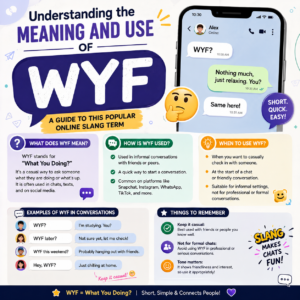
“WYF” is a sort of popular texting abbreviation which basically means “Where are you from?” It’s used a lot in social media chats and quick text conversations to ask someone about their origin, whether that’s where they live or where they were born.
The term WYF kind of shows how language keeps shifting, especially with internet slang moving fast across social platforms. Still, WYF can turn into different things depending on what people mean in that specific situation, like “What’s your favorite?”, “What you feeling?”, or “Whatever you fancy?”. These other versions can make it easier to understand the intention and avoid any confusion in the chat.
Exploring the meaning of WYF on different social media applications
‘Where are you from’ is the basic WYF meaning in text, but if you want a deep exploration of the abbreviation on every social media platform, then take a look at how this abbreviation is used on these platforms to engage with people.
- Snapchat: Enquiring about someone’s location in chats
On Snapchat, WYF is pretty common in casual messages to ask where someone is from. Since Snapchat is mostly for quick snaps and short chats, people ask it to get a little background on the person they’re talking to.
- WhatsApp: Used in group chats or one-on-one conversations
In WhatsApp group chats or private messages, WYF often pops up when people are talking about backgrounds, or when someone is meeting new folks in the group. It’s a fast way to figure out where someone comes from without making it too serious.
- TikTok: To create engagement in comments and replies
On TikTok, WYF comes up a lot in the comments, especially when people want to relate through similar places or shared experiences. Sometimes creators even drop it in captions to pull in more interaction and get the audience talking back.
- Instagram: To connect with people through DMs, comments, or captions
On Instagram, you’ll see WYF in DMs, post captions, or comment sections. It’s usually used when users talk about location-heavy experiences like travel, style, or events, and want to compare where they are or what’s going on nearby.
- WhatsApp: Used in group chats or one-on-one conversations
In WhatsApp group chats or private messages, WYF often pops up when people are talking about backgrounds, or when someone is meeting new folks in the group. It’s a fast way to figure out where someone comes from without making it too serious.
- TikTok: To create engagement in comments and replies
On TikTok, WYF comes up a lot in the comments, especially when people want to relate through similar places or shared experiences. Sometimes creators even drop it in captions to pull in more interaction and get the audience talking back.
- Instagram: To connect with people through DMs, comments, or captions
On Instagram, you’ll see WYF in DMs, post captions, or comment sections. It’s usually used when users talk about location-heavy experiences like travel, style, or events, and want to compare where they are or what’s going on nearby.
It should be noted that “WYF” should be used in casual, friendly chats, not in formal or professional contexts. When you reply, share your own location too, so the conversation stays lively and personal, not stiff.
Source: Saferloop