Mini split air conditioning systems have become a popular cooling solution for homes, offices, retail spaces, hotels, and many other buildings. Their compact design, flexible installation, and energy-efficient operation make them an attractive alternative to traditional central air conditioning. However, the technology behind modern mini split systems has developed over many decades. Understanding the history of mini split air conditioning provides valuable insight into how these systems evolved from a specialized cooling technology into a widely used solution for modern buildings.
The Origins of Split Air Conditioning
The history of mini split air conditioning is closely connected to the development of conventional split-system air conditioners. Early air conditioning systems were generally large, complex, and expensive. They were primarily designed for industrial facilities, commercial buildings, and specialized environments where temperature and humidity control were essential.
As air conditioning technology improved during the twentieth century, manufacturers began looking for ways to create smaller and more practical systems. One important development was separating the major components of an air conditioner into indoor and outdoor units. This configuration became known as a split system.
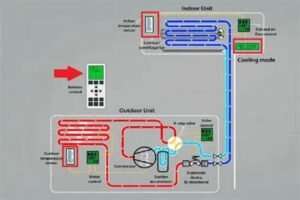
Unlike window air conditioners, which contain most components within a single cabinet, split systems place the compressor and condenser outdoors while the evaporator and indoor fan remain inside. Refrigerant lines connect the two units. This design reduced indoor noise and offered greater flexibility for installation.
The Development of Mini Split Technology
The concept of a smaller split air conditioning system emerged as manufacturers sought solutions for spaces that did not require large centralized cooling equipment. Mini split systems were particularly useful for individual rooms, smaller commercial areas, additions, and buildings where installing extensive ductwork was impractical.
Japanese manufacturers played an important role in the development and commercialization of ductless air conditioning technology. During the second half of the twentieth century, companies invested heavily in compact cooling equipment designed for residential and commercial applications.
The ductless configuration provided a significant advantage. Traditional central air conditioning systems typically distribute conditioned air through a network of ducts. Installing those ducts in an existing building can be expensive and disruptive. Mini split systems eliminated this requirement by delivering conditioned air directly from an indoor unit.
Why Ductless Systems Became Popular
As buildings became more diverse in design, the demand for flexible HVAC solutions increased. Mini split air conditioners offered several characteristics that made them particularly appealing.
First, installation was relatively straightforward compared with installing a complete ducted system. A small opening in the wall can accommodate refrigerant piping, electrical connections, and a condensate drain between the indoor and outdoor units.
Second, mini splits allow individual rooms or zones to be controlled independently. Instead of cooling an entire building to the same temperature, occupants can adjust specific areas according to their needs. This zoning capability can contribute to lower energy consumption when properly designed and operated.
Third, indoor units are available in several configurations. Wall-mounted units became especially common, while cassette, floor-mounted, and concealed options expanded the applications of ductless technology.
The Introduction of Inverter Technology
One of the most significant milestones in the evolution of mini split air conditioning was the introduction and widespread adoption of inverter technology.
Traditional air conditioners generally operate the compressor at a fixed speed. The compressor turns on when cooling is required and shuts off after the desired temperature is reached. Inverter systems work differently. They can vary compressor speed according to the cooling demand.
When a room requires substantial cooling, the compressor can operate at a higher speed. Once the temperature approaches the desired setting, the system can reduce compressor speed rather than repeatedly switching completely on and off.
This approach can provide more consistent indoor temperatures, reduce temperature fluctuations, and improve operating efficiency under suitable conditions. Inverter technology helped transform mini split systems into sophisticated variable-capacity HVAC equipment.
Modern Mini Split Air Conditioners
Today’s mini split air conditioners are considerably more advanced than early ductless systems. Modern units can incorporate electronic controls, programmable operation, smart connectivity, advanced filtration, variable-speed compressors, and improved refrigerant technologies.
Many systems are also designed as heat pumps, allowing them to provide both cooling and heating. This makes a single system useful throughout different seasons and increases the practical value of ductless HVAC technology.
Multi-zone mini split systems have further expanded the technology’s capabilities. A single outdoor unit can often support multiple indoor units, allowing different rooms to receive individualized temperature control. This configuration is particularly useful for homes, offices, restaurants, hotels, and other buildings with multiple occupied areas.
Mini Splits and Energy Efficiency
Energy efficiency has become one of the most important considerations in modern HVAC design. Mini split systems can offer efficiency advantages because they do not require extensive air ducts. In ducted systems, poorly insulated or leaking ducts can contribute to energy losses, particularly when ducts pass through unconditioned spaces.
The combination of ductless distribution and variable-speed inverter technology can help mini splits operate efficiently when correctly sized and installed. However, actual performance depends on factors such as building insulation, climate, equipment capacity, maintenance, installation quality, and user settings.
The Future of Mini Split Air Conditioning
The development of mini split air conditioning continues as manufacturers respond to changing environmental standards, energy requirements, and consumer expectations. Future systems are likely to focus increasingly on higher efficiency, lower environmental impact, intelligent controls, and integration with connected home and building technologies.
Refrigerant development is also an important part of this transition. HVAC manufacturers are increasingly considering refrigerants with lower global warming potential while maintaining reliable system performance.
From relatively simple ductless cooling equipment to sophisticated variable-capacity systems, mini split air conditioners have undergone a remarkable transformation. Their history reflects broader changes in HVAC technology, including the movement toward energy efficiency, zoning, flexible installation, and smarter temperature control.
Conclusion
The history of mini split air conditioning systems demonstrates how HVAC technology has evolved to meet the changing needs of modern buildings. The introduction of split-system architecture created a practical alternative to large centralized equipment, while ductless design improved installation flexibility. Later developments such as inverter compressors, multi-zone operation, smart controls, and advanced refrigerants made mini split systems even more capable.
Today, mini split air conditioners are recognized as a versatile solution for many residential and commercial applications. Their continued evolution suggests that ductless technology will remain an important part of the future of efficient and flexible indoor climate control.
More info visit: https://acjakarta.com