
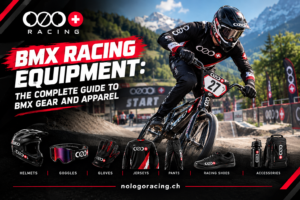
BMX racing is a sport where preparation matters just as much as riding ability. Riders accelerate from the starting gate, navigate jumps and berms, compete for position and need equipment that can handle repeated impacts and demanding race conditions. Having the right BMX racing equipment helps riders focus on technique, control and performance while ensuring that essential protective gear is not overlooked.
For riders in Switzerland, where BMX communities, clubs and cycling facilities continue to support both recreational and competitive riding, choosing appropriate equipment is an important part of getting ready for the track. From the bike itself to helmets, gloves and race clothing, every piece of BMX gear has a purpose.
NOLOGO Racing provides BMX-focused apparel and equipment for riders who want a distinctive racing look combined with practical functionality. Here is a closer look at the essential equipment to consider before heading to the starting gate.
1. Start With the Right BMX Racing Bike
The bike is obviously at the heart of your equipment setup. A BMX racing bike is designed differently from many freestyle or recreational BMX bikes. Racing models prioritize acceleration, responsiveness, low weight and efficient power transfer.
When selecting a racing bike, consider the frame geometry, wheel size, drivetrain, brakes, tires and overall fit. The correct setup depends partly on the rider’s age, height, experience and racing category.
A good bike should feel predictable when accelerating out of the gate and stable when landing jumps or entering corners. Tire choice is also important because track surfaces can vary significantly.
Regular maintenance should be part of your race preparation. Check tire pressure, chain condition, brake operation, wheel alignment and fasteners before every event.
2. A Proper BMX Helmet Is Essential
A helmet is one of the most important parts of BMX racing equipment. BMX racing involves speed, jumps and close competition, so riders should use a helmet appropriate for the discipline and compliant with applicable safety requirements.
A full-face helmet can provide additional coverage around the head and face. Riders should make sure the helmet fits correctly, remains secure during movement and is suitable for BMX racing.
Do not choose a helmet simply because it looks good with your race kit. Comfort, fit, ventilation and certification should all be considered.
3. Choose BMX Racing Gloves for Grip and Comfort
BMX gloves are another important part of a rider’s equipment. Gloves can improve grip between the hands and handlebars while helping protect the hands from dirt, minor abrasions and repeated contact.
A racing glove should fit securely without restricting finger movement. Ventilation can also be valuable during longer training sessions or warm-weather races.
Look for a flexible construction that allows riders to operate brake levers naturally. Reinforced areas can add durability, particularly for riders who train frequently.
For competitive riders, small details such as grip, seam placement and wrist closure can make a noticeable difference to comfort.
4. BMX Jerseys Combine Function and Identity
BMX jerseys are designed for the demands of racing rather than simply being casual cycling shirts. A good jersey should allow a wide range of movement while helping manage moisture during intense riding.
Many BMX racers also use their jerseys as part of their visual identity. Team colors, rider numbers, logos and custom designs make race clothing instantly recognizable at the track.
For riders representing a club or racing brand, consistent apparel can create a professional appearance while strengthening team identity.
NOLOGO Racing’s approach to racing apparel combines a bold visual style with the needs of active riders.
5. BMX Pants Need Freedom of Movement
BMX pants need to balance durability with flexibility. Racing requires riders to move their body constantly: standing on the pedals, shifting weight through corners and absorbing landings.
Pants that are too restrictive can interfere with movement, while excessively loose clothing can become uncomfortable or catch on equipment.
When choosing BMX pants, consider the riding position, waistband fit, ventilation and durability of the fabric. Reinforced areas can be useful for riders who spend significant time training on tracks.
The right pants should feel natural while riding rather than becoming something the rider has to think about.
6. Don’t Forget BMX Protective Gear
Protective equipment can vary depending on the rider, event and local requirements. Depending on the discipline and individual needs, riders may consider knee protection, elbow protection, chest protection and other protective equipment.
The key is to understand what your particular racing environment requires before arriving at an event.
Protective equipment should fit properly and should not interfere with steering, braking or body movement. Riders should also inspect protective gear regularly for damage and excessive wear.
7. BMX Goggles for Clear Vision
Clear vision is important when racing. Dust, mud, rain and airborne debris can make it difficult to see the track clearly.
BMX goggles can help protect the eyes while providing a clear field of vision. When selecting goggles, check lens clarity, ventilation, compatibility with the helmet and overall fit.
Tinted lenses can be useful in bright conditions, while clear lenses may be preferable when visibility is limited. Riders should choose according to the conditions in which they normally train and compete.
8. BMX Accessories That Belong in Your Race Bag
A race setup involves more than the equipment worn during a race. Useful BMX accessories can make preparation much easier.
A basic race bag might include:
- Spare tubes
- Tire levers
- Mini pump
- Multi-tool
- Chain lubricant
- Spare bolts
- Number plates
- Water bottle
- Towels
- Spare gloves
- Extra jersey
- Goggles
- Weather-appropriate clothing
Experienced racers often keep a dedicated equipment bag so essential items are not forgotten on race day.
9. Build a BMX Gear Checklist
Before leaving for the track, use a simple checklist.
Bike
- BMX racing bike
- Correct tires
- Proper tire pressure
- Working brakes
- Lubricated chain
- Secure wheels
- Race number plate
Protection
- Approved helmet
- Gloves
- Knee protection where appropriate
- Elbow protection where appropriate
- Other required protective equipment
Apparel
- BMX jersey
- BMX pants
- Appropriate socks
- Racing shoes
Accessories
- Goggles
- Water bottle
- Tools
- Spare parts
- Personal maintenance equipment
This simple routine can prevent avoidable problems on race day.
10. Choosing BMX Racing Equipment in Switzerland
Swiss riders have access to a wide cycling culture, with road cycling, mountain biking and BMX all forming part of the country’s broader cycling scene. When buying equipment, riders should consider the conditions in which they train, the type of track they use and the requirements of their racing category.
It is also worth considering durability rather than choosing equipment based solely on appearance. Racing equipment is repeatedly exposed to dirt, moisture, impacts and mechanical stress.
For riders building a complete setup, purchasing compatible equipment can simplify preparation. A coordinated BMX apparel collection can also provide a consistent appearance at training sessions and events.
11. Why Quality Matters
BMX racing is demanding on both riders and equipment. A bike may experience repeated landings and hard acceleration, while clothing and protective equipment are exposed to dirt and friction.
Quality equipment does not eliminate the need for maintenance, but durable materials and appropriate construction can help equipment withstand regular use.
Riders should inspect equipment frequently and replace components when they become damaged or no longer function correctly.
12. Create Your Own Race-Day System
The best equipment checklist is the one you actually use. Instead of packing randomly, create a repeatable system.
Keep your bike equipment together, protective equipment in another section and clothing in a separate compartment. After every race, check what needs cleaning, drying, repairing or replacing.
This makes the next training session easier and reduces the chance of forgetting an essential item.
Final Thoughts
The right BMX racing equipment can make race preparation more organized and riding more comfortable. From the BMX bike and helmet to BMX jerseys, BMX pants, BMX gloves, BMX goggles and accessories, each part of the setup serves a practical purpose.
Whether you’re preparing for your first local race or regularly competing on the BMX circuit, a complete equipment checklist is a simple way to stay prepared.
For riders looking for BMX-focused racing apparel and equipment, NOLOGO Racing brings a distinctive Swiss-inspired racing identity to the BMX community.


