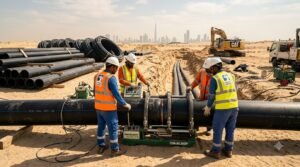
As the UAE continues to expand its water networks, irrigation systems, and industrial infrastructure, high-density polyethylene (HDPE) pipe has become the material of choice for a growing share of these projects. Lightweight, corrosion-resistant, and remarkably durable in harsh desert conditions, HDPE pipe offers advantages that traditional materials like steel or concrete often can’t match in this environment. But the performance of an HDPE pipeline depends heavily on the skill of the team installing it. Choosing the right HDPE pipeline installation contractor in UAE can be the difference between a system that performs reliably for fifty years and one that develops costly leaks within its first decade. This guide explains what HDPE pipe is, why it has become so popular across the UAE, and what to look for when selecting an installation partner.
What Is HDPE Pipe and Why Is It Used So Widely in the UAE?
High-density polyethylene (HDPE) is a thermoplastic material known for its strength-to-density ratio, chemical resistance, and flexibility. Unlike metal pipe, HDPE doesn’t rust or corrode, which makes it especially well-suited to the UAE’s coastal humidity, saline groundwater, and highly variable soil chemistry. Its flexibility also allows it to withstand ground movement and minor seismic activity without cracking, a valuable trait in a region where reclaimed land and shifting desert substrates are common.
HDPE pipe is now widely used across the UAE for:
- Potable water distribution networks, supporting the country’s growing population and urban expansion
- Sewage and wastewater collection systems, particularly in new residential and industrial developments
- Irrigation networks, supporting agricultural and landscaping projects across the emirates
- Industrial fluid transport, including chemical and slurry lines in manufacturing facilities
- Gas distribution lines, where its flexibility and leak-resistant joints offer significant safety advantages
Because HDPE pipe is joined through heat fusion rather than mechanical couplings or threaded connections, a properly installed system creates a virtually monolithic pipeline with no weak points at the joints—provided the fusion work is done correctly. This is precisely where the expertise of the contractor becomes critical.
The Technical Process Behind HDPE Pipeline Installation
Butt Fusion and Electrofusion Welding
The two most common joining methods for HDPE pipe are butt fusion and electrofusion. Butt fusion involves heating the ends of two pipe sections and pressing them together under controlled pressure to form a continuous, homogeneous joint. Electrofusion uses specialized fittings with embedded heating elements that melt and bond the pipe when an electrical current is applied. Each method has ideal applications depending on pipe diameter, site conditions, and project specifications, and a qualified HDPE pipeline installation contractor in UAE should be certified in both techniques.
Trenchless Installation Methods
Given the density of existing utilities beneath many UAE cities, trenchless installation techniques like horizontal directional drilling (HDD) and pipe bursting have become increasingly popular for HDPE pipeline projects. These methods allow contractors to install or replace pipelines beneath roads, buildings, and other infrastructure with minimal surface disruption—an important consideration in busy urban centers like Dubai and Abu Dhabi.
Proper Bedding and Backfill Practices
Unlike rigid pipe materials, HDPE relies on proper soil support to maintain its shape and structural performance under load. Contractors must carefully select and compact bedding material around the pipe to prevent deflection or ovalization over time. In the UAE’s sandy soil conditions, this requires particular attention to compaction techniques and moisture control during installation.
Pressure Testing and Quality Assurance
Once installation is complete, HDPE pipelines undergo hydrostatic pressure testing to verify the integrity of every fusion joint before the system is placed into service. Reputable contractors also conduct visual inspections of fusion beads and, in some cases, use tensile testing on sample joints to confirm weld quality meets international standards such as ISO 21307 or ASTM F2620.
Why the UAE Market Demands Specialized Expertise
Extreme Temperature Considerations
HDPE pipe’s performance characteristics, including its expansion and contraction rates, are affected by temperature. In a climate where ground and ambient temperatures can swing dramatically between summer and winter, contractors need a strong understanding of how thermal expansion affects fusion joint integrity and long-term pipeline layout, particularly for above-ground or shallow-buried sections.
Working Around Dense Underground Utility Networks
Rapid urban development across the UAE has resulted in congested underground utility corridors in many areas. An experienced HDPE pipeline installation contractor in UAE will have strong utility locating capabilities and experience navigating tight spaces without damaging adjacent infrastructure.
Compliance with Local and International Standards
Projects tied to entities like the Dubai Electricity and Water Authority (DEWA), Abu Dhabi’s Department of Energy, or various municipal water authorities require strict adherence to both international piping standards and local regulatory requirements. A qualified contractor should be well-versed in navigating approval processes with these authorities while maintaining compliance with international codes governing HDPE pipe design and installation.
Handling Large-Scale, Fast-Track Projects
Many UAE infrastructure projects operate on aggressive timelines tied to broader master development plans. Contractors need the workforce capacity, fusion equipment inventory, and project management systems in place to scale up quickly without compromising installation quality.
What to Look for When Hiring an HDPE Pipeline Installation Contractor in UAE
Certified Fusion Technicians
Ask potential contractors about their technicians’ certifications in butt fusion and electrofusion welding. Reputable firms will have technicians trained and certified according to internationally recognized standards, along with documented quality control procedures for every fusion joint completed on-site.
Proven Project Portfolio
Review the contractor’s history with similar-scale projects, ideally within the UAE or comparable Gulf climates. A contractor with experience across water, wastewater, and industrial applications will typically bring a broader problem-solving toolkit to your specific project.
Equipment and Technology Investment
Modern fusion machines with data-logging capabilities allow contractors to record and verify fusion parameters for every joint, creating a documented quality trail that can be invaluable for long-term asset management and future troubleshooting.
Safety and Compliance Track Record
Given the scale of many UAE infrastructure projects, safety performance matters. Ask about the contractor’s HSE (Health, Safety, and Environment) policies, incident history, and adherence to relevant UAE labor and construction safety regulations.
Responsiveness and Local Support
Because pipeline systems require ongoing maintenance and occasional repairs, choosing a contractor with an established local presence and rapid response capabilities can save significant time and cost over the life of the pipeline system.
The Long-Term Value of Getting It Right
While HDPE pipe itself offers a lifespan often exceeding 50 years, that potential can only be realized through correct installation. Poor fusion technique, inadequate bedding, or rushed quality control can lead to premature joint failures, leaks, or system inefficiencies that are far more costly to repair once a pipeline is buried and operational. Investing the time to select a qualified, experienced HDPE pipeline installation contractor in UAE pays dividends across the entire lifecycle of the system, from initial commissioning through decades of reliable service.
Final Thoughts
As the UAE continues to invest in water security, urban expansion, and industrial growth, HDPE pipe will remain a cornerstone material for much of this new infrastructure. The technology behind HDPE pipe is well-proven, but its long-term success depends entirely on the quality of installation behind it. By carefully vetting contractors for technical certification, project experience, and quality assurance practices, project owners can ensure their pipeline investment delivers the durability and performance the material is capable of providing.
Image Prompt: A photorealistic image of an HDPE pipeline installation site in the UAE, showing workers in high-visibility safety vests and hard hats operating a butt fusion welding machine to join large black HDPE pipe sections, sandy desert terrain in the background under a bright midday sun, coiled black polyethylene pipe stacked nearby, modern construction equipment, highly detailed and technical infrastructure atmosphere.