The demand for clean and renewable energy is increasing as industries, businesses, farmers, and transport sectors look for alternatives to conventional fossil fuels. One promising solution is Compressed Biogas (CBG), a renewable fuel produced from organic waste such as agricultural residues, cow dung, poultry litter, food waste, and other biodegradable materials.
CBG is produced by processing raw biogas through purification and upgrading processes and then compressing the methane-rich gas. Because of its fuel properties, it can be used for applications where conventional natural gas and other fossil fuels are commonly used.
What is Compressed Biogas (CBG)?
Compressed Biogas (CBG) is an upgraded form of biogas. Raw biogas generated through anaerobic digestion contains methane along with carbon dioxide, hydrogen sulfide, moisture, and other impurities. Before compression, these unwanted components need to be removed through suitable purification technology.
After purification, the methane concentration increases, and the gas can be compressed for storage, transportation, and different commercial applications. This makes CBG a useful renewable fuel for industries, commercial establishments, transportation, and other energy requirements.
5 Key Points About Compressed Biogas (CBG)
1. Converts Organic Waste into Renewable Energy
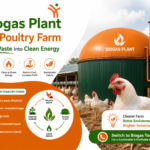
One of the major benefits of a CBG plant is its ability to convert organic waste into useful energy. Feedstocks such as cow dung, poultry waste, agricultural residues, press mud, bagasse, Napier grass, and piggery waste can be processed through anaerobic digestion to produce biogas.
This approach can support better waste management while creating a renewable source of fuel. The remaining digestate can also be managed as an organic manure resource, depending on its quality and application.
2. Advanced Purification and Upgrading
Producing CBG requires more than simply generating raw biogas. The gas must be properly treated to remove impurities such as carbon dioxide, hydrogen sulfide, and moisture.
Different technologies can be used for biogas upgrading, including VPSA, water scrubbing, PSA, and membrane-based systems. Koshish India’s CBG solutions include purification approaches such as VPSA and water scrubbing for producing methane-rich gas.
3. Multiple Industrial and Commercial Applications
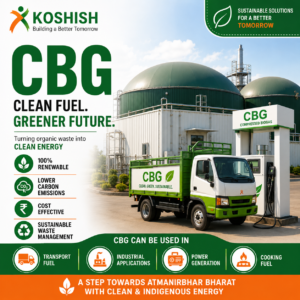
Compressed Biogas (CBG) has several potential applications. It can be used as a renewable fuel for transportation, industrial heating, boilers, furnaces, commercial kitchens, and power generation.
For example, industries such as food processing, textiles, pharmaceuticals, and ceramics can use CBG for thermal applications. It can also be used in suitable CNG-compatible vehicles and commercial kitchens as a renewable fuel alternative.
4. Supports Waste-to-Energy Projects
CBG plants connect waste management with renewable energy production. Instead of treating organic waste only as a disposal problem, businesses and agricultural operations can explore its potential as a feedstock for biogas and CBG production.
For farms, food-processing units, sugar industries, dairy operations, and poultry businesses, the availability of suitable feedstock is an important factor when evaluating a CBG project. Consistent feedstock supply can help maintain stable plant operations.
5. Supports the Transition Towards Cleaner Fuels
The use of Compressed Biogas (CBG) can contribute to the wider transition from conventional fossil fuels towards renewable energy. Since CBG is produced from organic materials rather than extracted fossil resources, it can become part of a circular approach to energy and waste management.
In India, CBG is also associated with initiatives such as the SATAT (Sustainable Alternative Towards Affordable Transportation) programme, which aims to encourage the production and use of alternative fuels.
Conclusion
Compressed Biogas (CBG) offers a practical connection between organic waste management and renewable fuel production. By converting suitable waste materials into purified and compressed methane-rich gas, CBG plants can support applications across transportation, industries, commercial kitchens, and power generation.
However, the success of a CBG project depends on factors such as feedstock availability, plant design, purification technology, gas quality, storage, and end-use requirements. With proper planning and technical support, CBG plants in India can become an important part of sustainable waste-to-energy solutions.
Domestic Biogas , Commercial Biogas , BioGas , Sewage Water Treatment Plant , Effluent Water Treatment Plant , Zero Liquid Discharge Water Treatment Plant