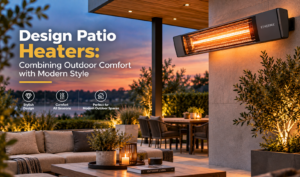
Outdoor spaces are becoming an important extension of homes, restaurants, cafés and hospitality venues across the Netherlands. From modern verandas to landscaped restaurant terraces, these areas are designed to provide comfort and create an attractive environment for dining, relaxing and entertaining.
However, cooler Dutch evenings can limit how often outdoor spaces are used. Patio heating can provide a practical solution, but heating equipment should not compromise the appearance of a carefully designed terrace.
Design patio heaters combine outdoor warmth with a modern appearance, making them suitable for projects where comfort and aesthetics need to work together.
What Are Design Patio Heaters?
Design patio heaters are outdoor heating systems developed with both heating performance and visual appearance in mind. They can complement contemporary architecture, landscaping, outdoor furniture and hospitality interiors.
For a homeowner, this could mean integrating a heater into a modern veranda without making it a dominant feature. For a restaurant or hotel, the objective may be to provide comfortable outdoor seating while maintaining the venue’s premium appearance.
The design patio heater range can be considered when aesthetics are an important part of an outdoor heating project.
Why Does Patio Heater Design Matter?
A terrace is often planned as one complete environment. Flooring, furniture, lighting, planting, roofing and architectural details all contribute to its appearance.
A large or poorly positioned heater can disrupt this balance.
For hospitality businesses, this can be particularly important because the terrace forms part of the customer experience. Restaurants, cafés and hotels often invest heavily in creating attractive outdoor areas, so heating equipment should ideally complement the existing design.
For residential projects, the same principle applies. A modern garden or luxury veranda benefits from heating that fits naturally into the overall concept.
How Can Design Patio Heaters Improve Outdoor Spaces?
Combine Warmth With Modern Style
The main purpose of a patio heater is to provide warmth, but its appearance can also influence the finished outdoor environment.
Modern designs can work alongside contemporary terraces, minimalist gardens and premium hospitality settings.
Support Architectural Design
Architects can plan heater locations alongside roofing, walls, glazing and seating areas. This allows heating equipment to become part of the design rather than an element added after construction.
Complement Landscaping
Landscape and garden designers can coordinate heater placement with furniture, planting, lighting and pathways. Careful positioning can provide warmth while maintaining clear sightlines.
Enhance Outdoor Living
For homeowners, heating can make verandas, covered patios and outdoor dining areas more comfortable during cooler evenings without changing the character of the space.
Where Can Design Patio Heaters Be Used?
Modern Verandas and Covered Patios
Covered outdoor areas are suitable locations for many heating solutions. Homeowners can use heating around dining tables, lounge areas or outdoor kitchens.
The selected heater must be appropriate for the environment, and installation distances and safety requirements should follow the manufacturer’s instructions.
Restaurants and Cafés
A restaurant terrace needs to provide both comfort and atmosphere. Design patio heaters can provide warmth around customer seating while supporting the visual identity of the venue.
Businesses can explore design heating solutions for hospitality terraces when planning or upgrading their outdoor dining areas.
Hotels and Hospitality Chains
Hotels often use terraces, courtyards and outdoor lounges as extensions of their hospitality experience.
For hospitality chains, a consistent approach to heating can help maintain a recognisable design standard across different locations while allowing each installation to reflect its individual layout.
Outdoor Bars
Outdoor bars need to balance atmosphere and comfort. Heating can be focused around seating and gathering areas, helping create a more usable space when temperatures fall.
What Should You Consider Before Choosing a Design Patio Heater?
Appearance should not be the only consideration. The heater also needs to suit the technical requirements of the space.
Heating Coverage
Identify the areas where people will sit, dine or gather. A small seating zone will have different requirements from a large restaurant terrace.
Installation Position
Depending on the product, heaters may be installed on walls, ceilings or other suitable structures. The mounting position should be considered during the design stage.
Electrical Requirements
Electric patio heaters require an appropriate electrical supply. Electrical installers should assess circuit capacity, protection and connection requirements before installation.
Weather Exposure
Dutch outdoor spaces can experience rain, moisture and changing wind conditions. Select equipment suitable for its intended environment and installation location.
Safety Clearances
Mounting distances and clearances vary between products. Manufacturer instructions should always be followed during installation.
What Are the Business Benefits of Design Patio Heating?
Make Better Use of Outdoor Areas
Restaurants, cafés and hotels invest in furniture, landscaping and terrace infrastructure. Heating can help make these spaces more practical during cooler periods.
Support a Premium Customer Experience
A comfortable, visually coordinated terrace can contribute to the overall hospitality environment. Heating can become part of the design rather than simply functional equipment.
Improve Space Planning
Design-led heating allows architects and designers to consider comfort alongside seating, lighting and landscaping.
Support Outdoor Hospitality
Heating can help businesses continue using outdoor areas when temperatures become less comfortable. Actual commercial results depend on factors such as customer demand, occupancy and operating costs.
How Should Designers and Installers Plan the Heating?
Heating should ideally be considered at the beginning of an outdoor project.
Architects can identify suitable mounting points, while landscape designers can coordinate heater locations with furniture and planting. Contractors can prepare structural requirements, and electrical installers can assess the electrical infrastructure.
For existing terraces, begin by identifying seating zones, available mounting locations, electrical access and potential obstructions.
This approach helps prevent heaters from being installed purely for convenience and supports a more integrated final result.
Is a Design Patio Heater Right for Your Outdoor Space?
Design patio heaters can be a suitable option when outdoor comfort and visual appearance are equally important. They can support modern homes, luxury verandas, restaurants, cafés, hotels and outdoor bars throughout the Netherlands.
The right solution depends on the terrace layout, heating requirements, electrical infrastructure, mounting options and weather exposure.
Rather than choosing a heater based only on appearance, consider design and performance together. Identify where warmth is needed and work with an experienced installer to determine appropriate positioning and installation requirements.
If you are planning a modern terrace, veranda or hospitality project, explore modern design patio heating options to find a solution that complements your outdoor environment.
Frequently Asked Questions
What makes a patio heater a design heater?
A design patio heater combines outdoor heating functionality with an appearance intended to complement modern architecture, landscaping and outdoor furniture.
Are design patio heaters suitable for restaurants?
Yes. They can be used in restaurants, cafés, hotels and other hospitality environments where guest comfort and terrace aesthetics are important.
Can design patio heaters be installed on verandas?
Depending on the product, they can be suitable for veranda installations. Mounting requirements, safety clearances and environmental suitability should be checked before installation.
Are electric design patio heaters suitable for Dutch terraces?
Electric heating can be suitable for many Dutch outdoor applications. The appropriate solution depends on the terrace layout, electrical supply, weather exposure and required coverage.
Should an electrician install an electric patio heater?
Where electrical installation is required, the work should be completed by a suitably qualified professional. The electrical supply and protection should be assessed beforehand.
How do I choose the right design patio heater?
Consider heating coverage, mounting position, electrical requirements, weather exposure, appearance and intended use. Commercial projects should also consider seating patterns and heating zones.
Can patio heating be included in a terrace design?
Yes. Planning heating alongside architecture, landscaping, furniture and electrical infrastructure from the beginning can result in a more practical and visually integrated outdoor space.