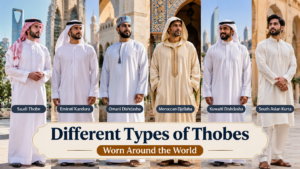
A thobe may look like a simple, long garment, but its style can change quite a bit depending on where you are in the world. Walk through the streets of Saudi Arabia, Oman, the United Arab Emirates, or Morocco, and you will notice differences in the way men wear their traditional clothing.
Some thobes have clean collars and straight silhouettes, while others feature decorative embroidery, loose sleeves, or distinctive details around the neckline. Although these garments share a connection with traditional men’s clothing in Muslim communities, they are not all exactly the same.
For men who enjoy traditional Islamic clothing, understanding these differences makes choosing a thobe for men more interesting. Whether you prefer a simple everyday design or a more detailed traditional outfit, there are several styles worth knowing about.
Let’s explore some of the popular thobe styles worn around the world and what makes each one distinctive.
1. Saudi Arabian Thobe: Simple, Clean, and Structured
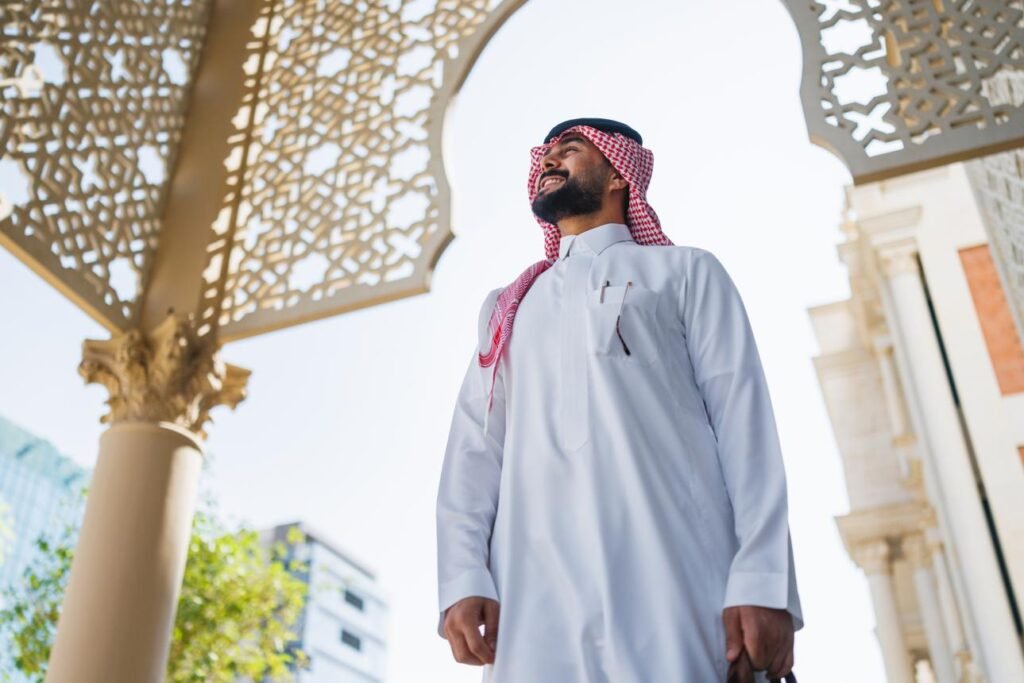
The Saudi Arabian thobe is one of the most recognisable styles of traditional men’s clothing in the Gulf region. It is generally designed with a straight, full-length silhouette and a relatively structured appearance.
A typical Saudi thobe often has a formal collar, a front button opening, and long sleeves with buttoned cuffs. White is especially common, although men also wear other colours, including beige, grey, navy, and black.
The design is usually quite minimal. Rather than relying on heavy decoration, the overall appearance comes from its neat cut, clean lines, and carefully finished details.
Saudi thobes are worn for everyday activities, prayers, work, family gatherings, and formal occasions. The fabric and design may change depending on the season and the occasion.
What makes it distinctive?
-
A structured collar and front button detail.
-
A clean, straight silhouette.
-
Long sleeves with finished cuffs.
-
Both formal and everyday styling options.
If you prefer a neat and traditional appearance, a Saudi-style thobe is a practical option to consider.
2. Emirati Kandura: A Collarless Gulf Style
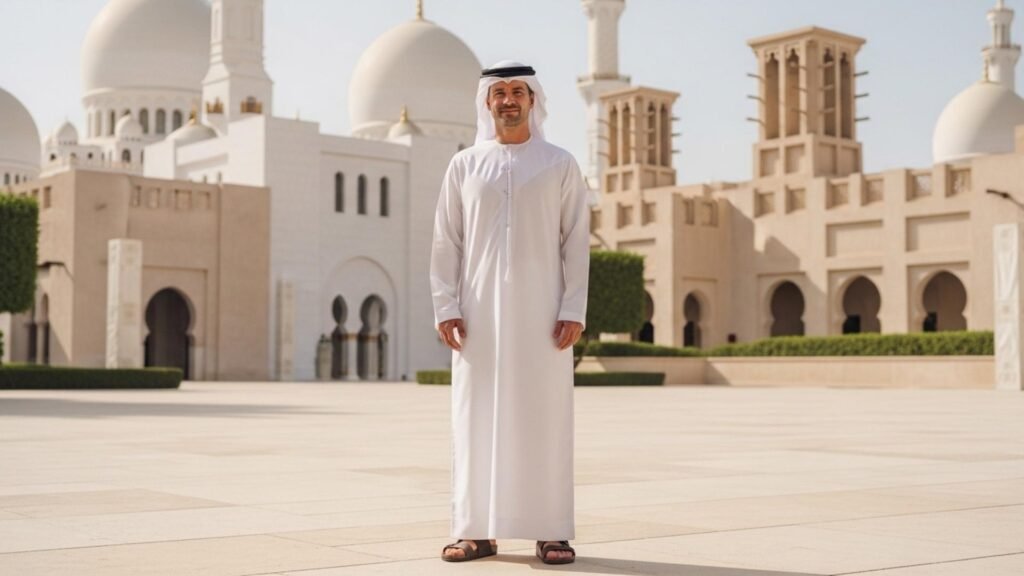
In the United Arab Emirates, the traditional men’s garment is commonly known as a kandura. It is closely related to the thobe, but there are some noticeable differences in its design.
One of the most familiar features of an Emirati kandura is its collarless neckline. Many designs also include a decorative tassel, often called a tarboosh, hanging from the neckline. The garment generally has a relaxed, flowing shape and a clean finish.
White is a popular choice, particularly in warmer months, but kanduras are also available in other colours. Some men choose cream, beige, brown, or darker shades depending on personal preference and the occasion.
The Emirati kandura is worn for everyday activities, prayers, social visits, and formal gatherings. Its simple appearance makes it suitable for many different settings.
What makes it distinctive?
-
A collarless neckline in many traditional designs.
-
A decorative tassel at the front.
-
A relaxed and flowing silhouette.
-
Simple styling with a focus on clean finishing.
Although the words kandura and thobe are sometimes used interchangeably, local naming and design preferences make the Emirati style distinct.
3. Omani Dishdasha: A Distinctive Traditional Design
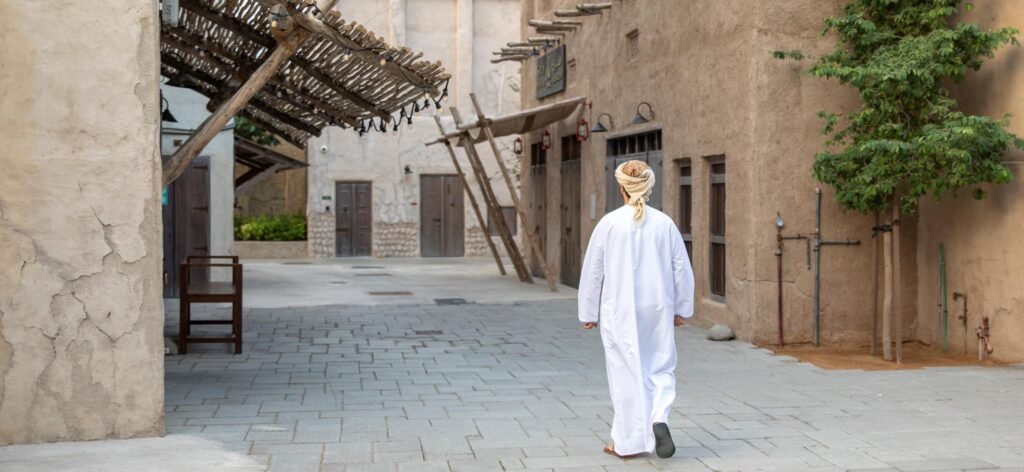
Oman’s traditional men’s garment is known as the dishdasha. At first glance, it may look similar to other Gulf garments, but its small design details give it a recognisable identity.
One of its most distinctive features is the tassel, known locally as a furakha, which hangs from the neckline. It is often lightly scented, adding another traditional detail to the garment.
Omani dishdashas are commonly worn with a kumma, a traditional embroidered cap. The kumma comes in different patterns and colours, allowing men to add personality to an otherwise simple outfit.
White is widely worn, but other colours are also seen, especially in everyday clothing. The garment is generally designed to provide a comfortable fit for daily activities and social occasions.
What makes it distinctive?
-
A traditional neckline tassel called a furakha.
-
Often paired with an embroidered Omani kumma.
-
A simple, full-length design.
-
Different fabric and colour choices for different occasions.
The combination of a dishdasha and kumma is a good example of how accessories can help distinguish traditional clothing from one region to another.
4. Moroccan Djellaba: Loose-Fitting with a Hood
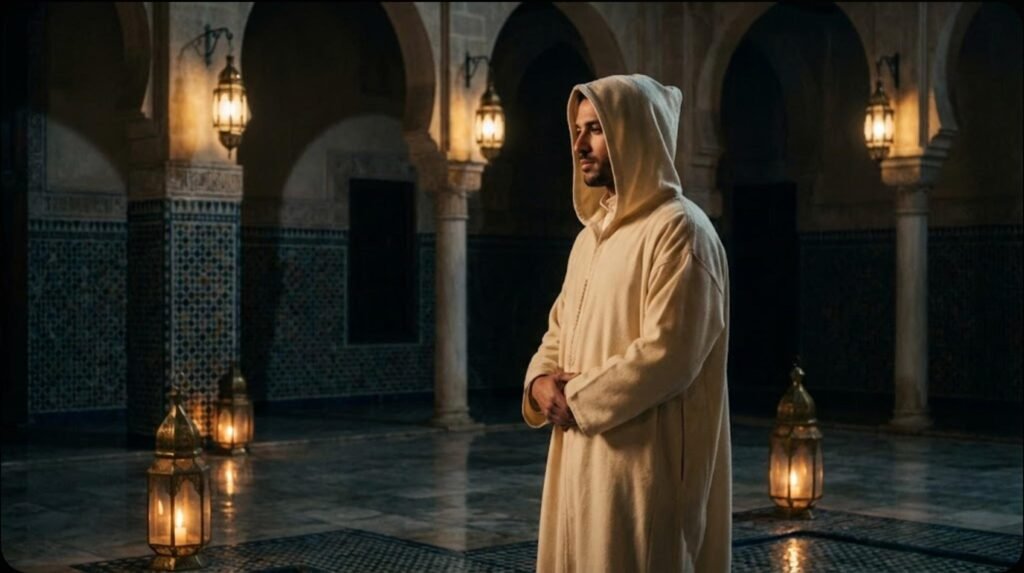
Moroccan men’s traditional clothing offers a different look from the familiar Gulf thobe. One of its best-known garments is the djellaba, a long, loose-fitting robe that is traditionally made with a hood.
The hood is one of the most recognisable features of a Moroccan djellaba. It is often pointed and can be worn over the head when needed. The garment may also feature decorative stitching or embroidery around the neckline and front opening.
Djellabas are available in different fabrics and weights. Lighter versions are suitable for warmer weather, while heavier wool designs are traditionally worn during colder months.
You may see Moroccan men wearing djellabas for daily activities, religious occasions, family visits, and special gatherings.
What makes it distinctive?
-
A loose, flowing shape.
-
A pointed hood, known as a qob.
-
Decorative details around the neckline.
-
Different fabric weights for different seasons.
It is worth understanding that a Moroccan djellaba is not simply another name for a Saudi or Emirati thobe. They are different traditional garments, even though both are long robes worn by men.
Moroccan men’s clothing also includes garments such as the gandora and jabador, which have their own designs and uses.
5. Kuwaiti Dishdasha: A Refined and Minimal Look

Kuwaiti men’s traditional clothing is another example of how similar garments can develop their own regional character.
The Kuwaiti dishdasha is generally recognised for its clean appearance, simple neckline, and neat tailoring. It often has a relaxed fit while maintaining a polished overall shape.
White is a familiar choice, particularly during warmer weather. Men also wear darker and neutral shades, including grey, beige, and navy.
Compared with more heavily decorated garments, the Kuwaiti style usually keeps things understated. Its appeal comes from the overall fit, fabric, and finishing rather than noticeable embellishments.
What makes it distinctive?
-
A clean and minimal design.
-
Neat tailoring with a comfortable silhouette.
-
Commonly worn in white and neutral colours.
-
Suitable for daily wear and formal settings.
For men who like traditional clothing without too many decorative details, the Kuwaiti style offers a simple option.
6. Yemeni Thobe: Traditional Styles with Regional Variations
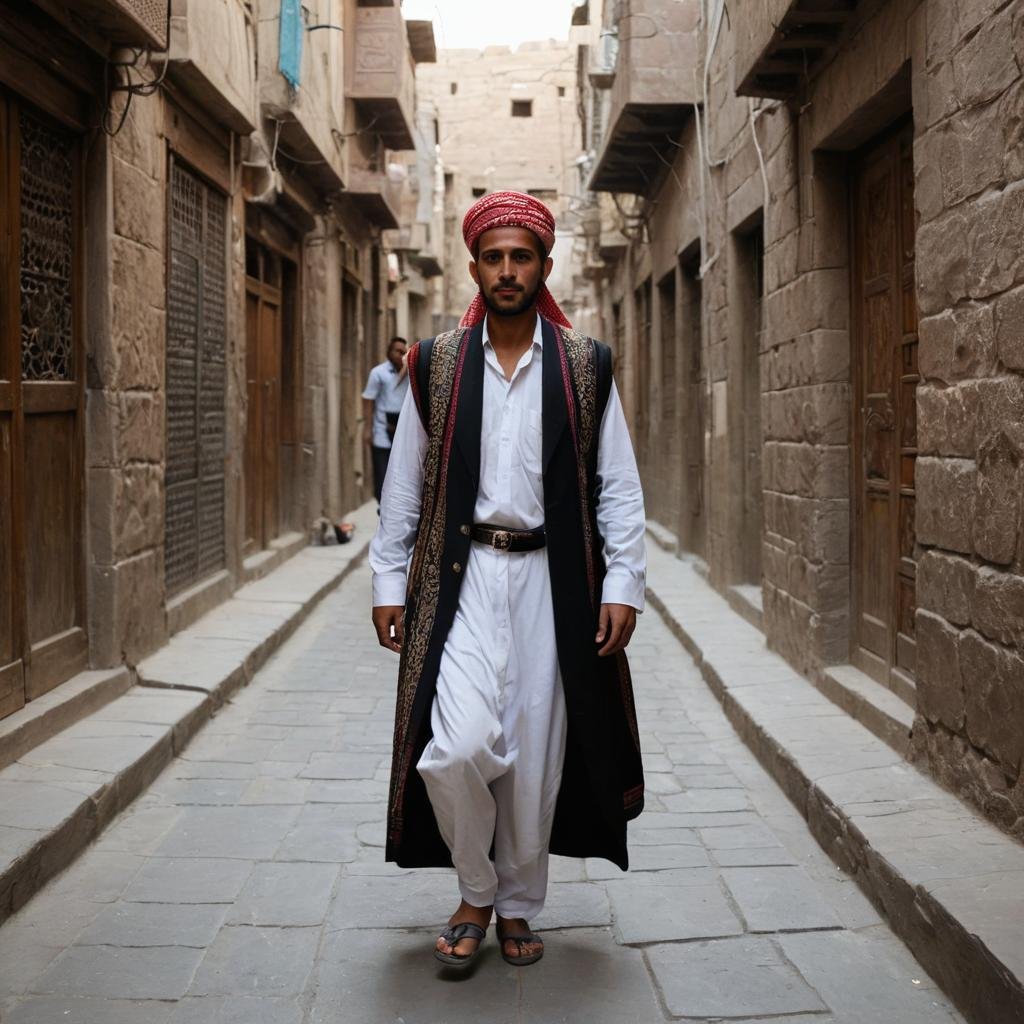
Traditional men’s clothing in Yemen varies across different regions, so there is no single design that represents every Yemeni garment.
In some areas, men wear long robes or tunic-style garments, while in others, traditional outfits may include a futa, a wrapped cloth worn around the waist, alongside a shirt or outer garment.
The way these garments are worn can differ depending on local customs, climate, and occasion. Some outfits are relatively simple, while others are combined with traditional accessories and outer layers.
This regional variety makes Yemeni men’s clothing particularly interesting. It also shows why traditional garments should not all be grouped under one general name.
What makes it distinctive?
-
Considerable regional variation.
-
Different combinations of robes, shirts, and wrapped garments.
-
Traditional accessories that vary by area.
-
Clothing styles influenced by local customs and climate.
When exploring traditional Islamic clothing, Yemen is a useful reminder that men’s dress across the Muslim world is much more diverse than a single style of thobe.
7. South Asian Kurta: A Different Garment with a Similar Purpose
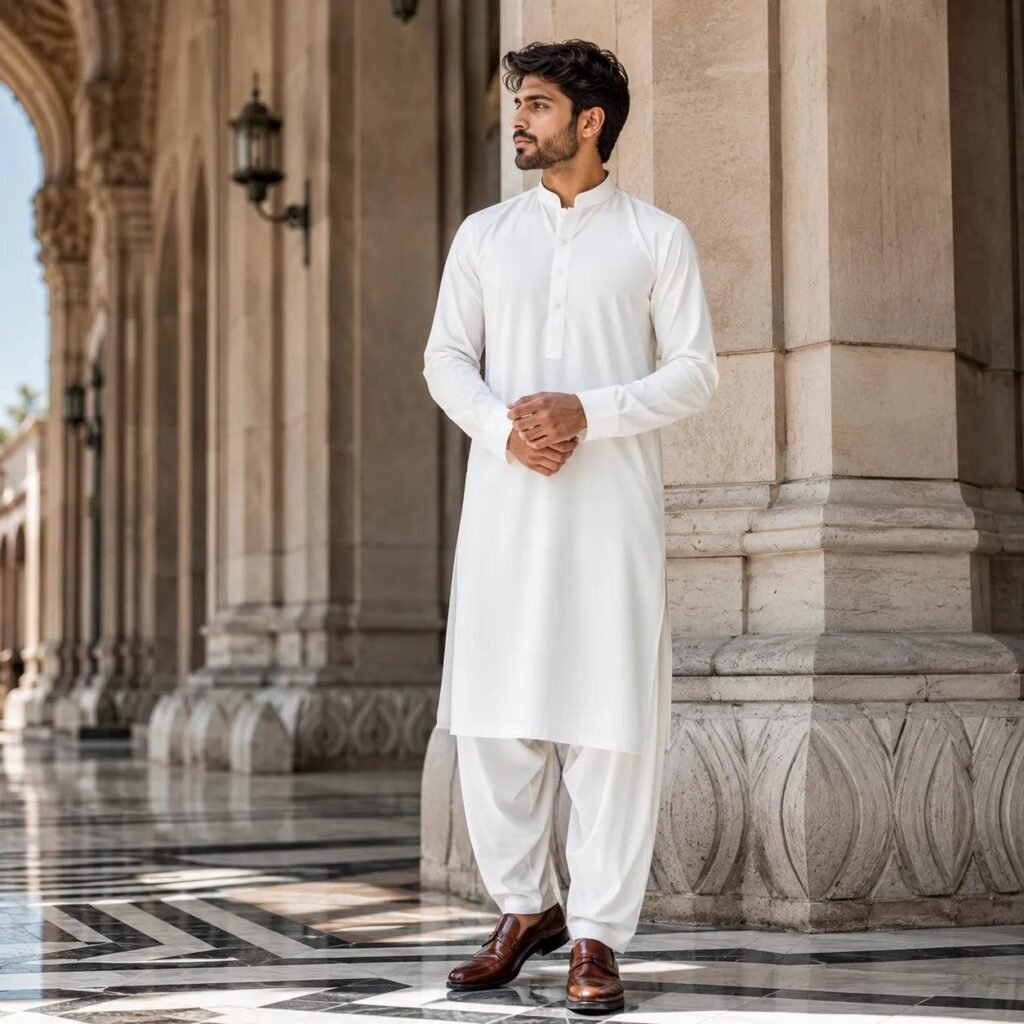
In countries such as Pakistan, India, and Bangladesh, the kurta is a popular traditional garment for men.
It shares some visual similarities with a thobe because it is also a long, loose-fitting top. However, a kurta is generally worn with separate trousers, such as a pajama or shalwar, rather than being a single full-length robe.
Kurtas come in many different lengths, fabrics, and designs. Some are simple enough for everyday wear, while others include embroidery and decorative details for weddings, Eid, and other celebrations.
The kurta is not exclusively associated with Muslim clothing. It is worn by people from different religious and cultural communities across South Asia.
What makes it distinctive?
-
Usually worn with separate trousers.
-
Available in short and long styles.
-
Often features a front button opening.
-
Can be simple, casual, or heavily decorated.
If you are comparing a kurta with a thobe, the main difference is the overall construction and how each garment is traditionally worn.
Thobe, Kandura, Dishdasha, and Djellaba: Understanding the Differences
These garments may look similar because they are long and often loose-fitting, but their names and traditional details vary by region.
Here is a quick comparison to make the differences easier to understand.
| Garment | Region | Recognisable feature |
|---|---|---|
| Saudi thobe | Saudi Arabia | Structured collar and front buttons |
| Emirati kandura | UAE | Often collarless with a decorative tassel |
| Omani dishdasha | Oman | Furakha tassel and kumma pairing |
| Moroccan djellaba | Morocco | Loose fit and pointed hood |
| Kuwaiti dishdasha | Kuwait | Clean, minimal tailoring |
| Yemeni traditional garments | Yemen | Regional variations and layered styles |
| Kurta | South Asia | Worn with separate trousers |
These descriptions cover common traditional styles, not strict rules. Designs can change between regions, occasions, and individual preferences.
How to Choose the Right Thobe Style for Yourself
Knowing about different regional styles is interesting, but how do you decide which one to wear?
The best choice depends on your comfort, personal taste, and where you plan to wear it.
Think About Your Daily Routine
If you need something for everyday prayers, work, or regular outings, a simple Saudi-style thobe or a clean Gulf-style garment may suit your needs.
For special occasions, you may prefer a design with more distinctive details, depending on your personal style.
Choose Fabric According to the Weather
Fabric makes a noticeable difference to how comfortable a garment feels.
Lightweight cotton and suitable cotton blends can be practical for warmer weather. Heavier fabrics may be more appropriate for cooler conditions. Always check the fabric composition and care instructions before buying.
Pay Attention to Fit and Length
A thobe should allow you to walk, sit, and move comfortably. Check the shoulder width, sleeve length, chest measurements, and overall garment length.
When you buy thobes online, use the store’s size chart rather than relying only on your usual clothing size. Different brands can have different measurements.
Decide How Traditional or Minimal You Prefer Your Outfit
Some men prefer a plain white thobe with very few details. Others enjoy regional styles with distinctive collars, tassels, embroidery, or traditional headwear.
There is no single correct choice. Your clothing should reflect your preferences while remaining comfortable for the occasion.
Where to Buy Thobes Online?
Finding the right thobe is easier when you know what to look for. Before placing an order, compare the available styles, fabric information, measurements, and product details.
If you are looking to buy thobes online in the USA, Shannoh offers a range of men’s thobes for different clothing preferences. You can explore its men’s thobe collection to see the available designs, colours, and size options.
When shopping, pay attention to the product description and sizing information. A garment that looks good in a product photograph should also fit comfortably and suit the way you plan to wear it.
Final Thoughts
Traditional men’s clothing has many different styles, and each region brings something of its own to the design. From the structured Saudi thobe and collarless Emirati kandura to the Omani dishdasha and hooded Moroccan djellaba, these garments reflect local traditions, preferences, and ways of dressing.
You do not need to choose a style based only on where it comes from. Think about the fit, fabric, occasion, and appearance you prefer.
Whether you are buying your first thobe for men or adding another design to your wardrobe, exploring these regional styles can help you make a more informed choice.