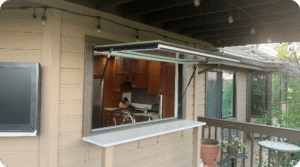
A well-ventilated kitchen feels fresher, cleaner, and more comfortable throughout the day. Cooking can release heat, steam, grease particles, and strong odors that may remain trapped indoors without enough airflow. While exhaust fans and range hoods help remove these pollutants, natural ventilation can provide another effective layer of air circulation. An awning pass through window can bring fresh outdoor air into the kitchen while also creating a convenient opening between indoor and outdoor spaces.
Understanding Awning Pass Through Windows
An awning pass through window is designed with hinges along the upper edge, allowing the lower section to open outward. This opening creates a pathway for fresh air to enter while helping warm and stale air move toward the outside. The pass-through design can also make it easier to transfer food, dishes, or other items between a kitchen and an outdoor entertaining area.
The awning-style configuration offers homeowners greater control over how much air enters the room. Instead of leaving a large opening completely exposed, the sash can be positioned according to the desired airflow. This feature can be particularly useful in kitchens where ventilation needs change during cooking. It combines everyday convenience with a practical approach to improving indoor air movement.
Creating Better Air Circulation During Cooking
Heat and moisture naturally build up when food is being prepared. Boiling water, frying ingredients, baking, and using the oven can all raise the temperature and humidity inside the kitchen. Opening an awning pass through window gives some of that warm air a route toward the outdoors. At the same time, cooler and fresher outdoor air can enter the room.
This natural exchange can make the kitchen feel less stuffy while cooking. It may also help reduce the amount of time unpleasant food odors remain indoors. When the window is positioned correctly, the airflow can work alongside a range hood or exhaust fan to support a more complete ventilation setup. This makes the window a useful addition rather than a replacement for mechanical ventilation.
Helping Reduce Kitchen Moisture
Excess moisture is another common concern in kitchens. Steam from boiling pots, dishwashing, and cooking can increase indoor humidity, particularly in smaller or enclosed spaces. If moisture has nowhere to escape, it can contribute to condensation and create an uncomfortable environment. Natural airflow from an appropriately positioned window can help move humid air outside.
An awning-style window can provide controlled ventilation without requiring the entire window opening to remain exposed. Homeowners can open it when steam begins to build and close it once the air becomes more comfortable. Maintaining reasonable humidity levels can also help protect kitchen surfaces, cabinetry, and finishes over time. Good ventilation is therefore useful for both comfort and general indoor maintenance.
Advantages of Using an Awning Pass Through Design
The design provides several practical benefits beyond simply allowing a window to open. Its outward-opening sash creates an opening that can be adjusted based on the weather and ventilation requirements. The pass-through feature also makes the kitchen more connected to outdoor areas, which can be valuable during gatherings and family meals.
Some notable advantages include:
- Fresh air intake: Outdoor air can enter and improve circulation inside the kitchen.
- Odor control: Air movement can help carry lingering cooking smells outdoors.
- Steam reduction: Additional airflow can help disperse moisture produced during cooking.
- Heat relief: Fresh air may reduce the buildup of excessive warmth.
- Adjustable ventilation: The sash can be opened to different positions as needed.
- Convenient serving: Food and dishes can be passed directly through the opening.
These features can make the window especially useful in kitchens connected to patios, decks, outdoor kitchens, or dining areas.
Improving Ventilation Throughout the Year
Different seasons bring different ventilation challenges. During pleasant spring and fall weather, opening a kitchen window can provide a simple way to enjoy fresh air without relying entirely on mechanical systems. On mild days, natural airflow can make the room feel more comfortable while cooking and entertaining.
During summer, homeowners can open the window when outdoor conditions are cooler, such as in the morning or evening. In winter, the opening can be used for shorter periods when fresh air is needed without unnecessarily losing indoor heat. Because the sash can be controlled, homeowners have greater flexibility when managing airflow throughout the year.
Choosing the Right Location
Window placement has a major influence on ventilation performance. Installing the window in a suitable location can help create a direct route for stale or warm air to leave the kitchen. It is also important to make sure the window does not conflict with countertops, cabinets, appliances, or other kitchen fixtures.
The exterior surroundings should be considered as well. Nearby walls, fences, landscaping, and outdoor structures can influence how freely air moves around the opening. A professional can evaluate the kitchen layout and outdoor space before installation to help identify a practical location. Proper planning can improve both ventilation and everyday usability.
Working With a Range Hood or Exhaust Fan
An open window can improve natural airflow, but it should not normally be considered a complete substitute for dedicated kitchen ventilation. Range hoods and exhaust fans are designed to capture and remove cooking pollutants close to where they are produced. A window can support these systems by allowing replacement air to enter the room.
Using both natural and mechanical ventilation can create a more balanced approach. For example, a range hood can remove smoke and airborne particles while the open window encourages fresh air circulation. If a kitchen continues to experience excessive smoke, humidity, or odors, the existing ventilation system may need professional evaluation rather than relying solely on a window.
Selecting a Quality Window
Choosing the right window involves more than selecting an attractive style. Homeowners should consider the size of the opening, frame material, glass performance, hardware, weather resistance, and how frequently the window will be used. The design should also fit naturally with the kitchen’s existing architecture and outdoor space.
When looking for the best Awning Pass Through Windows, homeowners should prioritize quality construction and smooth operation. A properly designed window should provide reliable ventilation while remaining easy to open, close, and maintain. Professional installation is equally important because poor sealing or incorrect positioning can reduce energy efficiency and affect long-term performance.
Making the Kitchen Fresher and More Functional
An awning pass through window can be a valuable addition to a kitchen where airflow, convenience, and outdoor access are important. By providing another route for fresh air, it can help reduce heat, moisture, and lingering odors created during everyday cooking. The pass-through feature also adds practical value by making it easier to connect the kitchen with a patio, deck, or outdoor entertaining area.
For the best results, homeowners should consider window placement, outdoor conditions, kitchen layout, and existing ventilation equipment before installation. When these factors are planned together, an awning pass through window can contribute to a more comfortable and functional kitchen. It offers a simple combination of natural airflow and convenience that can improve the way the space is used every day.