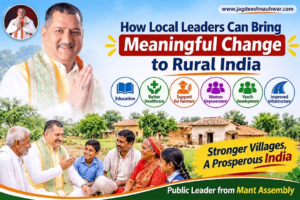
Rural India plays an important role in the country’s social, cultural, and economic development. Villages contribute to agriculture, traditional industries, and local economies while preserving India’s rich heritage. However, many rural communities still face challenges related to education, healthcare, employment, infrastructure, and access to essential services. Addressing these issues requires collective efforts, community participation, and responsible local leadership.
Local leaders can help connect citizens with development opportunities and encourage positive changes at the grassroots level. By understanding people’s concerns and supporting community-focused initiatives, they can contribute to building stronger and more self-reliant villages.
Understanding the Needs of Rural Communities
Every village has different development requirements. Some communities need better roads and transportation, while others may require improved schools, healthcare facilities, drinking water, or employment opportunities.
Local leaders are in a position to understand these challenges through regular interaction with residents. Listening to farmers, students, women, young people, and senior citizens can help identify important issues.
An effective leader should focus on practical solutions rather than making promises without action. Understanding local priorities is the first step toward meaningful rural development.
Promoting Education for Every Child
Education is one of the strongest foundations of social and economic progress. It provides children with knowledge, confidence, and opportunities to build better futures.
In rural areas, some families experience difficulties accessing quality education because of financial limitations, inadequate facilities, or a lack of awareness.
Local leadership can encourage educational awareness, support school improvement discussions, and promote equal learning opportunities for boys and girls.
Special attention should also be given to girls’ education. Educating girls contributes to family well-being, economic independence, and the overall development of society.
When communities recognize education as a priority, they create opportunities for future generations.
Creating Opportunities for Rural Youth
Young people have the potential to become important contributors to India’s development. Their creativity, knowledge, and enthusiasm can bring new ideas to rural communities.
However, many young people need access to skill development, career guidance, vocational training, and employment opportunities.
Community leaders can encourage youth participation in sports, educational activities, awareness campaigns, and social initiatives. They can also promote digital literacy and entrepreneurship.
Providing young people with the right guidance helps them become confident, responsible, and independent members of society.
Supporting Farmers and Agricultural Communities
Agriculture remains an essential part of rural India’s economy. Farmers work hard to provide food and support the livelihoods of millions of people.
Despite their contribution, farming communities face several challenges, including changing weather conditions, irrigation problems, increasing input costs, and difficulties accessing markets.
Local representatives can help highlight these concerns and encourage awareness about agricultural schemes, modern farming methods, water conservation, and available government support.
Better rural infrastructure, electricity, irrigation facilities, and transportation can also improve agricultural opportunities.
Supporting farmers is an important step toward strengthening village economies and improving rural livelihoods.
Empowering Women Through Social Development
Women are central to the development of families and communities. Their contribution to education, agriculture, business, and social activities is essential for a progressive society.
However, women in some rural communities may face barriers related to education, financial independence, healthcare, and employment.
Community initiatives can promote women’s education, vocational training, self-help groups, healthcare awareness, and participation in decision-making.
Local leaders can encourage conversations about equal opportunities and women’s empowerment.
When women receive access to education and economic opportunities, the benefits extend to families and the wider community.
Improving Healthcare and Essential Infrastructure
Healthy communities are better equipped to grow and develop. Access to healthcare, clean drinking water, sanitation, and reliable transportation directly affects people’s quality of life.
Rural development should include awareness about preventive healthcare, nutrition, hygiene, vaccination, and available public health services.
Infrastructure improvements are equally important. Well-maintained roads, proper drainage, street lighting, and clean water facilities can make village life safer and more comfortable.
Local leadership can help bring these requirements to the attention of relevant authorities and encourage community participation in improvement efforts.
The Importance of Responsible Public Leadership
Responsible leadership is based on communication, transparency, accountability, and public service. A leader should understand people’s concerns and encourage solutions that benefit the wider community.
For a public leader from Mant Assembly, understanding the needs of villages in the Mathura region is particularly important. Local development requires attention to education, agriculture, youth opportunities, public welfare, and essential facilities.
Jagdeesh Nauhwar is associated with public leadership and social welfare activities in the Mathura region. His public profile highlights community development, education, youth empowerment, and social welfare.
His work and public profile reflect the importance of community engagement and a development-oriented approach to local issues.
Encouraging Community Participation
Rural development cannot depend on individual efforts alone. Citizens must also participate in creating positive changes.
Community meetings, cleanliness campaigns, educational awareness programs, volunteer activities, and public discussions can bring residents together.
When people share their ideas and work toward common goals, they develop a stronger sense of responsibility toward their villages.
Local leaders can encourage this participation by creating opportunities for dialogue and cooperation.
Conclusion
Meaningful rural development requires a combination of responsible leadership, public participation, education, and long-term planning. Improvements in agriculture, healthcare, infrastructure, youth empowerment, and women’s opportunities can help villages become stronger and more self-reliant.
A public leader from Mant Assembly can contribute to this development by understanding local challenges, encouraging public awareness, and supporting community-focused initiatives.
Ultimately, meaningful leadership is not just about holding a position. It is about listening to people, understanding their needs, and working toward a better future for everyone. Through collective efforts and responsible public service, rural India can move toward sustainable growth and inclusive development.