Have you ever found yourself losing hours to changeovers between jobs? Are you struggling to keep up with customers who want smaller batches and faster turnaround times? What if there was a way to make your machines work smarter, not harder?
In today’s manufacturing landscape, flexibility isn’t just nice to have—it’s absolutely essential. Australian manufacturers are facing increasing pressure to adapt quickly, respond to changing demands, and maintain profitability without sacrificing quality. This is where modular workholding comes into play, offering a game-changing approach to how we secure parts during machining operations.
Throughout this article, we’ll explore what modular workholding actually is, why it matters for modern production, and how it can transform your manufacturing operations. Whether you’re running a busy job shop or managing production for aerospace components, you’ll discover practical insights to help you make informed decisions about your workholding strategy.
What Is Modular Workholding?
Understanding the Basics of Modular Workholding Systems
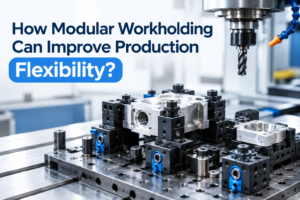
At its core, modular workholding refers to a system of interchangeable, standardised components that work together to secure workpieces during machining. Think of it like building blocks for your machine table. Rather than creating a custom fixture for every single job, you’re using a kit of compatible parts that can be reconfigured quickly.
The beauty of this approach lies in its adaptability. You can set up for one job, complete it, then reconfigure the same components for something entirely different—all without starting from scratch.
Key Components of a Modular Workholding Setup
A typical modular system includes base plates with precisely machined hole patterns, clamping elements, risers, locating pins, and various accessories. These components are manufactured to tight tolerances, making sure everything fits together perfectly every time.
The standardised hole patterns—whether metric or imperial—provide consistent reference points. This means you can document setups and recreate them reliably whenever you need to run the same part again.
How Does Modular Workholding Differ from Fixed Workholding?
Fixed workholding involves dedicated fixtures designed for specific parts. While these offer excellent rigidity and repeatability for high-volume production runs, they’re essentially single-purpose tools. Once that job ends, the fixture sits on a shelf.
Modular systems, on the other hand, give you flexibility. The same components that held an automotive bracket yesterday can be reconfigured to hold an aerospace fitting tomorrow. This versatility is what makes modular workholding so valuable for manufacturers dealing with varied product mixes.
Why Is Production Flexibility So Important in Modern Manufacturing?
Meeting Changing Customer Demands
Customer expectations have shifted dramatically. Gone are the days when buyers were happy to wait months for large batch orders. Today’s customers want customisation, shorter lead times, and smaller quantities. They expect you to pivot quickly when specifications change.
Manufacturers who can’t adapt risk losing business to competitors who can. Production flexibility has become a genuine competitive advantage.
Reducing Downtime Between Jobs
Every minute your spindle isn’t cutting means lost revenue. Traditional fixtures often require lengthy setup procedures, eating into productive machining time. The faster you can transition between jobs, the more parts you can produce.
This is particularly critical for job shops handling dozens of different parts each week. Reducing setup time from hours to minutes can dramatically improve your bottom line.
Supporting Small Batch and High-Mix Production
The trend toward smaller batches and higher product variety shows no signs of slowing. Whether it’s prototype development, replacement parts, or customised components, manufacturers need systems that handle variety efficiently.
High-mix, low-volume production demands a different mindset—one where flexibility takes priority over the raw speed of dedicated production lines.
The Top Benefits of Modular Workholding for Production Flexibility
Faster Changeovers and Reduced Setup Times
This is the headline benefit. With modular systems, changeovers that once took hours can often be completed in minutes. Components simply bolt into predetermined locations, eliminating the guesswork and adjustment time associated with traditional setups.
Quick-change capabilities mean more time cutting and less time fiddling with fixtures.
Improved Machine Utilisation
When setup times shrink, machine utilisation naturally increases. Your expensive CNC equipment spends more tim doing what it’s designed to do—making chips and producing parts.
Higher utilisation rates translate directly into improved productivity and better return on your equipment investment.
Cost Savings Through Reusable Components
Instead of purchasing or manufacturing new fixtures for every job, you’re reusing the same modular components repeatedly. Over time, this significantly lowers your tooling costs.
Plus, the components retain their value. Even as your product mix changes, the modular system adapts right along with it.
Enhanced Precision and Repeatability
Quality modular systems are engineered to exacting standards. The precision-ground surfaces and tight-tolerance hole patterns provide consistent, repeatable positioning.
When you document a setup, you can recreate it with confidence—knowing the part will locate exactly where it should, every single time.
What Are the Different Types of Modular Workholding Systems?
Grid Plate Systems
Grid plates feature evenly spaced hole patterns across their entire surface. These holes accept various clamping and locating components, providing enormous flexibility for positioning workpieces.
They’re particularly popular for general-purpose work where part geometries vary considerably from job to job.
Zero-Point Clamping Systems
Zero-point systems use precision receivers mounted to your machine table and matching pallets that lock into place instantly. This apoach delivers exceptional repeatability and lightning-fast changeovers.
Many manufacturers use zero-point clamping to pre-stage multiple setups offline, then swap them in and out of the machine in seconds.
Modular Vice Systems
These systems combine traditional vice functionality with modular mounting capabilities. Interchangeable jaws and standardised bases allow quick adaptation to different part sizes and shapes.
They offer a familiar working method while still delivering the benefits of modular flexibility.
Fixture Plates and Subplate
Fixture plates provide a stable, precision-machined foundation for building up modular setups. Subplates can be removed from the machine as complete assemblies, allowing offline setup while production continues.
This layered approach maximises both flexibility and productive machining time
How Can Modular Workholding Reduce Manufacturing Costs?
Lower Tooling Investment Over Time
The initial investment in a modular system might seem significant. However, when you compare it against the ongoing cost of dedicated fixtures for every new job, the economics shift dramatically in favour of modular.
One well-designed modular kit can replace dozens of single-purpose fixtures.
Minimising Scrap and Rework
Reliable, repeatable workholding means consistent part positioning. When parts are held correctly every time, you’ll see fewer quality issues, less scrap, and reduced rework requirements.
The precision of quality modular systems directly supports your quality objectives.
Maximising Spindle Uptime
More time cutting means more parts out the door. By reducing non-productive setup time, modular workholding helps you extract maximum value from your capital equipment investment.
Every extra hour of spindle uptime contributes to improved profitability.
Is Modular Workholding Suitable for CNC Machining?
Compatibility with CNC Milling and Turning
Absolutely. Modular workholding systems are designed with CNC applications in mind. Whether you’re running vertical machining centres, horizontal mills, or turning centres, there are modular solutions available.
The precision and repeatability of these systems complement CNC capabilities perfectly.
Integrating Modular Systems into Existing CNC Workflows
Most modular systems can be integrated into existing operations without major disruption. Start with a basic kit, learn the system, and expand as you discover what works best for your specific applications.
Many manufacturers begin with one machine and gradually roll out modular workholding across their entire shop floor.
Real-World Applications: Modular Workholding in Action
Aerospace and Defence Manufacturing
The aerospace sector demands exceptional precision combined with the ability to handle complex, varied components. Modular workholding delivers both, supporting everything from prototype development to production runs.
Automotive Component Production
Automotive suppliers face constant pressure to reduce costs while maintaining quality. Modular systems help them respond to design changes and production fluctuations efficiently.
General Engineering and Job Shops
For job shops handling an ever-changing mix of work, modular workholding is practically essential. The ability to adapt quickly to whatever comes through the door provides a genuine competitive edge.
How Do You Choose the Right Modular Workholding System?
Consider your typical part sizes, materials, and production volumes. Evaluate how the system will integrate with your existing machines and workflows. Think about long-term scalability—will the system grow with your business?
Take time to assess your actual requirements rather than simply choosing the most impressive-looking option.
Common Challenges and How to Overcome Them
The initial investment can feel daunting, but focus on the long-term return. Training takes time, but most operators quickly appreciate the benefits. Maintain your components properly to preserve accuracy over years of service.
Future-Proofing Your Production with Modular Workholding
Modular workholding represents a smart investment in manufacturing flexibility. By enabling faster changeovers, improving machine utilisation, and reducing long-term tooling costs, these systems help Australian manufacturers compete more effectively.
The shift toward smaller batches and greater product variety isn’t going away. Manufacturers who embrace flexible workholding solutions position themselves to thrive in this environment.
If you’re looking to improve your production flexibility, modular workholding deserves serious consideration. The benefits are real, the technology is proven, and the competitive advantages are there for those willing to make the change.