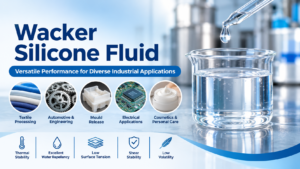
Selecting the right silicone fluid is an important consideration for industries that require consistent performance, thermal stability, lubrication, and surface protection. Different manufacturing processes have specific requirements, and choosing a suitable fluid can directly influence product quality, operational efficiency, and equipment reliability. Wacker Silicone Fluid is widely considered for industrial applications because of its versatile properties, including low surface tension, water repellency, and resistance to temperature variations.
From textile processing and automotive manufacturing to chemical processing and surface treatment, silicone-based fluids serve several industrial purposes. However, selecting the appropriate grade requires an understanding of viscosity, application requirements, compatibility, and operating conditions. Businesses looking for dependable sourcing options should also evaluate the experience and product knowledge of Wacker Silicone Fluid Manufacturers and Suppliers.
Understanding Wacker Silicone Fluid
Wacker Silicone Fluid refers to silicone-based products developed for applications where stability, spreading characteristics, lubrication, and moisture resistance are important. Depending on the formulation and viscosity grade, these fluids can perform different functions across industrial environments.
Silicone fluids are generally based on polydimethylsiloxane (PDMS) chemistry. Their molecular structure contributes to several useful characteristics, including flexibility across temperature ranges, low surface tension, and chemical stability.
One of the important considerations when purchasing these fluids is understanding that not every grade offers identical performance. Lower-viscosity grades may be suitable for applications requiring easy spreading, while higher-viscosity grades can be useful where thicker fluid characteristics are needed.
Important Properties of Wacker Silicone Fluid
Understanding the technical properties helps manufacturers and procurement professionals select suitable materials for their production requirements.
1. Thermal Stability
Silicone fluids are known for maintaining useful performance across a broad range of temperatures. Depending on the specific grade, they can support applications involving temperature fluctuations without immediately losing their functional characteristics.
2. Excellent Water Repellency
Their hydrophobic characteristics help create moisture-resistant surfaces. This property makes silicone fluids useful in applications involving textile treatments, construction materials, and surface protection.
3. Low Surface Tension
Silicone fluids have relatively low surface tension, allowing them to spread across different surfaces. This characteristic is valuable in applications requiring smooth coverage, surface conditioning, and controlled wetting.
4. Shear Stability
Suitable silicone fluid grades can maintain relatively consistent viscosity under mechanical stress. This property is beneficial in selected lubrication, damping, and industrial processing applications.
5. Low Volatility
Many silicone fluid grades demonstrate low volatility compared with conventional fluids of similar applications. This characteristic can help reduce evaporation-related losses under appropriate operating conditions.
Major Industrial Applications of Wacker Silicone Fluid
The versatility of silicone chemistry allows different grades to serve several manufacturing sectors. The actual application depends on product specifications and compatibility requirements.
Textile Processing: Silicone fluids are used in textile finishing formulations to improve fabric softness, smoothness, and surface feel. They can also contribute to water-repellent finishing systems when formulated appropriately.
Automotive and Engineering: Selected silicone fluids are used in damping media, lubrication-related applications, protective formulations, and components requiring stable fluid characteristics.
Mould Release Applications: Silicone-based materials can help reduce surface adhesion during certain moulding operations. They are used in suitable release formulations for plastics, rubber, and other manufacturing processes.
Electrical Applications: Certain specialised silicone fluids are considered for dielectric and electrical insulation applications. However, electrical compatibility and relevant technical specifications must always be verified before selection.
Chemical Processing: Silicone fluids can be incorporated into selected industrial formulations where spreading, lubrication, surface conditioning, or moisture resistance is required.
Cosmetics and Personal Care: Suitable cosmetic-grade silicone fluids are used in formulations requiring smooth application, conditioning, and improved sensory characteristics. Industrial grades should not automatically be considered suitable for personal care applications.
How to Choose the Right Wacker Silicone Fluid Grade
Selecting an appropriate grade is essential for achieving consistent production results. Before purchasing, industrial buyers should evaluate the following factors:
Viscosity Requirements: Viscosity determines how easily a fluid flows and spreads. Lower-viscosity grades may be suitable for applications requiring greater flow, whereas higher-viscosity grades may be preferred for applications requiring thicker fluid characteristics.
Application Compatibility: Consider the materials, processing conditions, and formulation components that will come into contact with the silicone fluid. Compatibility testing can help prevent unexpected production issues.
Operating Temperature: Evaluate the actual temperature conditions of the application. Always consult the relevant technical data sheet to confirm the recommended operating range.
Quality Documentation: Request appropriate product specifications, safety data sheets, and batch-related documentation. These records help procurement teams evaluate product suitability and maintain quality control.
Packaging and Supply Requirements: Consider the required quantity, storage conditions, delivery schedule, and packaging format before finalising a supplier.
Why Choosing the Right Wacker Silicone Fluid Supplier Matters
Product quality is only one part of successful industrial procurement. A dependable supply partner can also help businesses maintain production schedules and manage purchasing requirements more efficiently.
When evaluating Wacker Silicone Fluid Suppliers, buyers should consider product authenticity, batch consistency, technical documentation, availability, and communication.
Experienced suppliers can help customers understand available viscosity grades and identify products that may suit their intended applications. They can also support procurement planning by offering suitable quantities for initial trials as well as larger production requirements.
For manufacturers purchasing silicone chemicals regularly, maintaining a reliable supplier relationship can simplify inventory planning and reduce unnecessary sourcing complications.
Why Consider Plustech Chem for Wacker Silicone Fluid?
Plustech Chem is an industrial chemical supplier based in Gandhinagar, Gujarat, India, serving businesses looking for silicone-based products and speciality chemical solutions.
With an emphasis on product selection, supply coordination, and customer support, Plustech Chem assists industrial buyers in identifying suitable silicone fluid options according to their application requirements.
The available Wacker Silicone Fluid range includes different product options, such as:
-
Wacker 350 cSt Silicone Fluid
-
Wacker 1000 cSt Silicone Fluid
-
Wacker AK 100 cSt
-
Wacker SC 1500
These options provide buyers with different viscosity specifications to consider for their intended applications. Product selection should always be based on the manufacturer’s technical documentation and specific processing requirements.
Businesses can explore the complete product range through the Wacker Silicone Fluid product page.
Conclusion
Choosing the right silicone fluid involves more than comparing product names or viscosity values. Industrial buyers should evaluate application requirements, thermal conditions, compatibility, quality documentation, and long-term supply reliability before making a purchasing decision.
Wacker Silicone Fluid offers versatile characteristics that make suitable grades useful across various industrial applications, including textile processing, automotive manufacturing, mould release, and specialised chemical formulations.
Working with knowledgeable Wacker Silicone Fluid Manufacturers and Suppliers can simplify grade selection and support consistent procurement. Plustech Chem provides access to multiple Wacker silicone fluid options, helping businesses explore suitable solutions for their industrial requirements.