Indian kitchens have always relied on atta as the foundation of everyday meals. Whether it’s soft rotis for lunch or parathas for breakfast, the flour we choose plays a bigger role in our health than most people realize. With rising awareness about nutrition, more households are moving away from plain refined wheat flour and exploring healthier alternatives that offer better taste, texture, and long-term wellness benefits. This shift isn’t just a passing trend; it reflects a genuine change in how people think about the food they put on their plates every single day.
Why Flour Choice Matters More Than You Think
Not all atta is created equal. Regular wheat flour, while convenient, often lacks the fiber and micronutrients our bodies need on a daily basis. This is where blended and traditional grain flours come into the picture. They are milled from a combination of grains or from ancient millets that have been part of Indian diets for generations, offering a more balanced nutritional profile without compromising on taste. Many people assume that healthier flour means compromising on the softness of rotis or the flavor of parathas, but that is rarely the case when the blend is made thoughtfully.
The Benefits of Blended Grain Flour
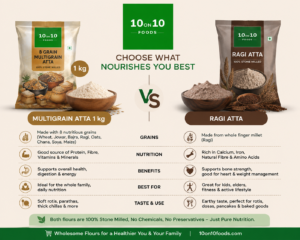
A well-balanced blend of grains brings together the goodness of wheat, barley, oats, soybean, and other cereals in a single flour. This combination naturally increases the fiber and protein content compared to single-grain options. People who switch to such blends often notice better digestion, sustained energy throughout the day, and a fuller feeling after meals, which can be helpful for those managing portion control.
For families looking for a convenient starting point, opting for a pack like multigrain atta 1 kg makes it easy to test the switch without committing to a large quantity right away. The smaller pack size is ideal for households wanting to experience the difference in taste and texture before making it a permanent part of their pantry. It also allows for easier storage, especially for smaller families or individuals living alone who don’t want flour sitting around for too long and losing freshness.
Ragi: The Traditional Superfood Making a Comeback
While blended flours are gaining popularity, ragi has quietly remained a staple in South Indian households for decades. Known for its impressive calcium content, ragi is often recommended for growing children, elderly family members, and anyone looking to strengthen bones naturally. It is also naturally gluten-free, making it a suitable choice for people with gluten sensitivities who still want to enjoy soft, homemade rotis or dosas.
Beyond calcium, ragi is rich in dietary fiber and has a low glycemic index, which means it releases energy slowly and helps keep blood sugar levels more stable. This makes it a preferred option for people who are mindful of their sugar intake or are simply trying to eat more consciously. Its earthy flavor also adds a nice variation to everyday meals, especially for households that eat wheat-based rotis every single day and are looking for something different without straying too far from familiar cooking methods.
Bringing Both Into Your Kitchen
The good news is that you don’t have to choose one over the other permanently. Many households rotate between different flours throughout the week to keep meals interesting while covering a wider range of nutrients. Trying ragi atta alongside your regular wheat-based flour can be a simple way to introduce more variety into your meals while still enjoying familiar dishes like rotis and dosas.
Some families even use one flour for breakfast items and another for dinner, spreading out the nutritional benefits across the day rather than relying on a single source. Children, in particular, benefit from this variety, as it exposes them to different tastes and textures from an early age, which can help build healthier eating habits over time.
Choosing Quality Over Convenience
When switching to healthier flour options, sourcing matters just as much as the type of grain. Freshly milled flour retains more nutrients and offers better taste compared to flour that has been sitting on shelves for extended periods. Stale or improperly stored flour can lose both flavor and nutritional value, which defeats the purpose of choosing a healthier option in the first place.
Brands like 10on10foods focus on providing freshly processed grain flours, ensuring that customers get both quality and nutrition in every pack. Choosing a trusted source also means fewer worries about additives or fillers that are sometimes mixed into cheaper, mass-produced flours.
Final Thoughts
Switching your everyday atta doesn’t have to be complicated. Small changes, like trying a new blend or incorporating a traditional grain flour into your weekly routine, can make a noticeable difference over time. Whether you’re looking for variety, better digestion, or stronger bones, exploring different atta options is a simple step toward a healthier kitchen. Over time, these small dietary shifts add up, contributing to better long-term health for the entire family without requiring drastic lifestyle changes.