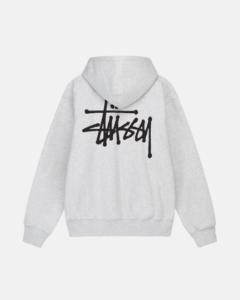
Long before “streetwear” became a billion-dollar industry with luxury houses scrambling to collaborate with skate brands and sneaker labels, there was Stussy — a small California surfboard business that quietly rewrote the rules of fashion. What began as a signature scrawled on custom surfboards in the early 1980s has grown into one of the most influential and enduring names in global street culture. Stüssy’s story is not just about clothing; it is about community, authenticity, and the birth of a movement that continues to shape how millions of people dress today.
The Origins: From Surfboards to T-Shirts
Stüssy was founded by Shawn Stussy, a surfboard shaper from Laguna Beach, California. In the late 1970s and early 1980s, Shawn began hand-shaping surfboards and signing them with his distinctive, graffiti-inspired signature — a stylized version of his own handwriting that resembled the logo of Chanel, though entirely coincidental in inspiration. This signature would eventually become one of the most recognizable logos in fashion history.
To help sell his surfboards, Shawn started printing his signature on plain T-shirts, using them almost like promotional merchandise. What he didn’t anticipate was that people wanted the shirts just as much as, if not more than, the boards themselves. The T-shirts captured the laid-back, rebellious spirit of Southern California’s surf and skate scenes, and demand grew organically through word of mouth on the beaches of Laguna and Newport.
By 1980, Shawn had partnered with Frank Sinatra Jr. — no relation to the singer, but a savvy businessman — to formally establish Stüssy as a clothing company. The brand’s early designs blended surf culture with punk, skate, and hip-hop influences, creating something entirely new: a fashion label rooted not in the runway but in the streets.
Building a Global Tribe
One of Stüssy’s most important innovations wasn’t a garment at all — it was a marketing philosophy. In the mid-1980s, Shawn Stussy and his collaborators began sending free clothing to influential DJs, musicians, skaters, and artists in cities around the world, including New York, London, Tokyo, and Paris. This loosely connected network became known as the “International Stüssy Tribe.”
The Tribe wasn’t a formal organization; it was a loose alliance of tastemakers who wore Stüssy because they genuinely liked it, not because they were paid to. This early, organic form of influencer marketing — decades before the term existed — helped Stüssy spread across subcultures and continents without traditional advertising. Names associated with the Tribe included graffiti artists, hip-hop pioneers, and underground musicians who lent the brand credibility that money couldn’t buy.
This grassroots approach became the blueprint that countless streetwear brands would later follow: build community first, let culture do the marketing, and treat clothing as an extension of identity rather than just a product.
The Rise of Streetwear as a Category
Stussy Clothing is widely credited, alongside a handful of contemporaries, with essentially inventing the modern concept of streetwear. Before Stüssy, there was no clear category for clothing that blended surf, skate, hip-hop, and punk aesthetics into a single wearable identity. The brand’s bold graphics, oversized silhouettes, and instantly recognizable logo created a template that would influence generations of designers.
As the label expanded internationally in the late 1980s and 1990s, it opened chapter stores in cities like Tokyo, London, and New York, each run somewhat independently but united by the core Stüssy aesthetic. This decentralized structure allowed local scenes to put their own spin on the brand while maintaining a unified global identity — another concept that streetwear brands continue to emulate today.
Japan, in particular, became a crucial market for Stüssy. Japanese consumers’ deep appreciation for American subculture and meticulous attention to quality helped cement Stüssy’s status as a cult favorite, and Tokyo remains one of the brand’s most important markets even now.
Collaborations and Cultural Impact
Stüssy has never been a brand that operates in isolation. Over the decades, it has partnered with an enormous range of companies and designers, from Nike and Dior to Levi’s, Comme des Garçons, and countless independent artists. These collaborations have consistently sold out within minutes, a testament to the brand’s enduring cool factor and cultural relevance.
Perhaps more importantly, Stüssy has managed something few brands ever achieve: it has stayed relevant across more than four decades without losing its original identity. While countless streetwear labels have risen and faded, chasing trends or overexposing themselves through mass retail, Stüssy has largely maintained a policy of limited distribution, selling primarily through its own stores and a small number of carefully selected retail partners. This scarcity has helped preserve the brand’s exclusivity and desirability, even as it has grown into a global name.
Design Philosophy
At its core, Stüssy’s design philosophy has always favored simplicity over excess. Classic pieces like the World Tour T-shirt, the 8-Ball graphic, and the signature logo hoodie remain best-sellers decades after their initial release. The brand mixes archival references with contemporary silhouettes, often reissuing designs from the 1980s and 1990s with updated fits for modern audiences.
This balance between nostalgia and innovation has allowed Stüssy to appeal to multiple generations simultaneously — longtime fans who remember the brand’s early days, and younger consumers discovering it through collaborations, resale platforms, or its continued presence in hip-hop and skate culture.
Stüssy Today
Today, Stüssy operates flagship stores in major cities worldwide, including Los Angeles, New York, London, Tokyo, and Seoul, alongside a robust online presence. Despite its commercial success, the brand has largely avoided the pitfalls of overexposure that have plagued other streetwear labels. It continues to release limited quantities, maintain relationships with artists and musicians, and prioritize authenticity over rapid expansion.
The brand’s influence can be seen everywhere, from the logo-driven design language adopted by countless streetwear startups to the very existence of “hype culture” surrounding limited drops and collaborations. Major fashion houses now regularly borrow from the streetwear playbook that Stüssy helped write.