Introduction
If you drive an SUV, pickup or even a regular sedan in the UAE, chances are the name Toyo has come up at some point while shopping for new tyres. It is a brand that gets mentioned a lot by mechanics and in car forums, but not everyone knows what actually makes it different from the dozens of other options sitting on tyre shop shelves, or how to actually go about placing an order once you have decided what to buy.
This guide covers both sides of that question. First, what makes Toyo tyres UAE buyers keep coming back to, including the different ranges available and how pricing works. Second, the practical side of placing a tyre order online, so you avoid the common mistakes that trip people up when buying tyres without visiting a shop in person.
Key Points
- Toyo is a Japanese tyre manufacturer known for heat resistant compounds, which matters a lot in a climate like the UAE’s
- The Open Country range is the most popular choice for SUVs and 4x4s, from light off-roading to serious mud terrain use
- Toyo sits in the mid to upper price bracket, above budget Asian brands but below flagship European tyres
- Always confirm your exact tyre size from the sidewall before placing an order
- Confirm whether your quoted price includes fitting, balancing and disposal of old tyres before you commit
Why Toyo Tyres Suit UAE Driving Conditions
Tyres in the Gulf go through a rougher life than they do almost anywhere else. Road surface temperatures can climb past 60 degrees in summer, and that heat works its way into the rubber compound, softening it and speeding up wear if the tyre was not built for it. This is one of the main reasons Toyo has built a loyal following here.
Toyo has been manufacturing tyres since 1945 and has spent decades refining compounds for hot climate markets, including Australia, Saudi Arabia and the UAE. Drivers who switch to Toyo from a budget brand often mention that the tyres feel more stable at highway speed and hold their tread pattern longer, even after a full summer of daily driving.
That said, no tyre is completely immune to UAE heat. Tyre pressure still needs regular checking, and rotation schedules matter just as much with Toyo as with any other brand.
The Main Toyo Tyre Ranges Available Locally
Open Country A/T III is Toyo’s all-terrain workhorse and probably the most commonly seen Toyo tyre on UAE roads. It suits SUVs and pickups that spend most of their time on tarmac but occasionally head out to Hatta, Fossil Rock or similar terrain, balancing a quieter ride with decent grip on sand and gravel.
Open Country M/T is the mud terrain option for serious off-roaders, with an aggressive tread block designed to bite into soft sand and rocky surfaces. It is noticeably louder on the highway compared to the A/T III, so it tends to suit people who off-road regularly rather than just on weekends.
Proxes Sport is Toyo’s performance road tyre, built for sedans and coupes where handling and braking response matter more than off-road capability. It is a common upgrade for drivers who want sharper cornering on fast moving routes.
Proxes CF2 is a comfort focused touring tyre aimed at everyday sedans and crossovers, prioritising a smoother ride and better fuel efficiency over outright performance.
How Toyo Compares to Other Brands
A lot of buyers end up comparing Toyo against Bridgestone, since both offer strong all-terrain lines. Bridgestone’s Dueler range is a close rival with wider availability across UAE dealers, though Toyo often edges ahead slightly in sidewall durability when driving on sand.
Against Michelin, the comparison shifts. Michelin generally wins on ride comfort and tread longevity for daily commuting, but it also costs more. Toyo tends to deliver similar performance at a friendlier price point, which is why it appeals to buyers who want quality without paying premium European prices.
Compared to budget brands like Nankang or Habilead, Toyo is a clear step up in wet weather grip and overall lifespan, though naturally it costs more upfront.
What Affects Toyo Tyre Prices in the UAE
Tyre size plays the biggest role in price. Larger rim sizes, common on SUVs and pickups, cost noticeably more than standard sedan sizes. An 18 inch Open Country tyre will cost more than a 16 inch Proxes CF2, for example.
The model line matters too. Off-road and performance tyres like the Open Country M/T or Proxes Sport sit higher on the price scale than the more everyday Open Country A/T III or Proxes CF2.
Country of manufacture can also influence pricing slightly, since Toyo produces tyres across several factories including Japan, Thailand and Malaysia. Fitting and balancing fees are sometimes bundled into a quoted price and sometimes not, so it is worth asking directly rather than assuming.
Placing a Tyre Order the Right Way
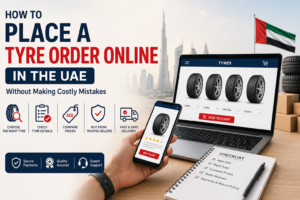
Once you have decided on a tyre, the next step is placing a tyre order, and this is where a lot of buyers slip up without realising it.
Step 1: Confirm Your Exact Tyre Size
Every tyre has a code printed on the sidewall that looks something like 225/55R17 97V. The first number is the width in millimetres, the second is the aspect ratio or sidewall height relative to width, R17 means it fits a 17 inch rim, and 97V refers to the load index and speed rating. If you are thinking about switching sizes, check with your vehicle manual or a tyre specialist first, since the wrong load index can affect handling.
Step 2: Choose the Right Tyre Type
Summer and all season tyres cover most sedans and crossovers on UAE roads. All terrain tyres, like Toyo’s Open Country range, suit SUVs and pickups that occasionally leave the tarmac. Run flat tyres are worth mentioning separately too, since mixing run flats with standard tyres on the same axle is not something most manufacturers recommend.
Step 3: Compare Brands and Prices
UAE tyre suppliers generally stock three tiers. Premium brands like Michelin, Continental and Bridgestone suit drivers doing long distance driving or wanting maximum comfort and resale value. Mid tier brands like Toyo, Hankook, Dunlop and Yokohama offer solid performance without the premium price tag, which is where many buyers find the best balance. Budget brands such as Nankang, Habilead and Nexen work fine for lower mileage vehicles or drivers who replace tyres more frequently.
It is worth getting quotes for two or three options in your size before finalising anything, since prices for the same specification can vary quite a bit between suppliers.
Step 4: Place the Order
There are usually two ways to go about it. The first is ordering for in-store fitting, where you reserve the tyres online and bring your car in for fitting, balancing and alignment in one visit. The second, which has become common recently, is mobile fitting, where a technician comes to your home, office or wherever your car happens to be. This is particularly useful if a tyre is already flat or badly damaged.
Before confirming, double check the quantity you are buying, since replacing tyres in pairs by axle is usually recommended for even wear, whether the quoted price includes fitting and balancing, the estimated delivery or fitting time, and the warranty terms attached to the specific model.
Step 5: Confirm the Appointment
After the order goes through, you should get a confirmation with an order reference number, a delivery window or fitting slot, and contact details for the technician if you chose mobile fitting. If confirmation does not come through within a reasonable time, follow up directly, especially during summer months when tyre demand and heat related failures both go up.
Common Mistakes to Avoid
A few mistakes come up again and again. Choosing a lower load index than recommended just to save a bit of money can affect how a car handles once fully loaded. Mixing different tread patterns or brands across axles can create uneven grip, particularly in wet conditions. Skipping the balancing and alignment check after fitting new tyres often shows up weeks later as uneven wear. And not checking the manufacturing date is easy to overlook, since tyres do age even sitting in storage, so checking the DOT code on the sidewall before fitting is a good habit.
Conclusion
Toyo has earned its reputation in the UAE for good reason. The heat resistant compounds and solid off-road lineup make it a practical choice for anyone dealing with Gulf summers, sitting in a comfortable middle ground between budget brands and top tier European options. Once you have chosen the right model for how you actually drive, the ordering process itself is straightforward as long as you confirm your exact size, compare a couple of price options, and check that fitting and balancing are included before you commit. A little bit of homework upfront saves a lot of hassle later.
Frequently Asked Questions
Are Toyo tyres good for hot climates like the UAE? Yes. Toyo has developed compounds that resist the rapid softening and wear caused by high road surface temperatures, which is a common issue in Gulf summers.
Which Toyo tyre is best for off-roading in the UAE? The Open Country M/T is built for serious off-road use with an aggressive tread pattern, while the Open Country A/T III suits drivers who mostly stay on tarmac with occasional desert trips.
How do I know what tyre size to order? Check the sidewall of your current tyre for a code such as 225/55R17, which tells you the width, aspect ratio, rim size and load rating you need to match.
Is mobile tyre fitting reliable in the UAE? Yes, most reputable suppliers offer mobile fitting with trained technicians, and it is often the more convenient option if your tyre is already damaged or flat.
How can I tell if a tyre order includes fitting and balancing? Always ask directly before confirming the order, since this varies between suppliers and is not always included in the headline price.