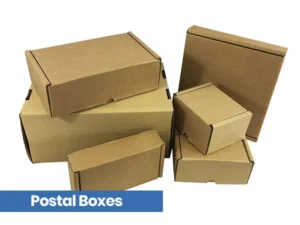
Most businesses spend a lot of time comparing couriers and very little time considering the box itself. That’s not a strategy, at least not a beneficial one. A courier’s job is to move a parcel from source to destination, often through a sorting depot, a delivery van, and several handling points along the way. There are a few questions that you must have answers to like: “Is the box the right sized for the product, or is there extra padding to absorb knocks, drops, and stacking pressure?” If the box is the wrong size, too weak, or badly sealed, no courier on earth will stop it arriving damaged.
This matters even more for small and growing e-commerce businesses, where a damaged delivery doesn’t just cost a replacement item but costs a review, a refund, and often a customer who doesn’t order again. It’s also worth remembering that couriers rarely accept liability for damage caused by inadequate packaging, so the cost of a badly chosen box tends to land squarely on the business, not the delivery network.
What Makes Cardboard Postal Boxes Actually Good
A well-made postal box is built to protect the product inside while staying as light as possible, since most couriers price parcels by size and weight together. That’s the balance a good box has to strike: strong enough to protect and light enough not to inflate the postage cost unnecessarily.
The most useful thing a business can do here is stock more than one size. Small, medium, and large postage boxes cover a genuinely wide range of everyday products, and each one deserves a box built around it, rather than everything getting squeezed into whatever size happens to be on the shelf that day. A box with too much spare space inside is almost as risky as one that’s too small, since the product can move around and take impact damage during transit.
The Small Detail That Makes a Real Difference
An intriguing design feature worth knowing about is the self-locking postal box, sometimes called a pizza-style box. These come flat-packed and fold into shape using locking flaps. What’s genuinely clever about them is the construction: a single layer of corrugated board folds into a triple-wall structure once assembled, giving real strength from what started as a much simpler sheet of cardboard.
These boxes are built for thin, flat, or low-height products, and they’re sized to fall within Royal Mail’s small-to-medium parcel guidelines, which is relevant directly for postage costs, since falling outside those size bands usually means paying a higher rate. For a business shipping the same type of product repeatedly, this is one of the easier wins available: less time at the packing bench, no tape gun involved, and a lower risk of a badly taped seam failing in transit.
Buying Direct Matters More Than People Assume
Where you buy postage boxes from affects both price and quality. Buying direct from the manufacturer or wholesaler, rather than through a reseller, generally means tighter quality control and better pricing, especially once you’re ordering at any real volume. For businesses shipping regularly, bulk and wholesale options exist specifically to bring the cost per box down further, and it’s usually the first place to look for savings once order volume starts climbing.
Matching the Box to the Journey
It’s easy to think about the product inside a box and forget to think about the journey it’s about to take. A parcel going a few miles by local courier and one going the length of the country through several sorting depots are handled very differently, even if the contents are identical. The more handling points a parcel passes through, the more it benefits from a properly sized, well-sealed box, and this is often the real reason “the courier damaged it” turns out to be a packaging problem instead.
A Simple Way to Think About It
Before boxing anything up, it helps to ask three quick questions:
- Does this box actually match the size of the product, or is there wasted space inside it?
- Is the wall strength appropriate for the weight?
- Is it sealed properly, with tape running across all the seams rather than just the top?
Getting those three things right solves the majority of in-transit damage before a courier is ever involved.
Summing Up
To sum up, several important factors must be taken into account when choosing the packaging materials. When selecting packaging for your shipments, pay attention to several important factors. Using the wrong packaging material or one of inferior quality will inevitably lead to damage to your items before they reach the customer. The packaging is therefore one of the most essential parts of the entire shipping and transportation journey which, if full attention is given to, can reverse unnecessary costs in shipping