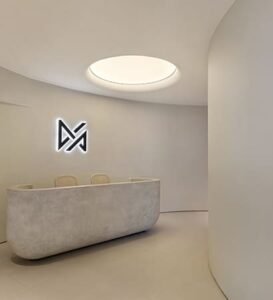
The UAE has become a global hub for business, hospitality, retail, healthcare, and real estate, creating strong demand for professionally planned and executed interiors. Businesses today want more than attractive spaces; they need environments that support productivity, reflect their brand identity, improve customer experiences, and remain practical for everyday use. This is where interior fit out companies in UAE play an important role. From initial space planning to material selection, construction, lighting, furniture coordination, and final installation, professional fit-out specialists can transform an empty shell into a fully functional environment.
The growing commercial landscape across Dubai, Abu Dhabi, Sharjah, and other emirates has also changed expectations around interior projects. Companies increasingly look for solutions that combine aesthetics, functionality, sustainability, technology, and long-term value. A well-executed fit-out is therefore not simply about decorating a space. It is about creating an environment that works efficiently while communicating the personality and objectives of the business.
What Does a Modern Fit-Out Involve?
A contemporary fit-out project can include a wide range of services. Depending on the property and business requirements, the process may involve space planning, interior architecture, flooring, ceilings, partitions, lighting, electrical works, plumbing, joinery, furniture, signage, and decorative finishes.
The project generally begins with understanding the purpose of the space. An office, restaurant, hotel, retail store, clinic, and educational facility all have different operational requirements. A successful design considers how people will move through the space, where equipment will be positioned, how employees or customers will interact with the environment, and how the finished interior can remain easy to maintain.
Professional planning at this stage can prevent expensive changes later. Measurements, building regulations, technical requirements, material specifications, and project timelines must all be considered before construction begins.
Why Businesses Are Investing in Better Interiors
Interior design has become an important part of business strategy. For offices, an intelligently designed workplace can encourage collaboration, concentration, and employee engagement. In retail environments, layout and visual presentation can influence customer movement and purchasing decisions. In hospitality, atmosphere can contribute significantly to the guest experience.
The UAE’s competitive business environment makes differentiation particularly important. A thoughtfully designed interior can help a company establish a memorable identity. It can also demonstrate professionalism to clients, visitors, investors, and potential employees.
Another important consideration is flexibility. Businesses change over time, and interiors should ideally accommodate future modifications. Modular partitions, adaptable furniture, multipurpose rooms, and efficient service layouts can make a property easier to update without requiring a complete renovation.
The Importance of Space Planning
Space planning is one of the foundations of a successful project. It involves determining how available floor space should be allocated according to the activities taking place inside it.
For an office, this might mean balancing private cabins, meeting rooms, open workstations, breakout areas, reception spaces, and employee facilities. For a restaurant, the design must consider dining areas, kitchens, storage, staff circulation, customer movement, and service points.
Poor space planning can create congestion, wasted areas, inefficient workflows, and unnecessary operating costs. Professional planning takes both current and future needs into consideration.
Material Selection and Finishing
Materials have a major influence on the appearance, durability, and maintenance requirements of a space. Flooring, wall finishes, countertops, ceilings, doors, glass partitions, and furniture must be selected according to the environment in which they will be used.
For high-traffic commercial properties, durable materials may be more appropriate than delicate finishes. Hospitality projects may require materials that combine luxury with easy maintenance. Healthcare environments require careful consideration of hygiene and safety.
Material selection should also consider availability, installation requirements, lifecycle costs, and compatibility with the overall design concept. Choosing materials purely because they look attractive can lead to maintenance challenges later.
Technology in Interior Projects
Technology is increasingly becoming part of commercial interiors. Smart lighting, access-control systems, integrated audiovisual solutions, energy-management systems, and workplace technology can be incorporated into modern spaces.
Meeting rooms may require video conferencing systems, while retail environments may integrate digital displays and interactive technology. Hotels and offices can use smart systems to improve energy efficiency and user convenience.
Technology should be incorporated during the planning stage rather than treated as an afterthought. Early coordination can help conceal cables, allocate equipment locations, and maintain a clean visual appearance.
Sustainable Interior Practices
Sustainability is another important consideration for modern UAE projects. Businesses are increasingly interested in materials and systems that reduce environmental impact and operating costs.
Energy-efficient lighting, responsible material selection, water-saving fixtures, durable finishes, natural daylight, and improved indoor environmental quality can contribute to more sustainable spaces.
Sustainability does not necessarily mean compromising on design. In many cases, environmentally responsible solutions can improve comfort and create a more contemporary aesthetic.
Choosing the Right Project Partner
Selecting a fit-out partner requires more than comparing quotations. Businesses should evaluate experience, technical capabilities, project management processes, workmanship, communication, and understanding of local requirements.
A reliable contractor should be able to coordinate multiple trades and suppliers while maintaining quality and schedule control. Clear communication is particularly important because commercial projects often involve architects, designers, consultants, property managers, suppliers, and business owners.
A strong portfolio can also provide insight into the company’s experience. However, businesses should look beyond photographs and understand whether the previous projects are comparable in scale, complexity, and sector.
Where Design Meets Construction
One of the advantages of working with an integrated project team is improved coordination between design and construction. Design decisions can directly affect budgets, timelines, material availability, and technical implementation.
This is particularly relevant in Dubai, where commercial interiors often need to meet demanding deadlines. Businesses may have lease commitments, planned openings, staff relocation schedules, or marketing campaigns connected to the completion date.
An integrated approach can reduce communication gaps and allow technical issues to be identified earlier.
The Role of Interior Design and Fit-Out Specialists
As businesses seek complete solutions rather than disconnected services, the role of interior design and fit out companies in Dubai has become increasingly significant. These specialists can connect creative concepts with technical execution, helping businesses move from an initial idea to a finished environment.
Their involvement can cover concept development, drawings, material specifications, budgeting, project coordination, construction, installation, and handover. The exact scope varies from one company to another, so clients should establish responsibilities clearly before starting.
Avoiding Common Fit-Out Mistakes
Several mistakes can increase project costs or affect the final result. One common issue is beginning construction without sufficiently detailed drawings. Another is selecting materials without considering lead times.
Changing the design repeatedly during construction can also create delays. Businesses should therefore establish priorities early and approve important decisions systematically.
Underestimating operational requirements is another problem. A visually impressive office may still fail if it lacks sufficient storage, power outlets, meeting facilities, acoustic control, or employee amenities.
Looking Beyond Aesthetics
A successful commercial interior should be attractive, but aesthetics alone cannot determine whether a project has succeeded. Functionality, durability, comfort, safety, accessibility, maintenance, and operational efficiency are equally important.
The best environments usually achieve a balance between visual identity and practical performance. Every design element should have a purpose, whether it supports branding, improves circulation, enhances comfort, or simplifies daily operations.
Final Thought
The UAE’s rapidly evolving business environment continues to raise expectations for commercial interiors. Businesses increasingly understand that their physical surroundings can influence productivity, customer perception, employee experience, and brand positioning.
A successful fit-out combines strategic planning, creative design, technical expertise, quality materials, careful project management, and attention to operational details. For companies planning a new workplace, retail environment, hospitality venue, or commercial facility, partnering with experienced interior design companies in UAE can help turn an empty space into a purposeful and memorable environment.