Hay storage is not just about keeping bales in one place; it’s about protecting your investment. Every bale represents time, labor, and money, and poor storage can slowly destroy all three. Rain, sunlight, ground moisture, and pests can reduce hay quality long before it reaches livestock. Many farmers lose a surprising amount of feed each year simply because their storage setup is not strong enough. Choosing between open hay storage and a metal hay barn is more than a budget decision. It directly affects feed quality, waste levels, and long-term farm costs. The right choice can save money, reduce stress, and protect your harvest.
What is Open Hay Storage?
Open hay storage means storing hay with little or no full enclosure. The most common methods include covering hay bales with tarps, stacking them directly on the ground, or placing them under simple open-sided sheds. These setups offer limited protection, mainly from direct rain, but leave hay exposed to moisture, wind, and sunlight from different angles. This method is widely used in small and medium farms due to its simplicity.
Why do farmers choose open storage?
The biggest reason farmers choose open storage is cost. It requires very little upfront investment and can be set up quickly. There’s no need for complex construction or permits in most cases. Open storage also offers flexibility; farmers can move or expand storage easily based on seasonal needs. For short-term storage or temporary use, open storage can seem like a practical solution.
Basic cost and setup needs
Open storage is affordable at the start. Tarps, wooden pallets, or a basic shed frame don’t cost much. Setup time is minimal, and maintenance appears simple. However, hidden costs come later in the form of hay loss, frequent tarp replacement, and increased labor to protect bales during bad weather.
What is A Metal Hay Barn?
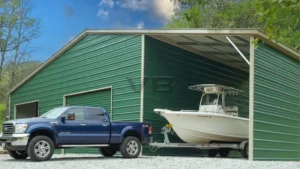
A metal hay barn is a fully or partially enclosed structure built specifically to store hay safely. It has a strong steel frame, solid metal roofing, and optional side walls or doors. These barns are designed to keep hay elevated, dry, and protected from all sides. Unlike temporary setups, metal hay barns are either permanent or semi-permanent.
Materials used and design features:
Steel hay barns are made from galvanized steel or coated metal panels that resist rust and corrosion. They often include raised flooring, proper ventilation, wide openings for machinery, and customizable sizes. Many designs also allow airflow without letting rain or snow inside, which helps prevent moisture buildup. The structure is engineered to handle heavy wind, snow loads, and long-term use.
How is it different from traditional storage?
Unlike open storage, prefabricated hay barns provide controlled protection. Hay is shielded from rain, sun, pests, and ground moisture at all times. There’s no need to rush during storms or constantly adjust covers. This makes metal barns a smarter choice for long-term storage and large hay volumes.
Which Offers Better Protection and Value?
To find out which offers the best value, you will have to learn about their features. Knowing the structure’s behavior in different environments will help you choose a suitable solution for your needs.
1. Protection from Weather Conditions
The weather is the biggest enemy of stored hay. Open storage offers very limited protection. Tarps can shift during wind, rain can enter from the sides, and snow often settles directly on the bales. Over time, moisture seeps in, causing mold and rot, even if the hay looks fine on the outside. Constant exposure to the sun also dries and bleaches hay, reducing its feed value.
Metal hay barns are built specifically to block weather from all directions. Solid roofs, side panels, and proper elevation keep rain, snow, and harsh sunlight away. This controlled environment keeps hay dry and stable throughout the year, which clearly makes metal barns the stronger option for weather protection.
2. Hay Quality and Nutrient Retention
Hay quality directly affects livestock health. In open storage, moisture and sunlight slowly break down nutrients. Even slight dampness can reduce protein and energy content, which means animals need more feed to get the same nutrition. Moldy hay can also cause digestive and respiratory issues.
Metal hay barns help maintain consistent dryness and airflow. By keeping hay off the ground and protected from moisture, they preserve nutrients for longer periods. The result is better feed efficiency, healthier animals, and less wasted hay. From a quality point of view, metal barns clearly offer more value.
3. Hay Loss and Waste Reduction
Open storage almost always leads to higher hay loss. Bottom bales absorb ground moisture, edges rot first, and damaged sections must be thrown away. Even careful stacking cannot fully prevent this. Over months, small losses add up to a large percentage of wasted feed.
Metal hay barns reduce loss significantly. Hay stays dry, stacked neatly, and protected. Less spoilage means more usable bales and better returns from every harvest. If reducing waste matters, metal barns are the smarter long-term choice.
4. Initial Cost vs Long-Term Cost
Open storage wins on initial cost. Tarps, pallets, or simple sheds are cheap and quick to install. This makes them attractive for small farms or short-term use. However, replacement tarps, extra labor, and repeated hay losses quietly increase costs year after year.
Steel hay barns cost more upfront, but they last for decades with minimal maintenance. When hay savings, reduced waste, and lower labor costs are considered, the long-term value often outweighs the initial expense. In most cases, metal barns pay for themselves over time.
5. Durability and Lifespan
Open storage materials wear out fast. Tarps tear, wooden supports rot, and repairs are frequent. Exposure to weather shortens their usable life. Metal hay barns are built for strength. Steel frames and coated panels resist rust, pests, and heavy weather. Many barns last 25 to 40 years with basic upkeep. For buyers thinking long-term, durability strongly favors metal barns.
6. Storage Capacity and Space Efficiency
Open storage spreads hay across large areas. Stacking height is limited, and space is often wasted. As hay volume grows, managing space becomes difficult. Steel hay barns allow vertical and organized stacking. Clear layouts improve space use and make expansion easier. This is especially useful for farms planning to grow.
7. Ease of Access and Daily Handling
In open storage, accessing hay during rain or snow is frustrating. Wet ground, loose tarps, and unstable stacks slow daily work. Prefab barns offer clean, dry access year-round. Wide openings and better layout improve workflow and save time. For daily feeding routines, this convenience adds real value.
8. Pest and Animal Protection
Open hay storage makes it easy for rodents, birds, and insects to access the bales. Rats and mice often burrow into stacks, birds nest between layers, and insects thrive in damp conditions. This not only damages the hay but also contaminates it with droppings and debris, making the feed unsafe for livestock.
Metal hay barns act as a physical barrier against pests. Enclosed walls, controlled entry points, and elevated storage greatly reduce pest activity. Cleaner hay means healthier animals and fewer veterinary issues caused by contaminated feed.
9. Safety and Fire Risk
Hay stored in open areas is more exposed to heat, dry conditions, and unpredictable airflow, which increases fire risk. Loose stacks and uncovered bales can heat unevenly, especially if moisture is trapped inside. Wind-blown debris and nearby equipment add to the danger.
Metal hay barns offer better control over ventilation and storage layout. Proper spacing, airflow design, and reduced exposure to external heat sources help lower fire risks. A structured storage system also improves overall farm safety for workers and animals.
10. Overall Value for Different Farm Sizes
Open storage can work for small farms with limited hay production and short storage periods. If hay is used quickly and losses are manageable, this option may feel cost-effective at first. However, as storage needs grow, losses become harder to ignore.
Metal hay barns are better suited for medium to large farms or anyone storing hay long-term. They protect larger volumes efficiently, reduce waste, and support farm growth. In the long run, they deliver stronger value and peace of mind.
Metal Hay Barn vs Open Hay Storage: Quick Comparison
If you are feeling overwhelmed after reading the above and looking for something to help you make a clear, quick decision, what could be better than a table?
|
Criteria |
Metal Hay Barn |
Open Hay Storage |
|
Weather Protection |
Full protection from rain, sun, wind, and snow |
Limited protection, mostly from the top only |
|
Hay Quality |
Maintains nutrients and dryness for long periods |
Quality reduces due to moisture and sun exposure |
|
Hay Loss & Waste |
Very low waste when stored properly |
High waste from rot, mold, and ground moisture |
|
Initial Cost |
Higher upfront investment |
Low initial cost |
|
Long-term Cost |
Cost-effective over time due to minimal losses |
Higher hidden costs from repeated losses |
|
Durability |
Lasts 25-40 years with low maintenance |
Tarps and sheds wear out quickly |
|
Pest Protection |
Strong barrier against rodents and birds |
Easy access for pests |
|
Fire Safety |
Better airflow control and safer layout |
Higher risk due to exposure and loose stacking |
|
Ease of Access |
Clean, dry access in all seasons |
Difficult during rain or snow |
So, Choose What Pays Back
Choosing between a metal hay barn and open storage comes down to how much value you place on protection, efficiency, and long-term savings. Open storage may look affordable at first, but ongoing hay loss, weather damage, and higher labor effort slowly eat into those savings. Metal hay barns, while requiring a higher upfront cost, offer consistent protection, better hay quality, and reduced waste year after year.
If hay is a major part of your farming operation, investing in proper storage is not optional; it’s essential. A metal hay barn doesn’t just store hay; it safeguards your feed, your livestock’s health, and your farm’s future.