Electrical control panels are designed around specific power and control requirements. Components installed inside them must match the electrical characteristics of the circuits they serve. This includes indicator lamps, which may appear small but still require careful selection.
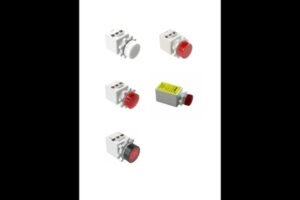
An LED Indicator Lamp is commonly used to display selected electrical and equipment conditions. Before choosing one, users should confirm its operating voltage and compatibility with the intended control circuit.
Selecting the wrong voltage can result in incorrect operation or damage to the component. A systematic selection process helps avoid these problems.
Why Voltage Compatibility Is Important
An LED indicator is designed to operate within a specified voltage range or at a particular rated voltage. If the supply does not match the product rating, the lamp may fail to illuminate correctly or may be damaged.
For this reason, users should not select an indicator simply because its size and colour match the panel design.
The first step is to identify the voltage available at the point where the indicator will be connected. This may be different from the main incoming supply because control panels can use separate control circuits.
Understanding Common Voltage Requirements
Industrial electrical systems use different voltage levels depending on the equipment and control design.
Some control circuits operate on low-voltage DC supplies, while others use AC supplies or higher-rated electrical circuits. Mimic Products lists LED indicating lamp options across selected voltage ratings, including 12V, 24V, 48V, 110V, 220V, 230V, 415V, 440V, and 600V variants, depending on the product.
These ratings should not be treated as interchangeable. Always confirm the exact operating voltage stated for the selected model.
A Practical Voltage Selection Process
1. Identify the Control Supply
Check the panel schematic, control transformer output, power supply rating, or relevant circuit documentation. Confirm whether the indicator circuit uses AC or DC.
2. Confirm the Actual Rated Voltage
Identify the voltage available at the indicator terminals under the intended operating conditions. Do not rely only on the main panel supply rating.
3. Check AC/DC Compatibility
Some indicator lamps are designed for AC operation, some for DC, and others for compatible AC/DC supplies. Select the correct version for the circuit.
4. Review Voltage Fluctuations
Industrial electrical systems may experience supply variations. Review the manufacturer’s permitted operating range and ensure that the actual circuit remains within the stated limits.
5. Confirm the Product Specification
Check the product datasheet or manufacturer’s information before ordering. Similar-looking lamps may have different voltage ratings.
Other Selection Factors Beyond Voltage
Voltage is essential, but it is not the only consideration.
Mounting size: Check whether the panel requires a 16.5 mm or 22.5 mm cut-out, or another specified dimension.
Colour: Choose a colour that follows the panel’s indication scheme.
Lighting function: Decide whether steady, flashing, or combined operation is required.
Body style: Consider whether a round or square body suits the panel design.
Environmental conditions: Review the stated protection rating and operating limits for the installation location.
Visibility: Consider the viewing distance and ambient lighting conditions.
LED Indicator Lamps for Different Industrial Applications
An LED indicator lamp can be installed in electrical distribution panels, motor control centres, switchgear, machine panels, and instrumentation systems.
In a motor control panel, for example, a 24V DC control circuit may be used to activate a running indication. Another panel may use a different supply voltage for its status lamps. The correct indicator must be selected according to the actual circuit design.
This is why checking the electrical drawings and model-specific specifications is important.
Mimic Products LED Indicating Lamp Range
Mimic Products offers LED indicating lamps for different industrial and electrical panel applications. The product range includes selected AC, DC, and AC/DC voltage options, along with different colours, body styles, mounting sizes, and lighting functions.
Users can review the category and compare individual products before deciding which model matches their application.
Explore the LED Indicator Lamp.
Common Voltage Selection Mistakes
Some common mistakes include assuming that all panel indicators operate at the same voltage, confusing the main supply with the control supply, and overlooking AC/DC compatibility.
Another mistake is ordering a replacement based only on its appearance. A replacement lamp should match the original electrical rating and required function.
Whenever a panel is modified, the circuit documentation should be reviewed to ensure that the selected component remains suitable.
Conclusion
Correct voltage selection is one of the most important steps when choosing an LED Indicator Lamp. Users should identify the control supply, verify AC/DC compatibility, review the manufacturer’s ratings, and check the remaining installation requirements.
Mimic Products provides a range of LED indicating lamps for different electrical applications. Comparing individual product specifications helps users select a suitable model for their control panels and equipment.
FAQs
1. Why should I check the voltage before buying an LED Indicator Lamp?
The lamp must match the supply voltage of the circuit to operate correctly and avoid electrical damage.
2. Are LED indicating lamps available in AC and DC versions?
Yes. Selected models are available for AC, DC, or compatible AC/DC operation. Check each model’s specification.
3. Can a 24V lamp be connected to a 230V supply?
No, unless the specific product is explicitly rated for that supply. Always follow the manufacturer’s voltage rating.
4. Does the main panel voltage determine the indicator voltage?
Not necessarily. The indicator may be connected to a separate control supply.
5. Where can I check available voltage options?
Review the Mimic Products category and the technical details of the individual product.