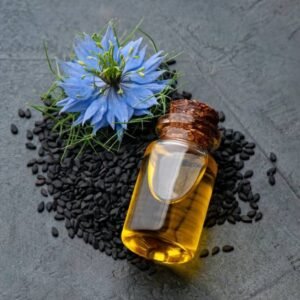
Black seed oil (from Nigella sativa seeds) – also called black cumin or kalonji oil – is prized for its rich content of unsaturated fatty acids and bioactives like thymoquinone. It has a long tradition of use in Middle Eastern, North African and South Asian cultures. Today, cold-pressed black seed oil is a sought-after ingredient for dietary supplements, nutraceutical blends, natural cosmetics, haircare products and even specialty culinary oils. Businesses sourcing this oil in bulk look for a reliable black seed oil manufacturer who can deliver consistent quality, full documentation, and competitive pricing.
Wholesale buyers value black seed oil for its characteristic peppery, herbal aroma and nutrient profile. The oil typically has an amber to dark-brown color with a spicy scent. Commercial cold-pressed black seed oil usually contains around 50–60% linoleic acid (an omega-6) and 20–25% oleic acid (omega-9), with smaller amounts of palmitic and stearic acids. Importantly, the oil’s signature compound, thymoquinone (TQ), generally ranges from about 0.5% to 2% in high-quality batches. (Exact TQ content varies by seed origin, harvest and extraction, so it should be checked on each batch’s Certificate of Analysis.)
Cold-Press Extraction and Manufacturing
Bulk black seed oil is produced by mechanical cold-pressing of cleaned Nigella sativa seeds. In this process, whole or dehulled seeds are fed into a screw or hydraulic press and squeezed at low temperatures (typically below ~60°C) to avoid heat damage. This preserves the oil’s natural fatty acids and volatile compounds. Reliable manufacturers use food-grade equipment with no chemical solvents, yielding a virgin oil that retains its full spectrum of actives. (Suppliers may also offer refined grades: refined oil is filtered and deodorized to produce a milder-smelling product for certain cosmetic uses.)
Yield from cold-pressing black cumin seed is in the range of roughly 30–35% of seed weight. (One review notes conventional presses yield about 32%.) Modern operations may pre-condition seeds (e.g. controlled moisture or temperature) to optimize oil recovery, but high-volume equipment must balance extraction efficiency with preserving thymoquinone levels. After pressing, the raw oil is typically filtered (e.g. through settling tanks or fine filters) to remove particulates. The finished oil is then drawn off into clean storage or packaging.
Quality Specifications and Testing
Wholesale buyers always require detailed quality analysis. Each batch of black seed oil should come with a Certificate of Analysis (COA) that confirms key parameters. At minimum, the COA should report the oil’s thymoquinone content (usually by HPLC), fatty acid profile (by GC-MS), and physical properties like color, odor, specific gravity and refractive index. Typical fatty acid ranges for cold-pressed black seed oil are about 50–60% linoleic acid, 20–25% oleic acid, 10–13% palmitic acid, and 2–4% stearic acid, with total unsaturated fats ~80–85%. These figures will vary by harvest, so the COA will show exact values for that lot.
Other COA data should include free fatty acid (acid value) and peroxide value. (Unrefined black seed oil naturally has higher readings than refined oils; acid values up to 5–10% and peroxide values in the tens of meq O₂/kg are common and reflect its bioactive compounds.) Fresh, well-stored oil should have a low peroxide number relative to its age (e.g. below ~10 meq O₂/kg indicates minimal oxidation). The supplier should certify the oil is 100% pure Nigella sativa oil with no adulteration. Many buyers also ask for a GC/MS or HPLC report from an accredited lab.
To evaluate quality on arrival, inspect the oil’s color, aroma and clarity. A high-grade cold-pressed oil is typically golden-amber and has a pungent, spicy scent. Any rancid or “off” odor indicates spoilage. Dark brown color or flat smell may suggest excessive refining or old oil. Always verify the batch’s COA and, if needed, have an independent lab test your sample. Reputable suppliers will provide COAs for free and may also offer SDS/TDS sheets. In summary, consistent quality and transparency are crucial: check that the supplier backs up purity claims with technical data.
Common Uses of Bulk Black Seed Oil
Black seed oil’s versatility drives its demand across industries. In cosmetics and personal care, it’s added to skin creams, lotions and soaps for its nourishing feel and to haircare products (serums, shampoos, beard oils) for scalp and hair conditioning. Many brands promote it as a soothing botanical ingredient. In the dietary supplements market, it is sold as capsules, softgels or liquid drops – often blended with other oils or botanicals. Some manufacturers even use it as a specialty culinary oil in gourmet foods, where its spicy flavor is appreciated. Importantly, while black seed oil distributor has traditional health associations, B2B content for a commercial blog should avoid medical claims. Instead, focus on its natural composition and versatility (e.g. “rich in vitamins and unsaturated fats”), and note that it is compatible with other carrier oils (jojoba, argan, etc.) in formulations.
Packaging, Storage and Shelf Life
Bulk black seed oil is typically delivered in bulk containers suitable for the order size. Common formats include drums (usually 55-gallon or 30-gallon sizes, made of food-grade lined steel or HDPE plastic) and IBC totes (rigid 275–330 gallon plastic containers inside a metal cage). Medium-sized buyers might also use kegs (5–15 gallon) or jerrycans (20–30 L). Some suppliers offer retail-ready bottles (amber glass or PET) for small clients or private-label brands, but most bulk users receive larger containers and repackage or pump the oil in-house.
Packing should protect the oil from light and air. Opaque, sealed containers are a must. Food-grade stainless steel drums or HDPE totes block UV rays, and minimal headspace reduces oxygen exposure. Make sure drum lids or IBC valves seal tightly, and use tamper-evident caps if possible. It’s often advisable to decant bulk oil into smaller amber bottles or pails upon arrival to simplify usage while keeping the main stock sealed.
Store unopened black seed oil in a cool, dry place around 50–70°F (10–21°C). Avoid extreme heat (above 80°F) or direct sunlight, which can accelerate rancidity and degrade thymoquinone. Under ideal conditions, a sealed drum or tote has a shelf life of about 24 months from production. Once opened, the oil should be used within about 6 months for best quality. Always label containers with batch/lot numbers and production dates, and follow a FIFO (First-In, First-Out) policy to use older stock first.
Shipping, Documentation and Pricing
Bulk black seed oil is shipped internationally by sea or road in containers. A 20-foot shipping container can typically hold about 14–16 standard 55-gallon drums; a 40-foot can hold roughly twice that. For very large volumes, flexitanks or ISO tanks are alternative options. When importing, ensure you have the proper paperwork: at minimum, you’ll need a commercial invoice, packing list, bill of lading, and a batch-specific COA. A Certificate of Origin (often from a Chamber of Commerce) and, where required, a phytosanitary or health certificate (from plant or health authorities) are also standard for food-grade oils. Additional certificates (Halal, Kosher, etc.) may be needed depending on buyer requirements.
Ask your supplier about Incoterms and delivery lead times. Overseas producers often sell FOB or CIF; freight times can be several weeks. In contrast, suppliers with local warehouses (e.g. in the US or EU) can dispatch drum or small-volume orders more quickly via ground freight. If your order is urgent, smaller containers or samples can sometimes be air-shipped, though this is costly. Always confirm packaging details (e.g. poly-line drums, palletization) and check that containers are properly labeled (e.g. “Food Grade Oil”).
Choosing a Trusted Supplier
Selecting the right black seed oil bulk supplier is critical. Prefer suppliers who are actual producers or have direct sourcing agreements (to ensure seed quality). Evaluate them on traceability and transparency. Key checks include:
- Quality certifications: Look for ISO 22000, HACCP, GMP, or food safety certifications. Halal and Kosher can also indicate attention to standards.
- Testing and documentation: Ensure the supplier provides third-party or in-house lab COAs for every batch. A reputable partner will readily share GC/MS or HPLC reports showing TQ, FFA, PV and fatty-acid data.
- Manufacturing practices: Cold-pressing without solvent or caustic refining is preferred. Be wary if a supplier “corrects” high acidity through refining (a sign of heavy processing).
- Consistency: Ask about harvest and bottling schedules. Genuine black seed oil will vary in color and aroma from batch to batch due to nature – this is normal. The goal is consistency in purity, not in color or taste.
- Supply chain: Confirm they maintain inventory or have reliable seed sources. A supplier should verify origin (e.g. Turkey, Egypt, India, etc.) and ideally have a fixed farming partner. Traceability back to origin is a good sign.
- Samples and trials: Before large orders, request a sample or small trial. This lets you verify the aroma, appearance, and a mini-COA. Some suppliers charge modestly for custom drums or allow you to inspect the oil before purchase.
In short, treat the selection like vetting any bulk ingredient: focus on verified quality and reliability over the lowest bid. Check references, and consider visiting the facility or obtaining independent lab analysis if volumes justify it.
Conclusion
Sourcing conventional (non-organic) black seed oil in bulk demands attention to quality, traceability, and logistics. By working with a reputable black seed oil wholesale, you can secure oil that meets your specifications and complies with international standards. Always review batch COAs, inspect samples, and ensure proper packaging and storage. With the right partner, bulk black seed oil can be a cost-effective, high-value ingredient for supplements, cosmetics, foods and more.
FAQs (Frequently Asked Questions)
1. What is black seed oil and where does it come from?
Black seed oil (Nigella sativa oil) is extracted from the seeds of the black cumin plant. It is rich in essential fatty acids (mostly linoleic and oleic acids) and active compounds like thymoquinone. Cold-pressed black seed oil has a long history of traditional use in the Middle East and Asia and is now used worldwide in supplements, foods, cosmetics and personal care products.
2. How is bulk black seed oil produced by cold-pressing?
Manufacturers clean and dry the Nigella seeds and then use a mechanical press at low temperatures (typically ≤60°C) to squeeze out the oil. This “cold-pressed” method preserves heat-sensitive compounds. The oil is filtered to remove particles, and then stored under food-safe conditions. No solvents or chemicals are used in cold-press extraction. Properly done, this yields a virgin oil with a peppery aroma and maximum natural content.
3. What are the main uses of bulk black seed oil?
Wholesale black seed oil is widely used in:
- Supplements/Nutraceuticals: Capsules, softgels, liquid drops, and functional foods.
- Cosmetics/Haircare: Skin creams, serums, soaps, scalp treatments and beard oils. Its nourishing oils and bioactives are valued in personal care formulations.
- Food/Culinary: As a specialty edible oil or flavoring in gourmet products.
It’s important not to make medical claims; instead emphasize its nutritional and sensory properties.
4. What quality tests are important for black seed oil?
Key parameters include:
- Thymoquinone (TQ) content: A bioactive marker. Premium oils often have ≥0.5–1% TQ. The batch COA should list the exact percentage.
- Fatty acid profile: Typically ~50–60% linoleic, 20–25% oleic, ~10% palmitic, 2–4% stearic. This confirms pure Nigella oil.
- Free fatty acids (FFA): Unrefined oil naturally has higher FFA (acid value). Cold-pressed black seed oil can show 5–10% or more; this is normal and indicates it’s unrefined.
- Peroxide value (PV): Indicates oxidation. Fresh cold-pressed oil may show tens of meq O₂/kg (higher than refined norms). Watch for rapidly rising PV over storage.
- Physical checks: The oil should be clear (no sediments), golden-amber, and have the characteristic spicy aroma. Off-odors or cloudiness are red flags.
Always obtain a batch-specific COA, and consider third-party testing if necessary.
5. What packaging formats are available for bulk black seed oil?
Common bulk packaging includes:
- Drums: 30–55 gallon (114–208 L) drums made of food-grade stainless steel or HDPE plastic. These are tight-sealed for large orders.
- IBC Totes: Rigid intermediate bulk containers (typically 275–330 gallon or 1,000–1,250 L) with an HDPE bladder in a metal frame. Used for very large volumes.
- Kegs: Smaller stainless-steel or plastic kegs (5–15 gallon) for medium-sized orders.
- Jerrycans and Pails: HDPE jugs (e.g. 20–30 L) or 5-gallon pails for moderate bulk needs.
- Retail Bottles: Pre-filled glass or PET bottles (amber if possible) are sometimes offered for private label or small batch requirements.
All packaging should be airtight and light-blocking. Suppliers may line steel drums with food-grade polyethylene for extra protection.
6. How should bulk black seed oil be stored, and what is its shelf life?
Store unopened containers in a cool, dry warehouse (about 50–70°F or 10–21°C) out of direct sunlight. Avoid temperatures above 80°F or below 40°F, which can harm the oil. The containers should be opaque (steel or colored HDPE) and well-sealed to minimize oxygen exposure. Under ideal conditions, sealed black seed oil lasts about 24 months from the production date. Once a drum or tote is opened, it’s best used up within 6 months. Always rotate stock (FIFO) and label each batch with production dates and batch numbers for traceability.
7. How are bulk orders priced and what is the minimum order quantity (MOQ)?
Prices depend on volume, oil grade and origin. As a reference, standard cold-pressed black seed oil has been around $14–15 USD per kg FOB (for large orders) in late 2026. Smaller trial orders carry a higher per-kg cost. Many suppliers have tiered pricing (e.g. samples, 200–500 kg lots, 1,000+ kg drums, full container loads). Typical MOQs range from a few hundred kilograms to a full 55-gallon drum (~200+ kg). Always ask for a formal quote. Drum or container pricing is usually offered “per batch” since it depends on quantities and shipping terms.
8. What documentation is needed for international bulk shipments?
For international orders of edible oils, you will generally need: Commercial invoice, Packing list, Bill of Lading (B/L), and Certificate of Analysis (COA). Additionally, a Certificate of Origin (from a chamber of commerce) and a Phytosanitary or Health Certificate (from plant/food authorities) are often required. Optional certificates might include Halal, Kosher, or non-GMO statements if those attributes were specified. Ensure the invoice description (oil name, HS code, weights) matches the B/L and packing list exactly to avoid customs delays. Proper labeling on drums (batch number, weight, UN rating if needed) is also important for shipping compliance.
9. How can I verify a supplier’s claims about black seed oil quality?
Request samples and documentation. A trustworthy supplier will share: batch-specific COAs (including lab results for TQ, acid value, peroxide, moisture, fatty acids), their manufacturing location, and any certifications they hold. Look for third-party or in-house lab accreditation. Inspect the sample – it should have the expected aroma and color. Check their references or reviews, and consider a factory visit or audit if you’re buying very large volumes. Good suppliers welcome audits, while those hiding information (e.g. about refining) may be suspect. Also compare sensory qualities: authentic cold-pressed oil can vary in color and taste by batch (a natural outcome of different harvests). Consistency of purity and specification (not uniform appearance) is the real goal.
10. What should I look for in a black seed oil manufacturer and bulk supplier?
Key factors include: direct experience in oil production, consistent seed sourcing, transparent QA/QC practices and robust logistics. Check that the supplier is a qualified manufacturer (not just a middleman), and ideally ISO 22000 or HACCP certified for food. They should demonstrate batch traceability (linking each drum back to seed origin and pressing date). Verify they do cold pressing with no solvent or excessive refining, and see if they have relevant certifications (HACCP, GMP, Halal, Kosher, etc. – these are not mandatory but reflect professionalism). Finally, good customer support and willingness to provide technical support (like answering your questions about storage or blending) is a positive sign. In summary, choose a supplier based on documented quality and reliability, not just the lowest price.