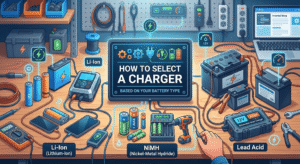
Selecting the right industrial battery charger is not simply a matter of matching voltage and plugging it into a machine. The charger must be compatible with the battery chemistry, voltage, capacity, charging requirements, equipment, and operating environment. Using the wrong charger can lead to incomplete charging, excessive heat, shortened battery life, equipment downtime, or potentially unsafe operating conditions. For forklifts, pallet trucks, floor-cleaning machines, warehouse equipment, backup power systems, and other industrial applications, charger selection should therefore be treated as an important part of battery management.
For businesses that need help identifying battery and charging requirements, a knowledgeable Battery Store Plano can be a useful starting point, particularly when the battery label, charger specifications, or equipment documentation is unclear. The goal is not simply to find a charger that physically connects to the battery, but to select one whose electrical characteristics and charging profile are appropriate for that specific battery and application.
Why Battery Type Matters When Choosing a Charger
Different battery technologies have different charging requirements. A charger designed for one battery type may not be suitable for another, even if both batteries have the same nominal voltage.
Traditional lead-acid batteries, for example, are commonly used in material-handling and industrial equipment. Flooded lead-acid batteries generally require a charging process that accounts for their chemistry, capacity, and charging stages. Absorbed glass mat (AGM) and gel batteries are also lead-acid technologies, but their charging requirements can differ from those of conventional flooded batteries.
Lithium-ion batteries have different charging characteristics again. Many lithium battery systems incorporate a battery management system (BMS), which monitors factors such as voltage, temperature, and charging conditions. A charger must be designed or approved for the particular lithium battery system rather than being selected solely because its voltage appears to match.
The basic rule is simple: always identify the battery chemistry and manufacturer’s charging requirements before selecting a charger.
Start With the Battery Specifications
Before purchasing or installing an industrial charger, gather as much information about the battery as possible. The battery nameplate or documentation may provide several important specifications.
Battery Voltage
Voltage is one of the first specifications to check. Common industrial battery systems include 12V, 24V, 36V, 48V, and 80V configurations, although other voltages are also used.
A charger must be compatible with the battery’s nominal voltage and its required charging voltage. A charger that is not designed for the battery’s voltage range should not be used simply because the connector fits.
For example, a 48V forklift battery requires a charger designed for the appropriate 48V battery system. Connecting an unsuitable charger can result in improper charging and may damage the battery or charging equipment.
Battery Capacity
Battery capacity is another major consideration. Lead-acid battery capacity is commonly expressed in ampere-hours (Ah). The charger must be appropriately sized for the battery capacity and the manufacturer’s recommended charging rate.
A charger that is too small may take excessively long to recharge the battery or may not provide the intended charging cycle. A charger that delivers charging current beyond what the battery is designed to accept can create excessive heat or other charging problems.
The correct charging current depends on the battery chemistry, manufacturer specifications, battery condition, and charging strategy. Therefore, capacity should be considered together with the battery manufacturer’s charging recommendations rather than as an isolated number.
Identify the Battery Chemistry
Flooded Lead-Acid Batteries
Flooded lead-acid batteries remain common in forklifts, pallet trucks, and other heavy-duty industrial equipment. They typically require chargers with charging profiles appropriate for flooded batteries.
Charging may involve multiple stages, including bulk charging and later stages intended to complete the charge. Some applications also use equalization charging as part of battery maintenance. Equalization should only be performed when appropriate for the battery and according to the manufacturer’s recommendations.
Because flooded batteries can release hydrogen gas during charging, charging areas also require appropriate ventilation and workplace safety procedures.
AGM and Gel Batteries
AGM and gel batteries are sealed or valve-regulated lead-acid batteries. Although they are still lead-acid batteries, their charging requirements are not necessarily identical to those of flooded batteries.
Using an inappropriate charging profile can contribute to overheating, overcharging, or premature battery deterioration. The charger should therefore have a setting or charging profile specifically approved for the battery type.
Lithium-Ion Batteries
Lithium-ion batteries are increasingly used in warehouse and material-handling equipment because they can offer different operating and charging characteristics from traditional lead-acid systems.
However, lithium batteries should not be treated as interchangeable with lead-acid batteries. The charger should be specifically compatible with the battery’s chemistry, voltage, communication requirements, and BMS.
For industrial lithium-ion systems, following the battery manufacturer’s charger specifications is particularly important. If the battery and charger communicate electronically, compatibility may involve more than voltage and current.
Consider the Equipment Application
The battery does not operate independently of the equipment. The charger should also suit how the equipment is used.
A forklift operating multiple shifts may require a different charging strategy from a floor scrubber used for a few hours each day. Warehouse pallet trucks may have shorter operating cycles, while heavy material-handling equipment can place substantial demands on its battery.
Consider questions such as:
- How many hours does the equipment operate each day?
- How frequently does the battery need to be recharged?
- Is opportunity charging required?
- Is the equipment used across multiple shifts?
- How much downtime is acceptable?
- Is the battery removable or charged while installed?
- Where will the charger be located?
These factors help determine the appropriate charger capacity, charging speed, installation requirements, and overall charging strategy.
Charging Speed Is Not the Only Consideration
It can be tempting to choose the fastest charger available, especially in a busy warehouse where equipment downtime affects productivity. However, faster charging is not automatically better.
The charging rate must remain within the battery manufacturer’s recommended parameters. A charging system should provide the appropriate current and charging profile for the battery rather than simply maximizing charging speed.
For high-use operations, a properly designed charging strategy may involve multiple batteries, opportunity charging, scheduled charging, or equipment-specific charging stations. The best approach depends on the fleet, battery technology, work schedule, and operating conditions.
Check Charger Output and Charging Profile
Two chargers can have the same nominal voltage while having different output characteristics. Therefore, check the charger’s rated voltage, current output, charging stages, and supported battery types.
Modern industrial chargers may use microprocessor-controlled charging profiles that adjust the charging process based on battery requirements. Some chargers can also provide information about charging cycles, faults, battery condition, or energy usage.
These features can be valuable for fleet managers because charging data can help identify unusual battery behavior and maintenance issues. However, advanced features do not compensate for an incorrect basic match between the charger and battery.
Connector Compatibility Matters Too
The physical connector is an important consideration, but it should never be the primary compatibility test.
Industrial batteries and chargers can use different connector styles, cable arrangements, and pin configurations. Two connectors may appear similar while being electrically unsuitable for the equipment.
Before replacing a charger, verify the connector type, polarity, cable configuration, and equipment requirements. If there is uncertainty, have a qualified technician inspect the setup rather than attempting modifications based only on appearance.
Consider the Battery’s Age and Condition
A charger cannot correct every battery problem.
If an industrial battery has reduced capacity, damaged cells, excessive voltage variation, physical damage, corrosion, or other signs of deterioration, changing the charger may not resolve the underlying issue.
Battery testing and inspection should be considered when charging performance changes unexpectedly. For example, a battery that appears to charge normally but loses power quickly during equipment operation may have an underlying condition issue rather than a charger problem.
Depending on the battery’s age, condition, and construction, professional rebuilding may be an option in some cases. In other situations, replacement with a new battery may be more practical. The appropriate decision should consider battery condition, equipment requirements, expected usage, availability, and overall cost-effectiveness.
Operating Environment Also Influences Charger Selection
Industrial charging equipment may be installed in warehouses, workshops, maintenance areas, distribution centers, manufacturing facilities, or other demanding environments.
Temperature, dust, moisture, ventilation, available electrical supply, and installation conditions should all be considered. A charger intended for a clean indoor environment may not be suitable for a harsher installation without the appropriate protection.
The electrical supply should also be verified before installation. A charger may require a particular input voltage, phase configuration, or circuit capacity. Installation should follow applicable electrical requirements and manufacturer instructions.
Common Mistakes to Avoid
One common mistake is choosing a charger based only on voltage. Voltage is essential, but it is only one part of compatibility.
Another mistake is using a charger designed for a different battery chemistry. A charger intended for flooded lead-acid batteries should not automatically be used with AGM, gel, or lithium-ion batteries.
It is also a mistake to ignore the battery’s condition. If charging problems continue after the charger has been checked, the battery itself may require testing.
Finally, replacing a charger without investigating why the original charger failed can lead to repeated problems. A failed charger may have been affected by electrical issues, overheating, damaged cables, poor ventilation, component failure, or other conditions. Charger repair and inspection can sometimes identify the underlying problem before a replacement is selected.
When Should a Charger Be Repaired or Replaced?
Not every charger fault requires immediate replacement. Depending on the failure, age, availability of parts, condition of the enclosure and components, and overall repair cost, professional charger repair may be practical.
A charger that has suffered significant internal damage, has obsolete components, or is no longer appropriate for the battery may be better replaced.
Similarly, upgrading a charger may make sense when the existing unit does not meet the operational requirements of newer batteries or equipment. The decision should be based on technical compatibility and lifecycle considerations rather than simply purchasing the newest charger available.
A Practical Charger Selection Process
A straightforward selection process can reduce mistakes. First, identify the battery chemistry. Next, confirm nominal voltage and battery capacity. Then check the manufacturer’s recommended charging current and charging profile.
After that, review the equipment application, charging schedule, connector, electrical input requirements, environmental conditions, and installation location. Finally, inspect the battery and existing charger for signs of damage or deterioration.
If specifications are missing or unclear, professional battery and charger testing can provide useful information before a purchase is made. This is particularly important for industrial fleets where an incorrect charger can affect multiple pieces of equipment and disrupt daily operations.
Conclusion
Selecting a charger based on battery type requires more than matching voltage or finding a connector that fits. Battery chemistry, capacity, charging profile, equipment application, battery condition, operating environment, electrical requirements, and manufacturer specifications all need to be considered. The right charger should support the battery’s intended charging process while fitting the practical demands of the equipment and workplace.
Regular battery inspection and charger maintenance are also important parts of reliable industrial equipment operation. If you are evaluating whether to repair an existing charger, replace it, test a battery, rebuild an industrial battery, or purchase a new battery and charger combination, working with an experienced provider such as Battery Rescue LLC can help ensure the decision is based on the actual condition and specifications of the equipment. A careful, compatibility-first approach can help businesses maintain dependable charging practices and avoid preventable equipment downtime.