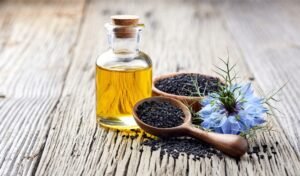
Natural product development has become increasingly sophisticated. Buyers no longer evaluate an ingredient only by its name or origin; they also consider extraction methods, batch documentation, specification consistency, intended application and supply reliability. This is especially true for black seed oil, a botanical oil derived from the seeds of Nigella sativa.
For brands creating beauty, personal-care, wellness or specialty formulations, selecting a dependable black seed oil supplier in India can therefore be an important part of product development.
One versatile option is Cold-Pressed Black Seed Oil, which can be considered for a range of cosmetic and personal-care formulations such as massage oils, hair oils, skincare blends and soaps. Comparable industry suppliers commonly position cold-pressed Nigella sativa oil for these types of formulation uses.
Cold pressing is especially relevant for brands that want a straightforward processing story. It is a mechanical extraction approach widely associated with plant-derived carrier and seed oils. Hetaksh’s official product information states that black seed oil is available using cold pressing as well as supercritical CO₂ extraction, allowing commercial buyers to consider different product specifications depending on their formulation goals.
A professional Black seed oil manufacturer should also be able to support buyers with clear technical information. This may include botanical identification, appearance, physical properties, active-content information and storage guidance. A published certificate of analysis from the company, for example, identifies Nigella sativa as the botanical source and lists measurable characteristics such as specific gravity, refractive index and moisture parameters for a tested batch.
Such information matters because natural ingredients can vary according to raw material, harvest conditions and processing. Specification-based purchasing gives brands a more structured way to evaluate incoming ingredients and maintain consistency in finished products.
Quality documentation is equally valuable for businesses working across regulated or quality-controlled supply chains. Depending on the product and market, buyers may request certificates of analysis, safety documentation, declarations and technical specifications before approving a supplier. The company’s website states that it provides COA and MSDS documents for applicable products and lists additional documentation for black seed oil buyers.
Scale is another consideration. Companies moving from product development to commercial production need suppliers capable of handling larger quantities without changing the basic sourcing standard. The official black seed oil page describes bulk packaging options and positions the product for B2B sectors including cosmetics, pharmaceuticals and wellness applications.
This makes black seed oil particularly attractive for brands that want a flexible botanical ingredient that can fit into multiple product concepts. A beauty company might explore it in a carrier-oil blend, a personal-care producer might use it in a topical formulation, while a wellness brand may incorporate it into a broader natural-ingredient range. These are formulation contexts rather than medical claims, and suitability should always be evaluated according to the intended finished product.
Hetaksh Essential Oils serves commercial buyers across essential oils, carrier oils and related natural ingredients, with company materials describing supply to customers in India and international markets.
Ultimately, sourcing decisions are strongest when they balance ingredient appeal with technical discipline. By evaluating extraction method, documentation, consistency, packaging and supplier capabilities, brands can choose black seed oil with greater confidence and build products around a more reliable ingredient foundation.
Black seed oil is produced from the seeds of Nigella sativa, an annual flowering plant also known as black seed or black cumin. The crop has a long history of cultivation and use across India, the Middle East and other regions, while Indian agricultural research identifies nigella as an established seed-spice crop with commercial varieties suited to Indian growing conditions.
For commercial buyers, choosing a Black seed oil manufacturer involves much more than comparing price. Seed origin, botanical identity, extraction technology, storage conditions, batch testing, traceability, regulatory compliance and supporting documentation all affect the usefulness of the finished oil. Indian food businesses also operate within FSSAI licensing, hygiene, labelling and contaminant-control requirements where the oil is sold for food applications.
The Indian market is also attracting interest from nutraceutical, food, cosmetics and personal-care buyers. Commercial market research forecasts continued growth in India’s black seed oil category, although such forecasts are proprietary estimates rather than official government statistics and should therefore be treated as directional rather than definitive.
Sourcing and manufacturing practices in India
India has established agricultural expertise in Nigella sativa. ICAR research has examined cultivation, seed quality, crop management and Indian nigella varieties, including work carried out at the National Research Centre on Seed Spices in Ajmer, Rajasthan. This makes domestic agricultural sourcing a realistic option for processors, although individual suppliers may also source seeds from other regions or countries. Seed origin should therefore be confirmed lot by lot rather than assumed.
Good sourcing begins with botanical authentication, clean seeds, moisture control and records identifying the grower, trader, region or lot. Buyers seeking organic material should request recognized certification rather than relying on the word “organic” in marketing. APEDA’s National Programme for Organic Production establishes standards and accreditation procedures for organic production in India, including certified categories such as oilseeds, spices, medicinal plants and processed foods.
Manufacturing may use mechanical pressing or other extraction technologies, depending on the grade required. The extraction method can influence yield, sensory characteristics and chemical profile, so purchasing specifications should identify the required process instead of treating all black seed oils as identical. For edible-oil processing businesses, FSSAI’s FoSCoS framework specifically recognizes vegetable-oil processing through expeller, solvent extraction and refining activities.