It is not possible to predict every situation that may arise in life. Sometimes, due to a sudden illness, one has to be admitted to the hospital, and sometimes a road accident or natural disaster can cause financial loss. In such situations, insurance helps provide financial security to a person and their family. Today in India, many insurance plans are available according to people’s different needs. Therefore, it is important to understand the types of insurance in India so that the right policy can be chosen according to one’s needs and budget.
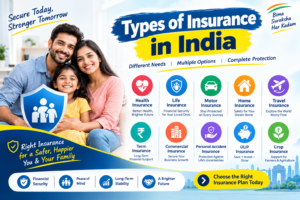
Main types of insurance in India
In the Indian insurance system, policies are mainly divided into two categories. The first is life insurance and the second is general insurance. Many types of plans come under these.
1. Life Insurance (Life Insurance)
Life insurance is useful for people who have financial responsibilities for their families. If the policyholder dies, the nominee is paid the insurance amount according to the terms of the policy. This can help the family handle future expenses.
Its main types are:
Term Insurance: Provides life coverage for a fixed period.
Whole Life Insurance: Provides life insurance coverage for a long time according to the terms of the policy.
Endowment Plan: This includes the benefit of savings along with life insurance.
ULIP: This offers the option of life insurance and market-linked investment.
2. Health Insurance (Health Insurance)
If you are hospitalized because of an illness or an accident, the cost of treatment can increase significantly. Health insurance helps reduce the financial burden by covering specified medical expenses.
It includes options such as individual health insurance, family floater plans, senior citizen health insurance, and critical illness insurance. When choosing a policy, you should understand the hospital expenses, the waiting period, and the conditions related to pre-existing illnesses.
3. Motor Insurance (Vehicle Insurance)
Motor insurance is taken to protect vehicles like cars and bikes from accidents, theft, or other damage.
It has two main types. Third-party insurance covers the specified legal liability related to damage caused to another person or their property. Comprehensive insurance also provides coverage for some damage to your own vehicle, along with third-party cover.
4. Home Insurance (House Insurance)
Buying a house is a major financial decision in life. Due to fire, theft, and some natural disasters, the house or household belongings may be damaged. According to the terms of the home insurance policy, the house and the items kept in it may be protected from specified risks.
5. Travel Insurance
During a journey, problems such as sudden illness, lost luggage, flight cancellation, or travel delays can arise. Travel insurance provides financial assistance in some such situations. Medical coverage can be especially important for travelers going abroad.
6. Personal Accident Insurance
A road accident or serious injury from other accidents can affect a person’s earnings. Personal accident insurance provides financial benefits in the event of death or specified disability, according to the terms of the policy.
7. Crop Insurance
Farmers may suffer crop losses due to drought, floods, bad weather, and other natural causes. Crop insurance schemes are designed to provide financial assistance for such losses according to specified terms.
How to choose the right insurance policy?
Before buying insurance, understand your needs, family responsibilities, and financial situation. Compare the premiums, coverage, waiting period, exclusions, and claim process of different companies. Do not buy a policy just by looking at the low premium. It is also important to read all its terms carefully.
Conclusion
Insurance is an important means of getting financial protection against uncertain situations in the future. Knowing about types of insurance in India can help you choose the right insurance options for life, health, vehicles, home, and other needs. Choosing the right policy can help protect your financial situation and meet your family’s needs.